

The following is a transcript of an episode of The Vilest Rag, The Ubyssey's podcast. You can also listen to the full audio on Spotify or Apple Podcasts.
[THEME MUSIC]
Sophie Clark
This is The Vilest Rag. I'm your host Sophie Clark, and you’re listening to a podcast brought to you by The Ubyssey, UBC’s student newspaper.
Archived Recording 1
Naomi Osaka is the Australian Open champion. She is the new world No. 1, and she simply has the world at her feet.
Sophie Clark
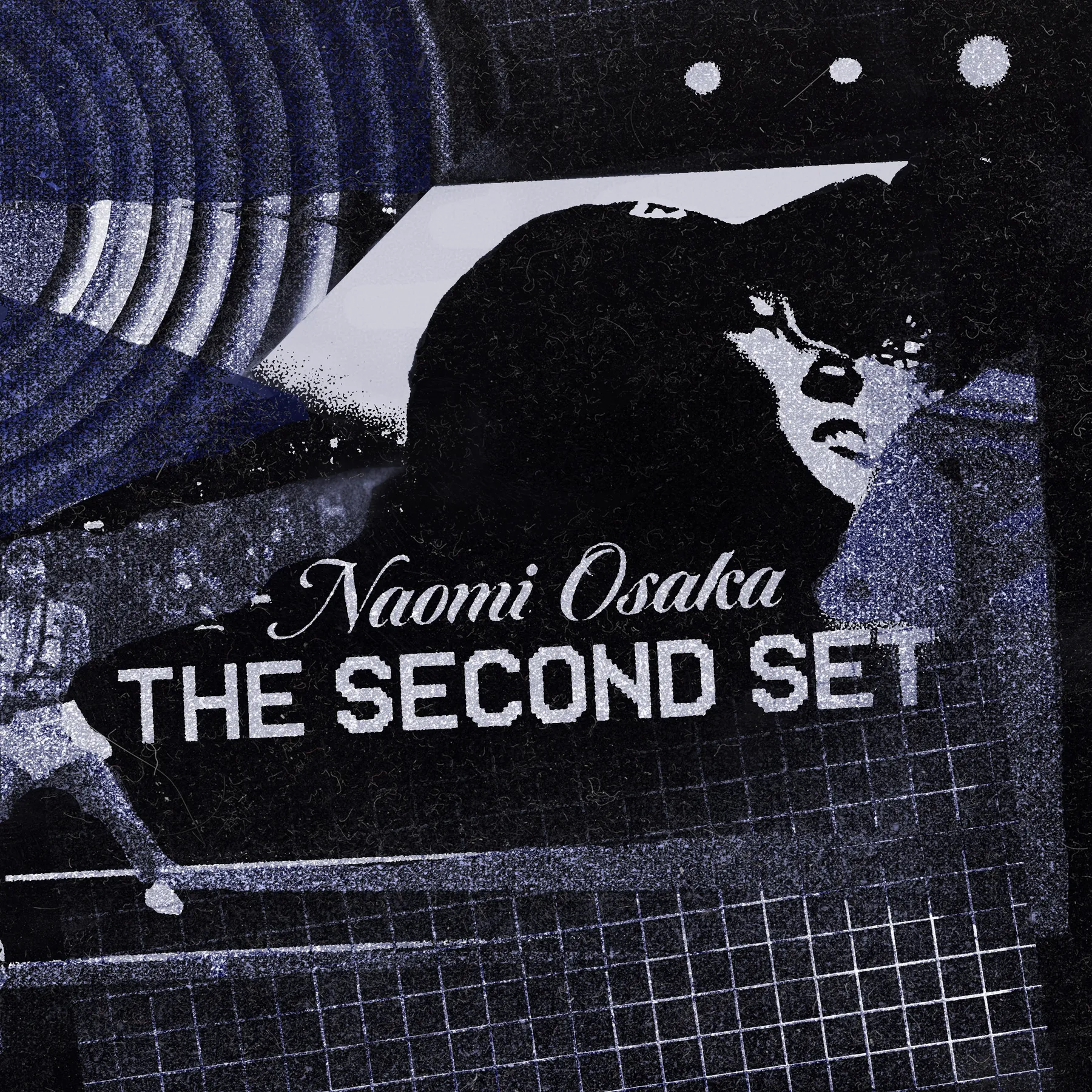
In early August, Vancouver's Rio Theatre premiered the director's cut of the recent documentary Naomi Osaka: The Second Set. The film follows Naomi Osaka, who holds seven career titles and is a four-time Grand Slam champion tennis player. Its main focus, however, is Osaka's return to tennis after becoming a mother in 2023. The director Kat Jayme is a UBC Film School alum, known for her Vancouver-focused sports documentaries. Today, I'm speaking to Claire Donnan, the Ubyssey’s arts and culture editor, about her review of the feature film and her interview with Kat Jayme.
Sophie Clark
Hi, Claire. How are you?
Claire Donnan
I'm good, Sophie. How are you?
Sophie Clark
I'm good. Welcome back to the podcast. First repeat guest.
Claire Donnan
Oh, thank you so much. I'm so happy to be back.
Sophie Clark
I'm happy to have you back. I want to talk a little bit about your story. But first, let’s talk about Kat Jayme, who directed the documentary Naomi Osaka: The Second Set, as you had the opportunity to interview her. I'm curious about her connection to Vancouver.
Claire Donnan
Yeah, absolutely. Firstly, I want to say, speaking with Kat was awesome. I also got the privilege to book her as a guest for CBC just last week, so it was really amazing to be able to do that. But Kat is actually a UBC alum. She went to UBC. She was initially in a different program, but then she transferred into the film production program. They had actually stopped offering it, and she was in the inaugural class after they started offering it again. And so she was an alum of the school, and then graduated. And as she was beginning her career, she spoke a lot about Vancouver sports teams, for example, [the story of] the Vancouver Grizzlies and the Vancouver Canucks riot after losing the Stanley Cup Final. So a lot of her work is very entrenched in Vancouver, and she herself is an alum of the school.
Sophie Clark
I know that producers and directors, or filmmaking career paths, can vary quite significantly. I was wondering what drew Kat to filmmaking, or film school in particular, and what her experience was like in UBC's film program?
Claire Donnan
They petitioned to bring the program back. At the end of her second year of school, she applied to the film school and she got in. She made a short film. She had a couple short films throughout her time in the program. She got to apply to the film school with a short film at the time, and she was on her high school student council and would make little skits and movies for the people in her class. And I believe that is what initially drew her to filmmaking, although she did not end up submitting one of those skits to apply for the film program.
So instead, when she applied for the program, she made a short film about [someone] who played for the Langara basketball team and who had been diagnosed with cancer. So she's been making sports documentaries basically all of her time.
But yes, she started making films in high school as something fun to do, and that's kind of what drew her to the film program here. And then in her time here, she made two short films. And the way that it would work is that people in the program would pitch their short films, and then they would decide which ones to do [by voting], and then they would pick six, and everybody would divvy up the roles and get chances to be the producer, to be the cinematographer, the editor, that kind of thing.
Sophie Clark
Cool. Did she say why she chose to direct or work with documentary-style features instead of fictional pieces?
Claire Donnan
Not necessarily fictional pieces, but I do know that she was a basketball player, which is, I believe, what drew her to sports documentaries and why she wrote about her friend when she first applied for the film program. She spoke to me a lot about — not to spoil too much — how the discipline of basketball had kind of drawn her to a lot of her later stories, like The Grizzlie Truth, and how she had used what she had learned about basketball to try and transfer into tennis when she started writing this new doc.
Sophie Clark
Right, and like you just mentioned, her three notable films — Finding Big Country, The Grizzlie Truth, and I’m Just Here for the Riot follow Vancouver sports teams, past and present. I was hoping that you could give me a little bit of an overview of these films and how they led to her most recent feature on Naomi Osaka.
Claire Donnan
Yes, for sure. So her first piece was Finding Big Country. That film and The Grizzly Truth are both about the Vancouver Grizzlies, which were Vancouver's basketball team that ended up being transferred to the U.S. to …
Sophie Clark
I believe it was Memphis.
Claire Donnan
Yes. So they got transferred to the U.S. in an incredibly controversial bid. Jayme said she was first drawn to Finding Big Country because she wanted to talk about the Vancouver Grizzlies. She knew somebody had to. She wanted to be the person to do it. But her very first piece, as she'd been looking around doing background research, she saw that any retrospective on the Vancouver Grizzlies would always acknowledge the fact that they couldn't track down Bryant “Big Country” Reeves, who was a player. She wanted to be the one to find him, but she had no NBA connection. She didn't know anybody. She's a childhood fan from Vancouver, trying to find the guy who lived somewhere in Oklahoma. She pitched to a lot of different places. They didn't want it.
Eventually, STORYHIVE was interested, and basically that film totally exploded. They actually did this kind of guerrilla marketing thing where they left up all of these missing posters for Bryant Reeves, which [made] everybody all of a sudden really drawn to this film.
But basically, in the movie, it's not like she plays herself, but she postures as a Vancouver Grizzlie super-fan looking for Reeves. After that, she did a follow- up full-length documentary called The Grizzlie Truth, and that was all about the Vancouver Grizzlies. Then she made connections with ESPN’s 30 for 30, which was actually a huge dream of hers. She co-directed a 30 for 30 — that was I’m Just Here for the Riot, which was about the Vancouver Canucks’ 2011 Stanley Cup riot situation. She co-directed that with a friend, and that opened doors for her because after that, she ended up signing with an agent who set up for her a bunch of different meetings with production companies, so that she could pitch story ideas.
She had a meeting with LeBron James's [media] company, Uninterrupted. She's going to general meetings, basically pitching the kind of stories she wants to tell. At that pitch meeting, that general pitch meeting, she talks about how she's got this idea in the works about professional athletes and motherhood. She says that loosely. The meeting ends.
Then she gets a call, and she's told that Uninterrupted wants to make a documentary about Naomi Osaka's return to professional tennis after becoming a mom, and tells her that she has five days to pitch a story. So she takes that and she basically locks herself in a room, as she says, and she spends five days creating what she wants to be able to describe as the perfect pitch.
This is where she says her basketball training and her experience came in handy for her because one thing I believe her coaches would say to her is, “tell them why they can't say no, not why they should say yes.” So she was constantly sitting there going through this pitch. Going, “how can I make this something that is so perfect that they cannot tell me no?” And ultimately, what she decided to create was a pitch where she basically said to Naomi, "I want to work with you to make something for your daughter … to create for your daughter, this piece of art about her and her life as a child, and your return to sports and how important she is, and how loved she is. I want to be able to help you to create this thing.” Then they flew her out to L.A. for a chemistry check, and that was it.
Sophie Clark
Wow! Oh my goodness!
Claire Donnan
I know.
Sophie Clark
That's so incredible. I mean, you discuss in your story that Jayme had to take on more of a technical role in the filmmaking process. I was wondering how that came to fruition in the first place, and what did that look like in the film?
Claire Donnan
Initially, Kat was rolling with these pretty big crews, like 15-plus people. And their second shoot was at Indian Wells, which is not technically a Grand Slam, but a major tennis tournament. They had a huge crew. It was not the right atmosphere for Naomi. One thing I noticed through watching the film is that Naomi Osaka, particularly in her private life, outside of her professional persona, is a decently quiet and shy person, and having a crew of 15-plus people definitely didn't work for her. Eventually, she told Kat that, and because of that, Kat was like, “no problem … I'm going to pick up the camera. I'm going to shoot this myself.” So for a lot of the shooting of The Second Set, a lot of the major [tournaments], like the Australian Open, the US Open and Wimbledon, she was the person who was filming. It was often her, and I believe, she was there with a producer, and it was just the two of them.
Archived Recording 2
Thankfully, I have a really great film community here in Vancouver. A lot of friends who took the time to teach me how to pick up a camera, like “these are the settings, this is what you do, this is exposure, this is your ND filter, this is what you do in these situations when it's really dark.” And then I had my friends, like Dave Palmer, Mike Dinsmore, Kaayla Whachell. They all had to teach me how to use the equipment.
Claire Donnan
Kat herself admitted it to me. She hadn't picked up a camera since film school. She was a writer, a director, a documentarian, and she had worked with a camera before, in film school, but she hadn't really been the camera person or the cinematographer in that way since.
So she actually credits the film community with a lot of the success of this documentary because she would go to her friends that she met in film school and other folks in the Vancouver film community and ask them for reminders, refreshers, or lessons on how to make sure she could film the best documentary that she could.
I will also say — my camera usage has been decently sparse throughout journalism school, but I found that her cinematography grew a lot throughout [the film]. By the end, when she was doing [follow shots], it was very, very balanced and steady and clean. So it was really remarkable growth throughout and where she was able to get. So often it would just be her and one producer with Naomi doing interviews or following her around with a camera.
Sophie Clark
I mean, that seems kind of crazy. I imagine the relationships that you have when making a documentary don't necessarily resemble that with an acting cast versus the human beings that you're following. So, what was different about the filming atmosphere and the relationship between Jayme and Osaka?
Claire Donnan
Yeah, there's two things about that. I'd say the first thing is, the relationship definitely grew throughout. Often, Kat would find that Naomi would just look at her and talk to her behind the camera. So sometimes Kat would set up the camera and stand off to the side, and they would have this conversation so that you could get that very traditional “I'm not talking to the camera, I'm talking to you” kind of documentary feel, if you know what I mean.
I also found — and Kat talks about this a lot in her Q&A — she wanted to work very hard to avoid being voyeuristic. There were many points, especially after losses, that she would follow Naomi back to a parking lot where she was going to be sitting alone, or through double doors, or to the media room, and she would always follow at what felt like a pretty far distance. So I think that the two of them had a lot of respect for each other.
Then the other thing was the dynamic of Naomi's daughter Shai. So one thing I really want to highlight and acknowledge is the timeline of this film. So in the opening shot, Naomi is pregnant, and in the closing shot, Shai is 15 months old, so it was well over a year of film, with the better part of a year being consistent. Kat followed her from Grand Slam to Grand Slam to tennis tournament to Japan to all over the place, and Kat spent a lot of time with her, and more importantly, a lot of time with her daughter as she grew up. Now, they were not allowed to show Shai's face throughout because they wanted to protect her identity.
But Shai was a super friendly kid, and Kat spent a lot of time with her. It got to the point where Naomi trusted her so much that she would leave Shai with Kat while she showered or washed dishes because she trusted her and they knew each other like that. But whenever Kat would be filming, Shai would try to come right up to her and hold her hand and walk around with her, which was adorable, and also very difficult because you can't film a little kid that's holding your hand. So yeah, I think it was interesting. Kat described it as different because what Naomi needed was this closeness and this trust. This was what allowed her to get very intimate and honest and personal with a lot of the details of her life and her story.
Sophie Clark
Speaking of Naomi's story, she holds a reputation for not only her skills on the court — being a four-time Grand Slam champion — but also for being an activist for mental health in sports, and I was wondering how this was presented in the feature film.
Claire Donnan
Yeah, so this is one thing that I think is really interesting. I didn't know much, and Kat herself admits she didn't know the first thing about tennis before she took on this documentary. She took one tennis lesson with a friend, and she says that the friend said as well that she did not know tennis very well. And she took the lesson so that she would know how to shoot tennis and what would be happening.
Like Jayme, I didn't know much about Naomi Osaka going in, other than her public persona. I knew about her outfits. I knew that she wore these iconic, incredible outfits on the court. I knew that there was a lot of public controversy, let's say, when she decided that she wanted to play for Japan. But the main things that I knew about her were [those things], and then also I knew how the media spoke about her.
She is an athlete who has been under particular levels of scrutiny and controversy throughout her career. She had this almost — I've done a lot of research about her since — she had this almost meteoric rise to fame, where she came out of nowhere. She beat Serena Williams, and then she spent 25 weeks as the No. 1 player in 2019. She had this very sudden success, and then she won four Grand Slams. She has seven career titles. She basically burst onto the scene.
And then people's reaction to her was not always positive. Her on-court behavior was under fire. She got in trouble, in I think 2022, for hitting balls into the stands and for breaking her rackets when she lost just this year. She was yelling during an opponent's serve, and she got in trouble because that was inappropriate conduct.
The other thing is she has had very public struggles with her mental health. She's withdrawn from tournaments because of it. She initially — and she says in this documentary — because of her mental health struggles, had planned to, after she decided to take time off from professional tennis, she had decided to withdraw and retire from professional tennis, and just not tell anybody, and just quietly fade into the background.
But getting pregnant and having her child is what changed everything for her. Shai is basically, according to her, the thing that kickstarted the second phase of her career. But yes, she struggled a lot with anxiety and depression. And also she talks a lot throughout the film about her struggles with postpartum depression, in a lot of very honest and intimate detail. She also talked a little bit about her mental health and how she used to react to losses. She would describe losing a game as feeling like as if something had died.
She would say that she would always go to this dark place after she lost a match, and then in the film, we see her lose over and over again because she's coming back to tennis after years off, and we see her beginning to cope with it better and better. We see her coaches hug her afterwards and thank her for not going to a dark place and she says that's because of her daughter. Her daughter totally reframed what was important to her. She started seeing her wins, and her titles — not as totally irrelevant — as nothing compared to holding her child. She would finish a match, she would lose, and she would be on her phone looking at pictures and videos of her daughter and talking about Shai-Shai and how excited she was to fly home and see her, how she didn't mind leaving the tournament early because she could go see her.
It was honestly really incredible and beautiful to see. It was a totally different side of this woman. It was very intimate and quiet and shy. And she, in the film, seemed to love motherhood and take to it, and just to grow so much within — also without — herself as a person outside of being a mom.
Sophie Clark
I mean, like you said, it's so incredible and beautiful when an athlete or someone who people either idolize for their skills or their personality is so open and willing to talk about their struggles and also their evolution to a better place. I know in your article that Naomi and Kat wanted to counter the kind of narrative of the comeback as a woman in professional sports, and to instead portray it as a second chapter in her career, and I was wondering, what did Jayme want people to take away from Osaka's story of motherhood and the intertwined experience as an athlete.
Claire Donnan
Yeah. So I think a lot of it comes down to the film's title. It's called Naomi Osaka: The Second Set, and Naomi explains it herself right at the end of the film. The “second set” is basically the second half of a game of tennis, and she described it as a new beginning, full of opportunity. She said that anything could happen at the start of the second set, and that having her daughter and coming to tennis was like her second set, and to her it was better, and she was better because of it.
And this is, according to Kat and according to Naomi, to directly counter what has been a pretty popular narrative in women's professional sports that when women return to their sport after having a child, they're having a “comeback” or they're “returning.” The idea that you return, you have a child, and you come back to your sport after an amount of time, you don't miss a beat, and you're the same. They really wanted to counter that.
Having a child, becoming pregnant, giving birth — when you're an athlete, it changes everything. Your body changes, your mind changes, your responsibilities change, your priorities can change, and becoming a mother … when you come back to your sport, you are a completely different person. And the idea of a “comeback” reduces all of the change that's happened, and everything you've had to do to get back to the point that you were at, because it's not a return. It's a continued development, a move in a different direction.
Kat interviewed several female athletes and tennis fans who were mothers, who said similar things where they were like, it's so exciting to have her back. But they talked a lot about the difficulty of motherhood and sports and how hard it is to leave sports and come back, and how when they were trying to decide if they wanted to have kids, they had to think really hard about if they wanted it to end their career or if they wanted to take a break, and that would determine when they had a kid.
Male athletes don't have to think about this. Male athletes can have kids, and it will not affect them physically, which would in fact affect their performance. So, Kat's goal here was to do a total reframe of this sort of mindset, and also, I don't know if this is necessarily her goal, but what this did for me secondarily was show me that Naomi Osaka is a badass, you would not believe it. She went back to training a week after giving birth.
Sophie Clark
I mean, talk about commitment.
Claire Donnan
One week postpartum, and she was up doing conditioning again, and she talked about that and how it felt like she was in a different body, but she had to adapt. And to me, it was absolutely insane that you were returning from something as physically demanding as giving birth. It's been one week, and now you're back to training to get yourself back to a level to compete in professional tennis in six months. Six months postpartum, you do your first major tournament back. It's insane. Her objective was to show us that “comeback” is the wrong term. It's something different entirely, and I absolutely got that.
[MUSIC INTERLUDE]
Sophie Clark
I was wondering when you were watching the film for the first time, what immediately stood out to you?
Claire Donnan
It felt like a scrapbook. I think that's the best way to describe it. Kat’s goal was to make something for Shai. So a lot of it was structured — because they couldn't show Shai’s face — almost like a scrapbook. There would be a lot of these voiceovers done by Naomi of like things she would say to her daughter, like “Dear Shai,” structured like a letter, and then there would be these transition screens that would talk about the country that they were in or the city, and it would be like “X amount of miles from you” with hearts and all these little almost stickers and these little tacked on things about the place.
It almost felt like a scrapbook from Naomi to Shai. It had this sort of personal feeling. It felt very warm and close, and it felt it was Naomi who was making the film, and I think that that was part of the goal. That was the first thing that stood out to me.
Then the second thing was Naomi's treatment, and this was one of Kat’s goals. She wanted people to know that Naomi is caring. She concerns herself and worries about the people around her and takes care of them. She's a nurturer. She's compassionate. She's kind. She wanted people to know these things about her that the media has not always attempted to convey, purely because of lots of different things, but also probably because they didn't have that access.
So following her around for a year, she caught these moments, these moments of hilarity. Naomi is super funny. This moment where Naomi wanted to give her a tour of her hotel room, and then at the end, it said, “and now you are unwelcome and stay out” and you can hear her laughing behind it. This moment where Kat tries to take a video to get a shot of Naomi and her friends posing for a mirror selfie, and then Naomi grabs her and pulls her in, and you see the camera turn, and you see Kat with all of these women with her camera waving and smiling. There was this incredible feeling of just inclusion. It felt like we were there, and it felt like we were able to be very close and intimately aware and familiar. I felt very warm and intimately welcomed throughout.
Sophie Clark
And for listeners, where can we watch The Second Set?
Claire Donnan
On Tubi right now. So you can watch it there, streaming for free. It's awesome. It screened with Q&As at the Rio Theatre and at the VIFF Centre. Those were the Vancouver premieres of the director's cut of the film. We asked her what that meant, and the music is different. So one thing I want you to know is that some of the tunes are going to be different in the Tubi version.
Sophie Clark
Oh, that's so interesting! Oh my goodness!
Claire Donnan
Yeah. So one thing that really struck me was they spoke a lot with Naomi's mom, who said there's nothing like it [when Naomi plays tennis]. She's something to see. She's an absolute artist. And you hear Tchaikovsky's Waltz of the Flowers from The Nutcracker during this conversation, and the ball hits are timed to the music. It's absolutely graceful and beautiful. I don't know if it'll be to a different piece of music, but I do know that some of the needle drops are changed. So that was one, and also Rihanna's “Work” when she went back to training, which was really quite good. But yeah, you can stream it on Tubi.
Sophie Clark
Okay, well, thank you so much, Claire. It's been a pleasure talking to you about both Kat and Naomi, thanks for coming on.
Claire Donnan
Thank you so much. One thing I love about — not to get on the journalism soapbox — but one thing I love about journalism and being a journalist is that we know a little bit about a lot. Before I went to go see this film, I didn't know the first thing about tennis besides the fact that I'd seen Challengers, and I think that this was such a gift getting to watch this film and to speak to Kat and to hear about how she also didn't know anything about tennis and how this woman and her story had taught so many people so much about this sport, and so many people so much about who she was as a person, and how she's been given a platform to talk about postpartum depression. And I just love this job because I got to learn so much about tennis and about Naomi and about filmmaking, and it's really nice to be able to share it with people.
Sophie Clark
Your review is a great read, so I hope that listeners will also check out the article.
Claire Donnan
Thank you.
Sophie Clark
Before we go, let’s take a look at this week’s stories. In News, reporters Juan Pablo Sastoque Vega, Spencer Izen, Thea Lee and Quyen Schroeder cover the AMS Council meeting, on August 19th. In Arts and Culture, Elena Massing, the Ubyssey’s editor-in-chief, writes on Vancouver’s hopeful artistic scene seeing progress in a Cultural Land Trust, despite longstanding unaffordability limiting creative spaces. You can read all of these pieces and more at ubyssey.ca, which publishes every Monday, Wednesday and Friday.
In today's episode of the Vilest Rag, you heard from Claire Donnan, the Ubyssey’s Arts and Culture editor, and myself, Sophie Clark, the Ubyssey’s audio producer. This episode was edited by Sophie Clark, and the music is by Dylan Fitzhenry.
This transcript was lightly edited for clarity.