

The following is a transcript of an episode of The Vilest Rag, The Ubyssey's podcast. You can also listen to the full audio on Spotify or Apple Podcasts.
[THEME MUSIC]
Sophie Clark
This is The Vilest Rag. I'm your host Sophie Clark, and you're listening to a podcast brought to you by The Ubyssey, UBC's student newspaper. This is The Ubyssey's first year with an original games designer and crossword makers, creating unique new puzzles related to our community. It's Monday, Nov. 2, and I'm speaking to Dylan Fitzhenry, The Ubyssey's senior games designer, about the art of a crossword puzzle, creating obscure clues, and the creation of our theme song.
[THEME MUSIC]
Sophie Clark
Hi, Dylan.
Dylan Fitzhenry
Hello.
Sophie Clark
Welcome to The Vilest Rag. I'm happy to have you on.
Dylan Fitzhenry
I'm very happy to be here.
Sophie Clark
For listeners, this is a bit of a different episode — I'd call it an inaugural one, but it's also kind of bringing back what we did in our pilot year of The Vilest Rag, where we interviewed editors about their process and what they do here, but also about them as people. This is our first time doing this on this season. If you're familiar with our Margins page on the website and in print, I'd say this is similar to that, so it's very exciting. Dylan, I'm happy to have you as our first guest for this. Can you tell me what your role at The Ubyssey is, and what brought you here?
Dylan Fitzhenry
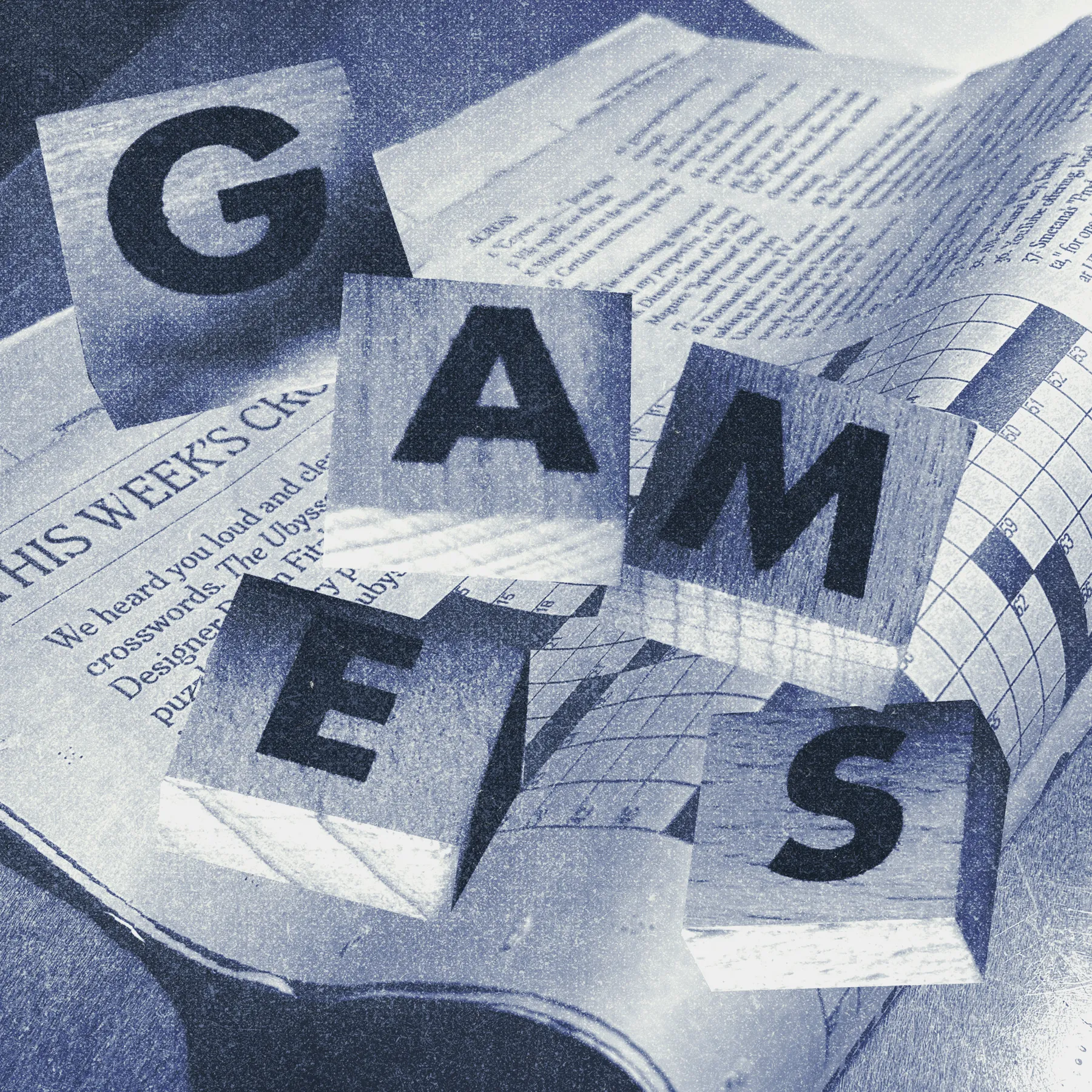
Yeah, for sure. Hello, I'm Dylan — I'm the senior games designer at The Ubyssey. I make a crossword puzzle every week for the newspaper, and soon I'll be leading a team of crossword designers to make puzzles for The Ubyssey's games page.
Sophie Clark
What got you interested in making games instead of just playing them? I think a lot of people wouldn't necessarily think, "I can play a crossword, so maybe I should create one because I like it so much" — that's not necessarily everybody's thought process.
Dylan Fitzhenry
It's a good thought process — if you like something, why not give it a try? For me, like so many hobbies, it started during the pandemic, 2020, great year. While I was locked at home with nothing better to do, I got really into doing the daily New York Times crossword puzzles. At first it was really hard, especially some of the later days in the week, but as I got better at it, I went on a spree of finding videos of crossword creators and seeing their process, and I thought, why not? I'll give it a shot.
I sat down in front of Microsoft Excel, just a grid of blank spaces for letters, and tried to make a puzzle. Oh my god — the first couple times trying to make a crossword, it's a difficult journey. You'll find you're trying to fit words into a grid you think will work really well, and then eventually you back yourself into a corner where no word can fit the crosses, and you're just filling the grid with gibberish at that point. I stuck with it, though — at this point it's definitely one of my most therapeutic hobbies. I love filling a grid with words and forcing people to solve the puzzles.
Sophie Clark
How do you even start making a crossword? What's your process? Your crosswords here are 15 by 15, and I assume that requires a lot of thinking — so how do you even begin?
Dylan Fitzhenry
The first step I usually go through is coming up with a theme — most of my puzzles are themed, some more than others. A theme usually consists of four or five connected words that all share a thread, so I'll come up with those words, write them down, keep them in my back pocket, and then try to find a way to fit them into the grid, either horizontally or vertically, and build a grid of black squares around that.
Other than that, I'll start filling in some words I really like. But the thing I discovered very quickly in making crossword puzzles is you have to be okay with compromise — sometimes a word you want to fit in the grid just isn't going to work, and you have to be okay with putting in some words that are less fun and more generic. But even then, as long as your themed words and clue writing are good, you can always make a fun puzzle.
Sophie Clark
Do you have a favourite clue you've come up with — one where you were just like, oh my gosh, this is so good?
Dylan Fitzhenry
I pride myself on a few clues I've made. Some of the most fun ones to make are always the ones that end in a question mark — when a clue ends in a question mark, that implies there's some sort of misdirection, wordplay or pun in it. Those are always the most fun to make, and in my experience doing crosswords, they're also the most fun to solve — they make you think a little outside the box. As for my favourite clue I've made, that's a great question.
Sophie Clark
I'll say — the most recent puzzle you did, I know it was Halloween themed, and there were three or four clues that were connected, like the Halloween-themed words. I don't remember the exact clues, but it was like, "this is connected to 33-across" and "this is connected to 12-down." I'm always like, oh, these are so hard, but so fun.
Dylan Fitzhenry
Yeah, clues that relate to other clues are always a big part of a theme, and in my Halloween puzzle I put a lot of that in, especially two clues in each corner that were directly related to each other. But here's a good one — making clever clues for the extra filler words is also fun, because you don't want the filler words to just be boring paint on the wall. You want to make them challenging so solvers have to think about the themes too. If they just ignore the themes and go straight to solving all the filler that crosses with it, the themes get filled out automatically — you want to give them a challenge so they're forced to fill out the theme as well. One of the filler words I added in my Halloween puzzle — I'll tell you the clue. The clue is: "Youths who get high in the night?"
Sophie Clark
Oh my gosh, this stumped me. I did it in the office when print came out, with two other people, and that one stumped us first — I think it was one of the last clues we got, and it was very fun.
Dylan Fitzhenry
"Youths who get high in the night?" The question mark implies you have to think a bit outside the box for what that might mean. Obviously, "youths who get high in the night" — you might immediately start thinking stoners. But if you think a bit more creatively... should I give the answer here on air?
Sophie Clark
Yeah.
Dylan Fitzhenry
Okay — the answer, skip forward a bit if you don't want to hear it: owlets.
Sophie Clark
Someone really had to help me with that one, because I was just like, I don't know anyone whose name starts with an O who's getting high in the night. I'm quite unsure. To follow up on that — how do you determine a clue? What's the process? I assume you have the word first, and then you create the whole 15-by-15 puzzle, and then make the clues?
Dylan Fitzhenry
Yeah, the clues always come last.
Sophie Clark
Okay.
Dylan Fitzhenry
You don't want to put too many hard clues in one chunk, because then an entire section of the grid becomes really hard. Certain words are also better suited to clever cluing than others — nouns especially are really good for that. For owlets, I could do something boring, like "baby animal that can turn its head 180 degrees" — you'd obviously know the answer to that. So when I have the choice between a really obvious clue and a clever one, I tend to go clever. It depends on the difficulty I'm going for.
My Ubyssey puzzles so far have been in the easy-to-middle range of difficulty. I've gotten a few requests to ramp things up a bit — we'll see where that leads in the future, but I don't want to go too hard. Making the clues is honestly one of the more time-consuming parts, because after making a grid, you're sitting there with a list of maybe 72 words you have to actually make a puzzle for. The most common type of clue is a synonym for the word, or a very simple description if it's a name or something like that — for example, in my recent puzzle I had the word SAG, and the clue was simply "droop," because for some verbs or words like that, a synonym is the most straightforward way to go.
Also, for names, it's about describing what the person has done — if it's a famous name, like I had Leonard Cohen in my recent puzzle, so the clue was something like "the guy who wrote 'Hallelujah.'" Deciding which clues should be straightforward and which should be tricky, and then figuring out how to make a clue tricky without being too difficult — that's where the puzzle comes in for me. That's what I have to solve.
Sophie Clark
I'm curious what kind of software you use to design or create these crosswords, because I assume you're not doing this by hand.
Dylan Fitzhenry
No, I'm not doing it by hand anymore. When I was working in Microsoft Excel, it was kind of just by hand — I was forcing words into place. Now I know better. I use a software called Crossfire. It's what a lot of professional crossword makers use, and it's useful for a lot of reasons. First, it streamlines the process entirely — the notation of the crossword becomes way easier. But it also has a few super useful tools for placing and fitting words onto the grid.
My favourite is the fill tool — it doesn't just fill the crossword for me, but when I hover over a blank space on the grid, it gives me a list of every possible word that can fit there from the dictionary, which I have my own version of, full of words I like and don't like — I'm constantly removing ones I never want to use. The fill list gives me dozens of options to work with. It saves me the hassle of putting in a word I think will work well, only to find out somewhere down the line that this combination of words doesn't fit the grid at all. It's a real time-saver, and it's made the process a lot more fun.
Sophie Clark
I'm very curious about this software, because I just can't imagine having to draw out each square, colour in some of them, and figure it all out by hand — and if you were doing it in pen, that would be terrible. I'm curious what the hardest part of creating games like this is. I'd love to try making a crossword at some point, because I love them so much, but I imagine it's super difficult. Do you still find it difficult?
Dylan Fitzhenry
Sometimes. When you're filling in a grid of filler words, the hardest part is when you have a wide-open grid or section — a lot of long, interconnected words is way harder to make fit. In terms of making the whole puzzle, sometimes the hardest part is actually just beginning — coming up with the themed words, because that's the most important part of the puzzle.
The longer, connected words are the parts the solver is going to think the most about and spend the most time with, and if it's unsatisfying to solve, it makes for a bad puzzle overall. So that's what I spend a lot of the beginning process thinking about — making a list of words I do or don't want in the puzzle. Usually I go through a few drafts of themes I try to make work, and they end up not cutting it, so I try again — but eventually, I always land on something good.
Sophie Clark
Are there any other games in the works for The Ubyssey?
Dylan Fitzhenry
So far I've just been making crosswords, especially for the print edition, but soon we'll be having a games page on ubyssey.ca, with a team of crossword makers making especially mini crosswords for the website. I don't have many details yet, but we'll also be incorporating at least one or two other trivia or word-based games relevant to UBC.
Sophie Clark
This is very exciting. I think one of the best parts of something as big as The New York Times games is that there are so many, and there's kind of something for everyone. I love a good game with wordplay, so I'm very excited about this, and I'm sure a lot of people are — we get people coming in asking, "So where's the next edition of print?" Specifically, where are the crosswords? I think people are excited about this, and I imagine it'll eventually go in our newsletter too — the daily puzzles, I'd guess.
Do you have any crosswords, games or puzzles you'd recommend to listeners — or to me? They can be in person or online, just things you've loved or are loving.
Dylan Fitzhenry
I always love doing the New York Times puzzles — especially, and this might be contentious, the Friday and Saturday ones. A lot of people don't like them because they're themeless and get very difficult, but I think that's where the most creative clues come from, in the really hard puzzles. In terms of games other than crosswords, I try to do Connections every day — I find that very difficult. I've fallen off the normal word games like Wordle; it was a big thing a few years ago, but I find it kind of repetitive at this point — you just start with the same word every time.
Sophie Clark
Yeah.
Dylan Fitzhenry
In terms of online daily games, there are a few I've been really into recently. One is called Disorderly, where every day it gives you a different set of things — sometimes names, sometimes movie titles, sometimes locations — and your task is to order them according to a certain guideline.
For example, if it's a list of names, it might say to order them by who was born first; if it's movies, order them by rating; if it's buildings, order them by height. It's a real test of trivia knowledge, and also what you can infer from certain clues. I find it very fun.
Sophie Clark
I know this isn't exactly what you're talking about, but I'm personally a huge Trivial Pursuit fan.
Dylan Fitzhenry
Ooh.
Sophie Clark
Any trivia or guessing games? I know a lot of people like Worldle, where you guess the country just based on...
Dylan Fitzhenry
The shape.
Sophie Clark
That one's really fun. I'm very sad — a long time ago, maybe three years ago, The New York Times had a game, I swear I'm not making this up, that was some sort of math game, something to do with multiplication — I think you had to add up to a certain number. I know it sounds like I'm making this up, but if The New York Times ever hears this, please bring it back. It was incredible. I love a good numbers game — it wasn't like Sudoku, but it was a very fun math game. Maybe we need more numbers games.
I do love a good word game, though. I think a lot of people love these games because of the connection they create — even in the office, it builds a sense of community, because whenever print comes out, people will sit down and read, but also eventually get to the crossword and do it together. I remember a few years ago, I went on a trip with some friends, and each morning we'd get up and do the Mini and see who could finish it fastest. Do you have a memory connected to a specific game?
Dylan Fitzhenry
I used to always compete with my sister on crossword puzzles, and then I got way too good, so now there's no competition — sorry if that's too much of a brag. Sorry, I have to roast her somewhere. I don't have one off the top of my head, though.
Sophie Clark
It's okay.
[MUSIC INTERLUDE]
Sophie Clark
You're also an instrumental part of this podcast.
Dylan Fitzhenry
Oh boy.
Sophie Clark
For those who don't know, at the end of every episode I say the music was created by Dylan Fitzhenry — you composed all of our music, whether it's the transition songs, the theme song, all of it. Can you tell me a little about your background in music, and how you got into composition specifically?
Dylan Fitzhenry
Yeah, so I'm not only a crossword designer — my main thing, in fact, is that I'm currently a master's student in composition at UBC's School of Music, and it's a lot of fun. I hesitate to say that because it's also a lot of work, but I love what I do. I got into composition in high school — I was a huge band nerd, so I'd always find an excuse to write music. I started doing it more seriously in university, kept writing, and now it's just part of what I do — it's my life at this point.
Sophie Clark
Do you have any composers you take inspiration from?
Dylan Fitzhenry
Oh my god, so many. What you're hearing for The Vilest Rag is quite unlike a lot of the other music I write for school — at school, there's more of an expectation to write academic, contemporary classical-style music, which is what I dabble in the most. As for composers I draw big inspiration from, I can list some names, but I'd be surprised if many listeners have heard of some of them.
Sophie Clark
That's okay — this is a recommendation, frankly.
Dylan Fitzhenry
Let's see, who would people know... I think everyone should try listening to Julia Wolfe at some point — her music is very chaotic, but I like it a lot. Her, as well as other composers like David Lang and other minimalist composers — Arvo Pärt, Philip Glass — these people have had a big influence on me, as well as more modern composers like Morton Feldman and Louis Andriessen. These names might not mean anything to you, but in terms of my compositional journey, they've been influential.
Sophie Clark
When you're composing, are there certain elements you like to use repeatedly? And when it came to composing for the podcast, what was that process like?
Dylan Fitzhenry
When I was writing for The Vilest Rag, I was listening to a lot of music from other podcasts, specifically The Daily from The New York Times, and really thinking about what makes that music click. For their background and transition music, there are certain things it has to be — pretty subtle, minimalist to a degree. For some of my transition music, I tried to give it a sort of chill, repetitive bass vibe, which is usually good — some chill strings for the theme song. That's where I tried to develop the most character, with the guitar, the strings and the drum beat.
This was all made using purely electronic instruments — I didn't have the resources to get live instrumentalists. I tried to come up first with a distinct theme, and I went back and forth with Elena about some of the musical elements, and we landed on the melody you now hear at the beginning and end of every episode. I think it fits the podcast quite well from what I hear — I'm always listening back to it, and I'm pretty pleased.
Sophie Clark
I love the theme song. I think it's the same thing with The Daily — it's like when something is both good and catchy in a way that's totally recognizable, stays in your head. I think ours does that, and when I describe it, it's kind of a combination of broadcast-news-ish energy. I also really like how the transition songs and the other longer pieces you've made all share this element that connects them back to the theme song — I find that really exciting. When I get to pick which songs to use in an episode, I'm like, this is so fun.
Dylan Fitzhenry
The main thing I tried to connect everything with was instrumentation — especially the bass and the choice of strings and guitar is the big connecting feature. I can tell a story about writing the theme song for The Vilest Rag — I wrote it back in the spring, during a couple of weeks when I had a wealth of free time, and I went through a lot of drafts of what I wanted it to be.
At first I had something more techno, with more of a driving beat, and I thought, this doesn't work for a journalism podcast, this isn't really what I'm going for. Then I tried something more akin to broadcast breaking-news music, and it ended up being way too fast. What ended up happening is I went to bed one night with ideas in my head, not really sure where to go with it, and — this is the only time this has ever happened to me — I woke up the next morning at 7:30 a.m., hours before I ever wake up normally, in a cold sweat, with a melody in my head, and I thought, oh my god, that's it, I finally got it. I leapt out of bed, sat down at my piano, and started writing down the idea, and that ended up being the final product. It just came to me in an epiphany. It was great.
Sophie Clark
I think that's really cool. It's always so crazy to me — I love music so much, but the thought of composing something, I'm like, how do you even start that? It seems like you have to have such a natural talent for it, and I find it so impressive.
Thank you so much for coming on, Dylan. I think both your games and the music for this podcast bring a lot of people joy, readers and staff alike, and I'm a huge fan of your games — I'm excited to see what you're going to do. I also think we should plug that you're still hiring games or crossword makers, so if you're listening to this, you should apply, even if you just have an inkling of interest. If you dabble in crosswords, I think it'd be a very fun opportunity.
Dylan Fitzhenry
Yes, please — I'm looking for more people to bring onto the team. We're eventually going to try to make more regular puzzles for the website, and that's where we need you, especially for making some mini-sized crosswords. It won't be the most demanding work, and I'd certainly help train you in the art of making crossword puzzles. It's a fun time — I'd recommend it if you're looking for something to do.
Sophie Clark
Well, thank you so much.
Dylan Fitzhenry
Yes, of course — very happy to be here.
Sophie Clark
Before we go, let's take a look at this week's stories.
In News, community reporters Suhani Dosanjh and Madeleine Semple, and deputy news editor Saba Majd, write about the "No Safe Spaces" event discussing the state of free expression at Canadian universities.
In Arts and Culture, music critic Haruna Beer reviews VanJazz's Studio Ghibli orchestra.
In Opinion, technology columnist Leah Grossman discusses UBC's need for a newly built, student-focused software platform, in Move Fast, Break Things.
In Sports, deputy sports editor Ian Cooper writes on Vancouver's pursuit of a WNBA team and the city's basketball culture.
You can read all of these stories and more at ubyssey.ca, which publishes daily.
In today's episode of The Vilest Rag, you heard from Dylan Fitzhenry, The Ubyssey's senior games designer, and myself, Sophie Clark, The Ubyssey's audio producer.
This episode was edited by Sophie Clark, and the music is by Dylan Fitzhenry.