

The following is a transcript of an episode of The Vilest Rag, The Ubyssey's podcast. You can also listen to the full audio on Spotify or Apple Podcasts.
[THEME MUSIC]
Sophie Clark
This is The Vilest Rag. I'm your host Sophie Clark, and you are listening to a podcast brought to you by The Ubyssey, UBC's student newspaper.
Archived Recording 1
Lieutenant Governor Wendy Lisogar-Cocchia, and she has agreed to dissolve the legislature and to call a provincial election for Oct. 24.
Sophie Clark
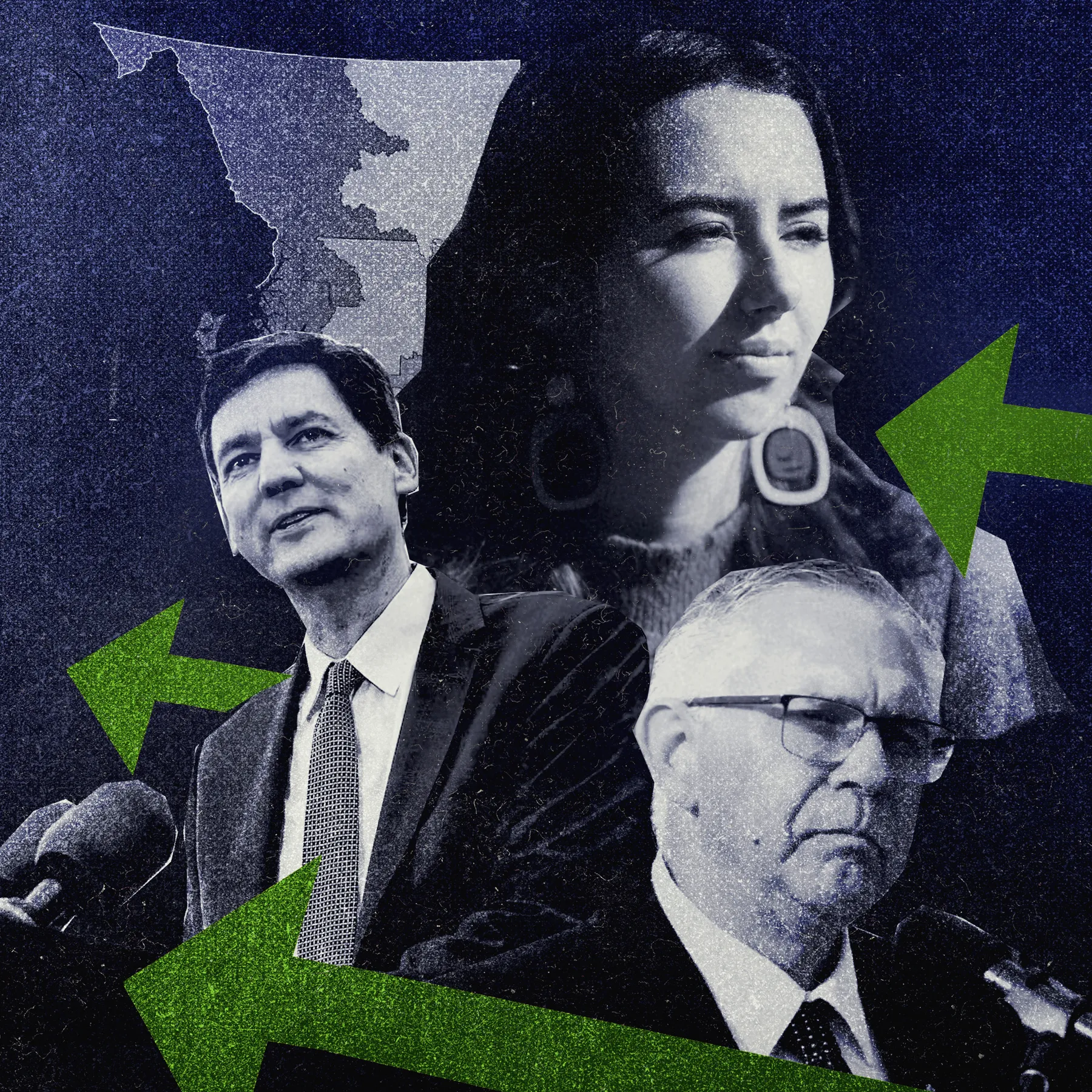
Only two years ago, British Columbians had narrowly voted the B.C. NDP into the legislature. Now, in 2026, they're hitting the polls again this week, with election day on Oct. 24. There are five parties, varying in support on housing, Indigenous sovereignty, health care and taxation — pressing issues for adults and students alike. It's Monday, Oct. 19, and I'm speaking to Leah Grossman, The Ubyssey's technology columnist, about The Ubyssey's editorial board endorsement of the B.C. Greens, party platforms, and understanding your riding's voting history to vote strategically.
Hi Leah, how are you?
Leah Grossman
I'm good. I'm doing well.
Sophie Clark
Welcome to The Vilest Rag. Before we get into the specific editorial today, I want to talk a little bit about provincial elections in general. It's been two years since the last provincial election, which means we're out of the normal four-year election cycle. What's the thought process or strategy behind calling a snap election, and why did Premier David Eby choose to call it so early?
Leah Grossman
I think a lot of it came down to what happened over the summer. Back in May, the Conservatives elected Kerry-Lynne Findlay as leader of the B.C. Conservative Party. She was quite a bit further right, especially on social issues, and fairly unpopular among the general B.C. population. Leading up to when Eby called the election in September, there was a lot of chaos — some MLAs left the Conservative Party, including former leader John Rustad, who got kicked out. Some MLAs went to CentreBC; Peter Milobar had formed his own party and then gone to CentreBC.
There was an enormous amount of chaos among the Conservatives, and more broadly among right-of-centre politicians, and I think Eby wanted to try to capitalize on that. He saw the Conservatives as unpopular and splintering, with a bunch of parties on the right and the possibility of vote-splitting — a good time to try to take that opportunity and get more votes and more seats. The NDP has a majority, but it's incredibly slim, and I think he figured that while everything is so splintered and fractured, they might as well try to capitalize on it.
Sophie Clark
There are five parties, and two are relatively new: OneBC and CentreBC. I was hoping you could go into each party's platform generally. Since it's a snap election, they would have had less time to roll out a solid campaign — what are the key things at issue between parties, and what are they running on?
Leah Grossman
There are five, broadly from the left side of the political spectrum to the right: the Greens, the NDP, CentreBC, the Conservatives and OneBC. The NDP and the Conservatives are obviously the two main parties in B.C. politics at the moment. The NDP is running a roughly centre-left platform — we've all lived through the last decade of an NDP government, and the last few years under Eby. They're running on raising taxes, theoretically for the rich, but also for some people I wouldn't call rich. They're running on increased health care, increased housing — your usual centre-left platform.
The Conservatives are running your usual centre-right platform, really broadly focused on tax cuts. They haven't rolled out a full plan and are missing a lot of policy areas — they really don't have much on housing. Most of their main policies are tax cuts: tax cuts on alcohol, a commitment not to raise any taxes, and a $1,000 tax cut across the board.
They haven't talked about what services would be cut to accommodate those cuts, which is a concern — if you have fewer tax dollars coming in, something has to give. They've talked about "supercharging the economy," a line they used in the debate quite a bit, but it's a fairly vague idea for how they'd cut taxes without cutting services. The Greens are running a pretty solid left-wing campaign focused on taxing the ultra-rich, social housing, affordable child care, affordable expanded health care and affordable transit — all the usual progressive, left-wing ideas.
CentreBC is a brand-new party. They currently have only one MLA, Emily Sturko, and they're running a fiscally conservative, socially liberal campaign — decently progressive on social issues, avoiding a lot of the culture-war stuff, but fiscally back to tax cuts. OneBC obviously has Dallas Brodie. It's also a relatively new party — it didn't exist in the last election, though it's existed for a little while — and they're running a far-right campaign, with a lot of culture-war issues, particularly focused on residential school denial and anti-Indigenous sovereignty. Dallas Brodie came to campus in early 2026 to talk about residential school denial, and there was a protest against her. That's still what OneBC is focused on.
Sophie Clark
To talk about the editorial, specifically what an endorsement is — in a previous podcast episode, we had two other editorial board members talking about AI in classrooms, which was the board's first editorial. I'm sure the deliberative process for an editorial like that is different from an endorsement. Can you explain to listeners what that process was like for this one? I know you did an endorsement last week on the municipal elections too.
Leah Grossman
For the provincial election, we were all coming at it from roughly the same angle — a progressive one. I think we all have reasonably similar politics within the scope of B.C. politics, and the places where we'd disagree are relatively niche. So a lot of our deliberative process was: we pretty quickly narrowed it down. We weren't endorsing CentreBC, and definitely not the Conservatives or OneBC — we were focused on the Greens and the NDP.
Figuring out how to balance between the two took most of our deliberation. We'll talk about strategic voting more later, but we spent a lot of time on that line, knowing that in a vacuum, we'd prefer the Greens — but obviously the Greens can't form government.
Sophie Clark
In your editorial, the board endorses the B.C. Greens. What stood out to you all about the Greens' policy in particular?
Leah Grossman
I think the Greens are best poised to handle most of the issues that are important to British Columbians. One of their flagship policies is to build 26,000 permanently affordable non-market homes. Housing is obviously a huge issue in B.C., particularly in Vancouver and the Metro Vancouver area, and 26,000 affordable homes would make a huge difference for people who need this housing — much stronger than what any other party is promising. We also really like their proposal for free transit in B.C., especially since they're committed to rolling it out to everyone.
They're starting with youth under 25 and seniors, and since most UBC students, especially undergrads, are under 25, this would make a huge difference. So many people commute by bus and SkyTrain every day, especially once the new SkyTrain extension opens in fall 2027, and free transit would save people quite a bit of money.
There's also their policy to publicly cover mental health care, since that's in most cases not covered by the government at all — even the AMS health plan only covers a little over $1,200 a year, which isn't much. Students have a lot going on and are often very stressed; many have other mental health conditions or needs for care, so having it covered publicly would make a huge difference.
Sophie Clark
In the last election cycle, the previous leader of the Greens, Sonia Furstenau, lost her seat in Victoria, and the Greens were elected to only two seats in the legislature. Furstenau resigned, and there was an election for a new Green leader — in fall 2025, Emily Lowan was elected to lead the party. I was hoping you could give a little background on who Emily Lowan is and what her vision is for the province and for the Greens.
Leah Grossman
Emily Lowan is an activist — a climate activist, I think that's what she was focused on before becoming leader. She's really young, only 26; I'm only 20, so she's quite young to me. I believe she's the youngest leader of a major political party in Canada, depending on what you define as major, and she's very progressive. I've seen people compare her to figures like Zohran Mamdani, the mayor of New York City, who's also progressive and relatively young for politics, though not as young as she is. She's pitched herself as a very progressive leader. The Greens took a progressive stance under the prior leader, Sonia Furstenau, and Emily Lowan is definitely continuing that.
Sophie Clark
Do you think Emily's previous experience in activism, specifically climate activism, has prepared her for this role — to be a party leader, or to lead a province, despite being only 26?
Leah Grossman
I think she's not running to lead a province — nobody thinks anyone besides the NDP and the Conservatives has a shot at forming government. The Greens have a shot at a couple of seats in this election. I think activism is a really important aspect of politics, and experience in it is important to have, but it's different from being in a legislature. When you're in a legislature, you have to compromise, especially if the Greens end up part of a minority government — if the NDP wins slightly under the threshold for a majority and the Greens close that gap, they'll obviously have to compromise quite a bit.
Activism often isn't built on compromise; it's built on continuous gains. I still think her experience is really strong — being involved in activism is an important part of being involved in politics, and for a lot of people, it might be the strongest way to be involved. It's an important experience, especially given that they don't have a shot at forming government. The best they'll have is being part of a minority, and she's going to be trying to compromise as little as possible.
Sophie Clark
Split voting is a big issue in certain ridings, specifically when it comes to progressive parties. Between the NDP and the Greens, could you explain the general idea of strategic voting? I think people sometimes have a hard time grappling with whether to go with the platform they align with most, or the lesser of two evils. Why is it crucial for certain ridings to think this way — you talked about that in the endorsement.
Leah Grossman
Strategic voting basically means you might cast your vote for not necessarily the party you most strongly agree with or support. In this case, there are a bunch of ridings that are very safe NDP seats, very safe Conservative seats, and a few that are safe Green seats — we think the Greens are by far the best party to help British Columbians, so in those safe seats, you should vote Green. Then there are seats where it's really a toss-up between the NDP and the Conservatives, where both parties have a real shot at winning. Those are the seats that actually decide the election — that determine whether we have a few more years of Premier Eby, or a few years of Premier Doerkson.
While we think the Greens are the best party, we also think the NDP is quite a bit better than the Conservatives. In the seats that will decide the election, we think it's more responsible to vote NDP, to make sure the Conservatives stay out of power, rather than voting Green and risking splitting the vote so those seats go to the Conservatives.
There were a couple of seats in the last election that were really close between the NDP and the Conservatives, where the margin between their votes was smaller than the vote share the Greens got — seats the Conservatives won, but that the NDP would have won if every Green voter had voted NDP instead. We wish we could just unilaterally say "vote Green, they're the best party," but we also think it's important to keep the Conservatives out of power. So in these close seats, we do think it's more responsible to vote NDP.
[MUSIC INTERLUDE]
Sophie Clark
To talk about the Conservatives and their platform — between the Conservatives and OneBC, it seems like the culture war is a huge part of campaigning in this election, which is interesting when you reflect on the political landscape right now more broadly. The Conservatives recently dropped two candidates over inappropriate social media posts and comments, yet have still kept Heather Maahs and Katie Merrifield. MLA Dallas Brodie came to our campus in January, seeking to hold a debate centred on the existence of unmarked graves outside former residential school sites; she was originally part of the Conservative caucus but was kicked out of the Conservative Party earlier last year, and then founded OneBC. So what does this culture war tell us about British Columbians, and how does it reflect the global far-right political landscape right now?
Leah Grossman
I think you're right — the culture war has become a much bigger part of politics in B.C. and in Canada overall, and I think a lot of that has come from south of the border, in the United States. The culture war is obviously a huge part of politics there, especially with Trump, and I think a lot of that has come up north to Canada. With the Conservatives, like I mentioned, they had Kerry-Lynne Findlay as party leader over the summer — she was a lot further right, especially on these culture-war issues, and that seemed to be fairly unpopular. Now they have Lorne Doerkson, who's technically an interim leader, and he's moderated the party quite a bit. The culture-war stuff is still there — they're still talking about SOGI in particular — but I think they've moderated it quite a bit overall.
Individual candidates are a different story. Like you said, they've dropped two candidates, one of them the Vancouver-Strathcona candidate, which is an indication that they're not willing to tolerate that level of hate speech. But they do have other individuals — Heather Maahs and Katie Merrifield in particular. Maahs is an MLA, and Merrifield is one of the Conservatives' strategists, and both have made inappropriate, hateful comments on social media without being dropped. I think there's still space for these much-further-right individuals within the party, even though the party's image as a whole has been moderated under Lorne Doerkson.
Then there's Dallas Brodie, who isn't part of the Conservatives — OneBC's whole brand is built around these culture-war issues, and OneBC isn't polling very well. It's hard to get polling for individual ridings, but overall, they really aren't polling well. I think these culture-war issues probably aren't particularly popular among British Columbians — we're seeing the Conservatives under Lorne Doerkson polling a lot better than the Conservatives under Kerry-Lynne Findlay were, which suggests that moderating those topics has helped them quite a bit. But the culture war is still here.
I think it's part of a broader sentiment of everything happening in the U.S. and globally, where there's a lot of culture-war issues. Some of Canada's are unique — a lot of the culture-war stuff here, especially with OneBC, revolves around Indigenous people, which isn't part of the conversation in most other Western countries. As a whole, the culture-war issue is still very much alive in B.C., and even though the Conservatives have moderated, it doesn't look like it's going away.
Sophie Clark
I think it's worth touching on DRIPA, since you mentioned that a lot of OneBC's campaign revolves around Indigenous sovereignty. Both the Conservatives and OneBC are planning to repeal DRIPA, which has to do with private property ownership, but is also a cultural issue, especially for OneBC. What would it mean for the province and Indigenous communities if DRIPA were repealed?
Leah Grossman
DRIPA — the Declaration on the Rights of Indigenous Peoples Act — is an act in the B.C. legislature, passed under the NDP, that effectively implements the UN's Declaration on the Rights of Indigenous Peoples (UNDRIP). It's been quite controversial. I'm not an expert on DRIPA, but as I understand it, it's essentially focused on making sure that what the government does is in line with First Nations and Indigenous communities — making sure they're consulted and respected — and the act provides a legal framework to hold the B.C. government to account on that. There's been a lot of fearmongering about whether it threatens private property, whether it will take property away.
The NDP has sort of waffled on DRIPA — they were in support of it, they passed it, but they've also talked about amending it, going back and forth as the political winds have changed. The Conservatives and OneBC both have repealing DRIPA in their platforms, largely because of that fearmongering about private property. For OneBC especially, it's tied in with the broader culture-war stuff — unmarked graves, residential school denial, all of that.
I think DRIPA is really important — respecting Indigenous communities and First Nations in the province is really important. Where the Conservatives are coming from is that it threatens major projects and investments in the province, but if those projects are working around Indigenous communities, that's not good for those communities. There might be cases where DRIPA adds a bit more red tape to make sure things are done in collaboration with First Nations, but it also holds the government to account.
If you repeal DRIPA, the government might still choose to collaborate with Indigenous people and say they're reducing red tape but still approaching things the right way — but they don't have to. I think that's the strongest part of DRIPA: it forces the government to work with Indigenous communities.
Sophie Clark
My last question is a broader one about elections and B.C. politics. Every election cycle or two, the pendulum swings, but the race is always between the Conservatives and the NDP — federally, it would be between the federal Liberals and the federal Conservatives. Why is this such a fundamental part of our Canadian political system, even though we aren't a two-party system?
Leah Grossman
The way Canadian elections work, provincially and federally, is through a system called first-past-the-post. No matter how many parties are running, the candidate who gets the most votes wins — they don't have to get half the votes, and there's no ranking of candidates, so you just vote for one out of however many there are. In this case, up to five, and whoever gets the most votes wins. That could be 30 per cent of the vote — we saw this in Quebec recently, where there were five parties in the election, and the winning party, the Parti Québécois, got under 30 per cent of the vote overall and very nearly got a majority of seats, falling only slightly under the threshold.
I won't get too deep into the theory, but this electoral system pushes people toward a two-party system. We're endorsing the Greens, but telling people that if they're in a close riding, they should vote NDP — that reinforces the two-party system, because we're saying, "We want to keep the Conservatives out, so you have to vote for the party that's maybe not the best, but is the strongest to keep the Conservatives out," which is the NDP, and that hurts the Greens.
The Greens are very much in support of electoral reform. Proportional representation has been talked about a lot in Canada — it's effectively where the number of seats a party gets in the legislature is proportional to its vote share. In this case, if the Greens get 10 per cent of the vote, which is roughly where they're polling, they'd get 10 per cent of the seats in the legislature instead of just two.
First-past-the-post is used in some other countries around the world. You see it strongest in the United States, where you have the Democrats and the Republicans, and basically every other party is irrelevant — there are a few independents who generally align with one of those two parties. The U.K. also uses first-past-the-post; their third parties are a bit more alive and capable there, though prior to the last couple of years, it was mostly between Labour and the Conservatives. Australia mostly uses first-past-the-post too, and it's mostly between Labor and the coalition of two right-wing parties that work well together. So in most places with first-past-the-post, you get a roughly two-party system.
Third parties exist and can get some seats — federally, there's the NDP, there's the Bloc, and the federal Greens have one seat — but the system really reinforces a two-party dynamic, and we very much see that in B.C., where the Greens are likely only going to get a couple of seats, and CentreBC and OneBC might not get any. With a different electoral system, the NDP and the Conservatives would probably still be the main contenders to win, but the other parties — the Greens, OneBC, CentreBC — would be a lot more equipped to pick up seats. This is just how our elections work, and it could be changed, but the people currently in power generally benefit from this system, so it's not in their interest to change it.
Sophie Clark
Thank you so much, Leah. I think it's important to differentiate editorials from news — our news section has been doing a lot of coverage on the provincial election this coming week, and this podcast is our board's endorsement. The board represents us generally as a publication, but this is an opinion-based board, and I hope students take it into consideration while understanding there was a real deliberation process behind the choice. Thank you for coming on to represent the board today.
Leah Grossman
This is why the editorial board exists. We're very isolated from the news side — we don't influence their coverage, and they don't influence ours — but we want to do this deliberation and give our audience a well-thought-out, well-formulated, fact-based opinion that isn't biased by political parties interfering with it. It's a different way to inform people than news, which is also obviously incredibly valuable.
Sophie Clark
Thank you.
[THEME MUSIC]
Before we go, let's take a look at this week's stories. In News, immigration reporter Ishita Sharma writes about the CBSA's investigation into the immigration statuses of four people at a protest in Calgary, raising concerns for university students' migrant rights. In Arts and Culture, theatre critic Zachary Kanevski reviews Arts Club's B.C. premiere of "Heist." In Sports, deputy sports editor Sofia Campanholo writes on the talent produced by UBC's rowing program and the team's history.
In Opinion, Astrid Maiz discusses the infrastructure of UBC's reusable container program, Friendlier, in her debut column, Degrees of Change. You can find all these stories and more at ubyssey.ca, which publishes every day. In today's episode of The Vilest Rag, you heard from Leah Grossman, The Ubyssey's technology columnist, and myself, Sophie Clark, The Ubyssey's audio producer. This episode was edited by Sophie Clark, and the music is by Dylan Fitzhenry.