

Before the tip-off of their first game, Women's Basketball is already facing a plethora of challenges.
Nearly half of last season's roster has graduated — including their top four scorers. Rookie point guard Amanda Guss, who was projected to fill a starting role, was injured for the year early in the preseason. The roster is full of new faces, all with brand-new roles and responsibilities.
But they've been here before.
Heading into last year, they had lost their head coach, Isabel Ormond, and the reigning U Sports rookie of the year, Keira Daly, to McMaster. Their top scorer, Mona Berlitz, didn't play a game due to injury. They were dealing with a lot — and at least to start, their play reflected it.
After winning their first four games, they hit a rocky stretch, losing four out of five games — teetering on the edge of a losing record. But they didn't quit.
The T-Birds were able to fight back, winning all of their remaining games to finish 16–4 on the season, securing the top seed in their conference. Outscoring their opponents by over ten points per game, the team stood their ground among the best in the West in scoring, rebounding, and controlling the paint.
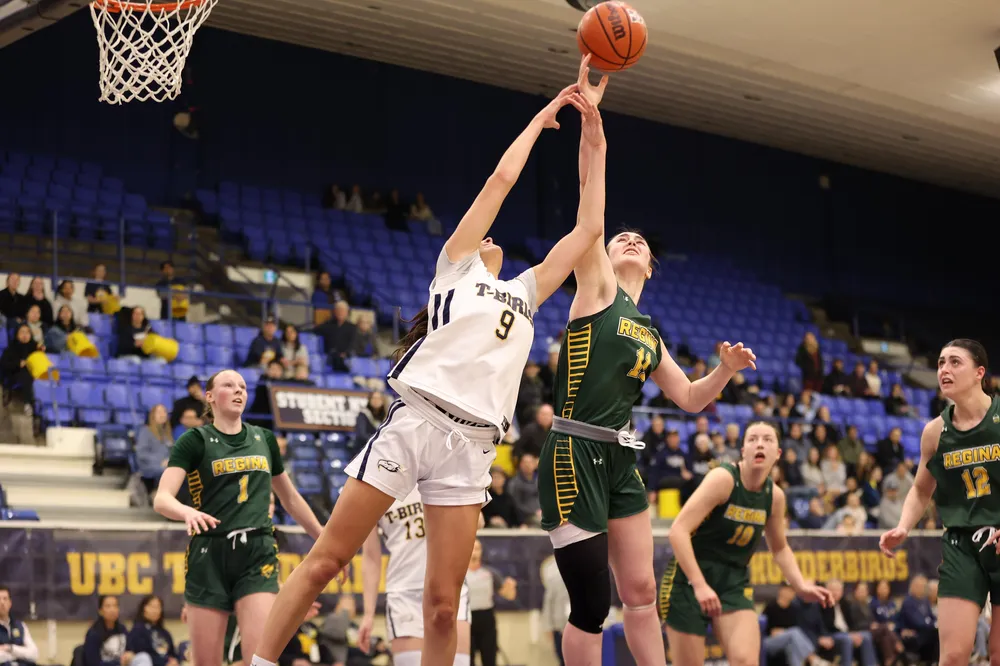
UBC fought through a rough start, winning 11 straight to end the regular season.
They couldn't finish the job — falling to the Calgary Dinos in the Canada West finals before a pair of losses at nationals ended their season — but they proved they were resilient.
Despite everything they have had to endure, they still competed at the highest level.
"There are eight or ten teams in the country with the talent to win," said head coach Dave Taylor. "We are one of them."
Much like last year, the team begins the season on uncertain terrain. This time around, however, they have consistency in their leader.
The T-Birds have had four different coaches in the last five years. That's a coaching change nearly every other year — so when Taylor came in, he focused on not adding to that turmoil. He adapted to the team, instead of having the team adapt to him and his coaching style. Now, with a year under his belt, he has more ability to craft the team's identity.

This started with recruiting. Taylor brought three high-profile rookies to help complete his roster — guards Amanda Guss and Sadie Danks, as well as post player Alfreda Okolie. However, early injury struggles have afflicted all three.
Guss suffered a season-ending injury in the preseason. Danks could help fill that sudden lack of guard depth — once her various injuries have healed. As for Okolie, Taylor is confident that she will be a core part of their top seven or eight when she is fully healthy from her nagging injuries.
While Danks and Okolie should eventually return, the loss of Guss is a big one. "She's an awesome player ... I'm upset I don't get to play with her, because I loved having preseason with her," Berlitz said.
It's yet another unexpected hurdle for the team to clear. But part of Taylor's responsibility is building the kind of system that can persevere through those obstacles, and find success regardless.
For Taylor — especially in a conference as competitive as Canada West — that success is dependent on the fundamentals.
Against tough competition, it often comes down to the team that does the little things better — the team that doesn't give up possessions because of mistakes.
"It's [about] how much you improve on your weaknesses and accentuate your strengths," said Taylor. "Nobody’s ever going to completely get away from ... [their] weaknesses, it's just: 'can you get better at them?"
For this team, it will come down to consistency; Taylor's key focus this year. They have the talent, but what matters is building a strong foundation throughout the year, and perfecting those details over time. "The talent alone does not win it for you," Taylor said. "It's how much you improve."
It's something his star player is on board with as well.
"The little things build the foundation to have success," Berlitz said. "Everyone works 100 per cent every day in practice, wanting to get better, setting the baseline.."
Coming in at No.8 in the U Sports preseason ranking, Women's Basketball is looking to use this point not as a resting point, but as their starting place.
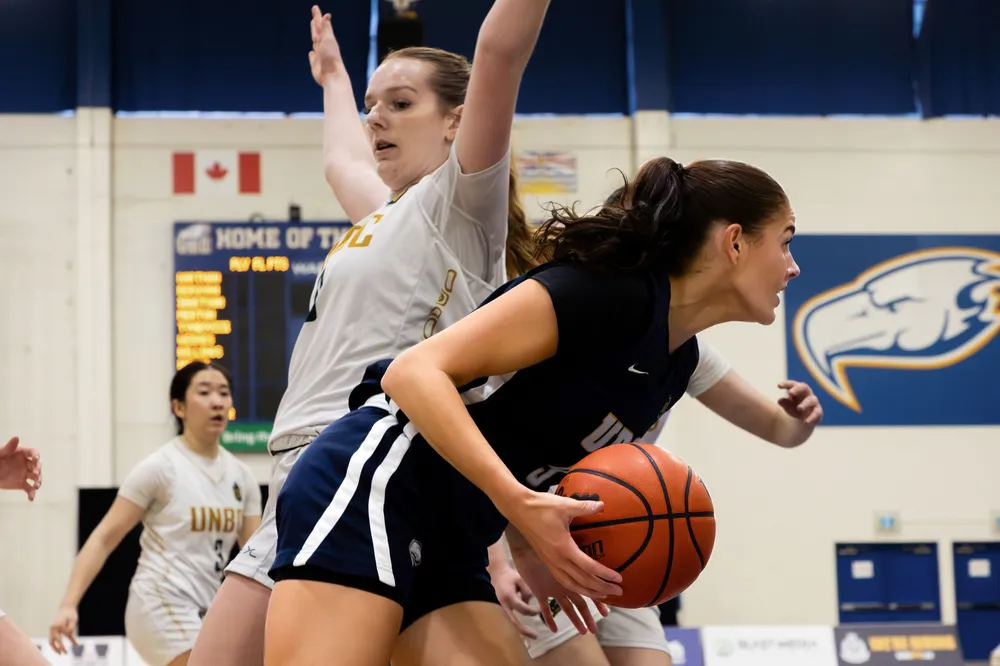
Olivia Weekes (#9) is one of the biggest losses for UBC this offseason, filling in for Berlitz last year as the team's leading scorer.
Taylor knows they have what it takes to bring a championship to Vancouver — he's seen it in practices, preseason, and in their connection off the court. They just need to execute.
They'll get a boost — possibly the biggest defining factor for the Thunderbirds this year — from the return of their shining star, Berlitz. The all-Canadian and two-time Canada West All-Star was expected to be the team's main scoring threat last season, but she tore her ACL in the preseason and missed the year. Olivia Weekes took her role as the player UBC relied on in crunch time — but now, with Weekes gone, Taylor is counting on Berlitz to be that person once again.
"She's that player who can get you a bucket when you need it ... it doesn't matter if you plan for it or not, she's going to get her points," Taylor said.

While rehabbing, she stayed in Germany for the first term of the academic year, before returning to campus in a different role — leading from the bench.
"I feel like I'm grounded in gratitude more," Berlitz said. "[The bench] gives you another kind of appreciation for the game."
After her injury, Berlitz has a new perspective on the game. Knowing how limited her time on the court could be, she's learned to enjoy every rep, every practice, and every game.
Throughout her recovery, her teammates were constantly checking in on her — her fellow fourth- and fifth-years, specifically. For Berlitz, having them to lean on and share her struggles with was a huge factor in her mentality during recovery.
In her first action since her injury, all eyes were on Berlitz in the preseason. She delivered. Even in limited minutes, she put up more than ten points per game, contributing to a solid preseason run by the Thunderbirds, who ended their exhibition stretch 5–2.
Now back on the court with her teammates, Berlitz isn't just coming back as the team's top offensive threat. She's coming back as a leader. "I'm one of the oldest players with a lot of experience," she said. "I'm not a very vocal leader, I lead more by doing." She knows that her teammates are relying on her to be calm and consistent, while also being a positive influence on the younger girls on the team.
The team can't to be consistent in the way Taylor needs them to if they're not in it together. As a leader, Berlitz is helping facilitate that trust, which she sees as their biggest strength, especially for the team's veterans.
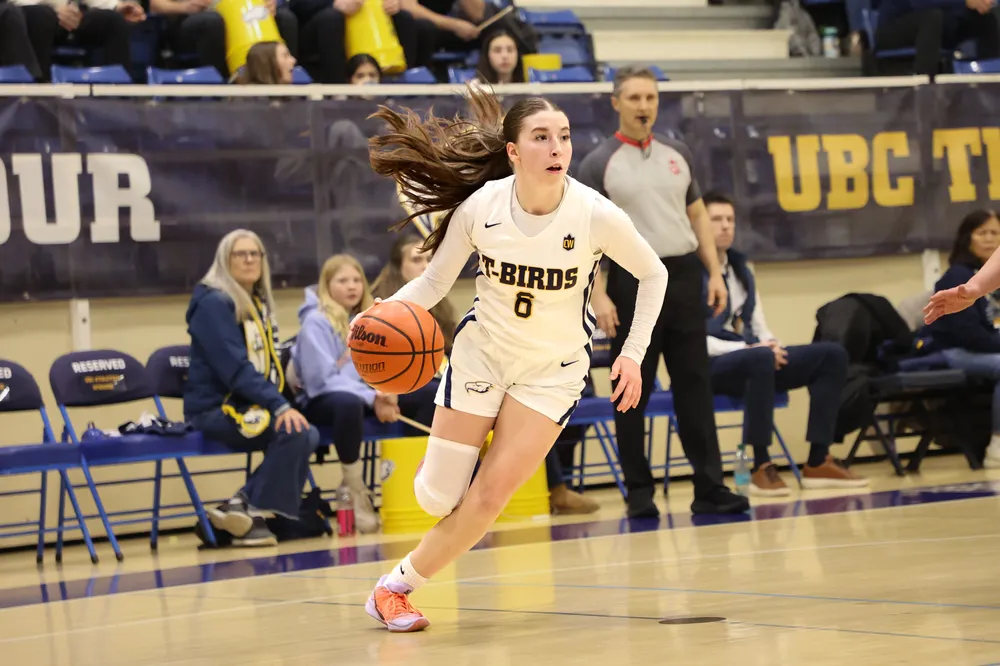
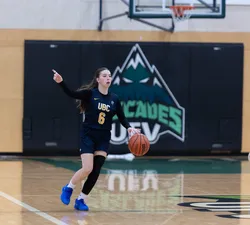
Cerys Merton (#6) is one of the team's veterans this season.
"You get so used to them and know how to rely on them ... I feel like we have a core fifth-year group," Berlitz said.
They'll also have to develop a new connection with someone who's expected to be a big contributor this year: forward Amy Stinson, a grad transfer from McMaster University. Berlitz described Stinson by saying that she "brings a lot of positivity." Being an exceptional shooter, she'll take a little bit of the weight off Berlitz, who's excited to play on the same team with such an experienced, reliable player.
This time last year, Stinson thought her time on the court was through. Now, as the T-Birds gear up for another season, Stinson will be a key part of it.
After graduating, Stinson became acquainted with the UBC women's basketball team through its practice squad, being a redshirt on the roster last year. She only has one year of eligibility remaining, but after learning the team culture and getting to know her teammates, she gets to compete one last time.
With four yearsof varsity experience under her belt, Stinson was able to slot herself alongside the other veterans on the team, as an experienced leader.
"I like to consider myself a team player," she said. "I really like to pride myself on that team game."
Despite it being her first year on the team, Stinson is leaning into this role as a leader — as much off the court as she is on it.
"I just try to be consistent every day and bring a smile, bring positive energy, because you never know what everyone else is going through,” she said.
On the court — on top of being a big three-point shooter — Stinson is aiming to focus her energy on the team as a whole, incorporating as many people as possible into every possession by being the loudest talker on the floor. It's about using her experience in the mental aspect of the game to push the team past the postseason hurdles that tripped them up last year.
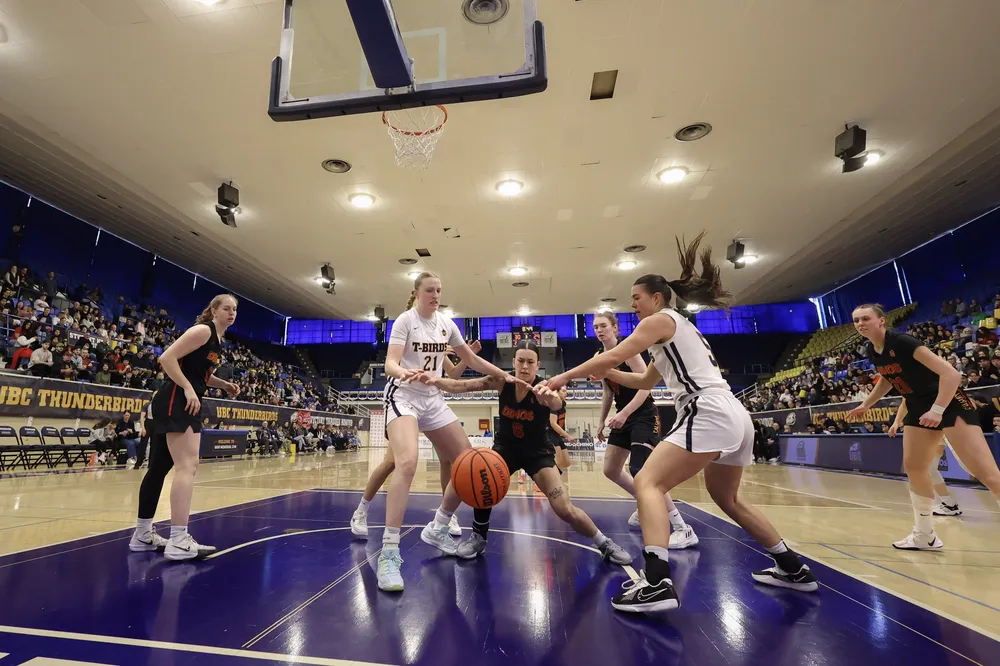
UBC fell short in the playoffs, first against Calgary in the Canada West Final.
Having played against her fair share of nationally-ranked teams, Stinson is no stranger to what it takes to make it to that level — despite never having been to nationals for herself while at McMaster.
Last year, UBC's season ended in a 68–66 loss against Toronto Metropolitan University. Between losing momentum in the third quarter and a lack of execution on the final shot the team was unable to prove they had what it took to win. This year, Stinson is looking to change that.
"Having that experience and being able to have poise on the court is really important — especially in close games," she said.
In Stinson's mind, the secret to a victory is not solely found in running reps or a diligent practice regimen. Instead, the forward believes the answer lies within the heart of the team and its players.
"Not one player is the same as the person next to them, which I think ... makes us better," she said. "Every person brings a different game, but we all complement each other really well."
While Stinson is bringing experience, this is still a young team figuring out a new dynamic. But heading into the season, they're not focused on replicating the talents of the eight graduating seniors. They're carving something out for themselves.
"[I'm] not trying to be what they lost, but just trying to be what I can bring to the table,” Stinson said.
Perhaps that's the key to understanding this team. For any other group, it would be easy to fold amid the constant, churning change they dealt with. But for this team, they're not defined by what happened before them.
They push through, sticking together through all of it. All that matters is what's on the court in front of them.