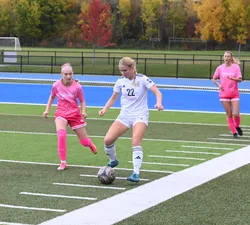

To prepare for their 2026 campaign, the UBC women's soccer team played four preseason games in Portugal and Spain. The T-Birds had a unique opportunity to test themselves against professional players and experience a different style of play.
But an international preseason tour is hardly standard for a university sports team. How did the T-Birds make it happen?
There are 26 T-Bird varsity programs and 17 Thunderbirds Sport Clubs on campus — and there's one thing they all have in common: travel demands. Teams travel for preseason competitions, regular-season road games, and for those that qualify, national tournaments (which is something UBC teams do regularly).
Every Thunderbird sport has its own schedule, competition, and travel requirements, while also competing in different levels. This means that, behind the scenes, a significant amount of work happens before athletes ever board a bus or plane.
For most U Sports varsity teams, that work starts with the coaching staff.
For Mike Mosher and Jesse Symons, the head coaches of the men's and women's soccer teams, respectively, planning begins months before the first whistle. Soccer is one of the first sports to start its season, usually kicking off before classes begin in August or September. This season, men's soccer started on Aug. 27, while the women's team opened on Sept. 4.
For most Canada West teams, the regular season means travelling throughout B.C. to face Pacific Division opponents, with some sports such as basketball, also travelling to compete against teams in the Prairie Division.
For the soccer teams, that means trips to nearby opponents like the Trinity Western University Spartans in Langley, as well as much longer journeys north, like to face the University of Northern British Columbia Timberwolves in Prince George.
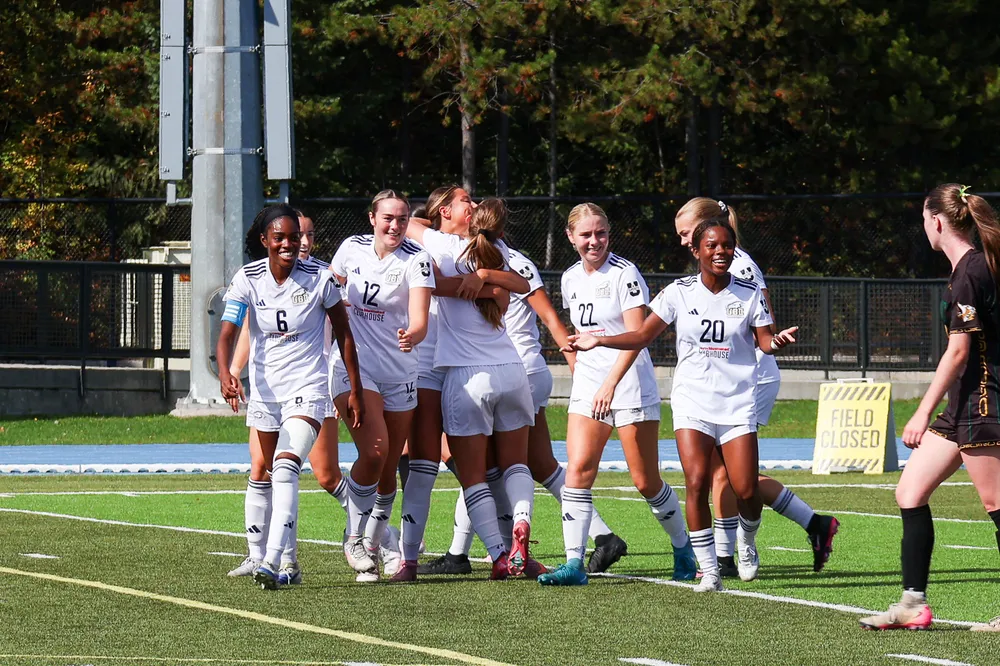
While UBC doesn't typically fly out to games, for longer trips like the one they had to make up to Prince George earlier this season, they'll board a plane.
Each trip requires its own logistical plan. For the 2026 season, the public schedule was released onJune 22, but Mosher and Symons typically receive a first draft in March — and with that, focused-season training starts.
That early access gives the programs weeks to plan before the schedule becomes public and the pre-season starts. Planning starts with three basic questions: where are we going, when do we need to be there, and how are we getting there?
This is more than a list of teams and times. Depending on how far they are travelling, the answers determine everything from whether a team travels the day before or the morning of to whether it needs a hotel, a practice facility, a bus, or a flight.
For most Canada West games, the men's and women's soccer teams travel by bus. The only exception is UNBC, which requires the teams to fly to Prince George and arrive the day before the game. Trips to Victoria, Langley, and Abbotsford can typically be completed in a single day, while games in the Interior generally require an overnight trip.
The women's team opened the 2026 season with four straight road games, putting the planning to work immediately. They travelled to Kelowna to face sister school UBC Okanagan on the opening weekend before heading to Langley to play the Spartans, without returning to Vancouver in between. The team came out of that stretch 4–0.
Once coaches determine where and when their teams need to travel, UBC Athletics takes over much of the logistics. That includes booking flights, buses, and hotels, as well as arranging travel insurance for players and staff..
Regular-season travel planning can sound complicated, but for coaches who have been doing it for years, much of it becomes routine. Mosher and Symons have been in their roles for quite a while, with Symons in his 10th season and Mosher in his 31st — the travel is nothing new.
"It's a little bit of rinse and repeat," said Mosher. "There are certain consistencies to the schedule each and every year."

UBC Men's Soccer coach Mike Mosher is no stranger to arranging travel, having been with the team for three decades.
But not every Thunderbird team follows the same formula.
For varsity programs that do not compete in U Sports, regular-season travelling looks very different. For UBC softball, a team that competes in the National Association of Intercollegiate Athletics (NAIA), every road game requires an international border crossing to the United States.
That creates a different set of logistical challenges — the planning still starts with the coaches, but the calendar looks very different from soccer.
Softball's season begins in February and the regular-season schedule is usually confirmed in August of the previous year.
To allow even more time for future planning and preparation, the NAIA publishes projected schedules for three to four seasons at a time. This is because the NAIA runs a three-year cycle, where teams play the same opponents in the same order for three seasons, with only home and away games alternating. Although changes may arise as a season approaches, this structure allows coaches to have a good idea of what's coming .
Once the schedule is out, planning can really start. Softball head coach Jennifer McKellar, like Mosher and Symons, creates the itinerary for all team travel. For UBC softball, most if not all travel is done by bus to avoid potential complications with air travel. This can lead to some longer trips than most teams would embark on, with their average trip lasting around 10 hours, but McKellar and the program consider it the best option.
Most often, the softball team will travel a day early by bus, sometimes splitting the travel time between the day before and the day of a game. They then play two games against their host team and will usually head home in one trip.
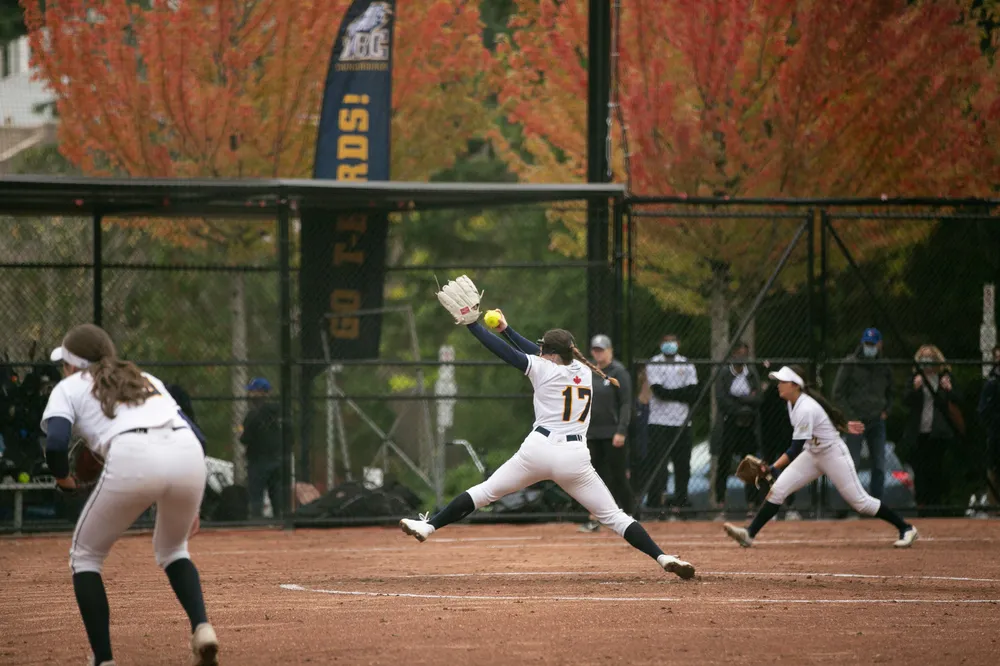
For Softball, and all other NAIA teams, they face the extra wrinkle of having to play the majority of their road games in the United States.
Potential complications with air travel include more than just weather, such as where their games are located. The T-Birds often travel to small U.S. cities with no major airports nearby, so busing is the best option.
The logistics of planning travel for varsity sports are designed to prioritize the athletes whenever possible. This includes choosing between flying and busing based on what will best prepare players to compete. For softball, that can mean making the long trip home in one go so players can rest at home after their games.
This design also means keeping in mind the student part of student athletes. When travel affects academics, UBC Athletics and the programs plan for potential conflicts.
Of course, players are responsible for being available for team travel, but they have ways to mitigate situations where they might miss anything for school.
At the beginning of the season, every varsity student athlete gains access to a letter of concession for their professors. This allows them to inform their professors of all their travel plans and any potential conflicts well in advance.In cases of conflict, the letter, alongside the support of UBC Athletics and the coaches, can help athletes to find alternatives.
For some athletes, this looks like taking exams on the road or finishing assignments on the team bus. Symons notes that his role as a full-time staff member sometimes includes invigilating exams to allow his players to fulfill both their academic and athletic responsibilities while travelling with the team.
In terms of financing team travel, this is never truly a burden on the varsity athletes. For all regular-season or playoff travel within Canada West, U Sports, and NAIA, UBC Athletics covers the cost. This includes busing or air travel to the destination, hotels if necessary, travel within the away team's city, per diem expenses for food, and other costs.
Any travelling in the preseason, however, is a different story.
The women's soccer team's preseason travel to Portugal and Spain is one example of the travel opportunities that Thunderbird Sports can take on. Preseason travel is planned slightly differently, in that more responsibility for the logistics is placed on the coach.
UBC Athletics does not fund preseason travel. Programs will instead do various fundraising initiatives like Back the Birds, a 24-hour crowdfunding event for varsity sports that took place on Sept. 15 this year.
Although students will likely take part in the fundraising efforts, the burden of financing and planning trips is still not placed on them.
Similar to regular-season travel, it is still the coach's responsibility to organize the itinerary of the trip. This time, without a set playing schedule to follow, they have flexibility to figure out who they are playing, when they are playing, and what sort of travel it requires to get there.
For the women's soccer team, Symons organized four games in southwestern Europe ahead of their 2026 campaign to give the team an opportunity to prepare and build chemistry.

Women's Soccer coach Jesse Symons planned a longer trip for his team this offseason, heading to Portugal and Spain in the offseason.
Women's soccer is not the only team to take advantage of overseas preseason travel opportunities. For example, in 2017 and 2019, men's soccer were able to travel to China when a school in Beijing hosted a large tournament and mostly subsidized travelling expenses for competing teams.
These unique preseason opportunities are not only limited to overseas trips. Both men's and women's soccer regularly compete against NCAA Division 1 schools in the United States.
Of course, for softball, travel to the U.S. is the norm, and so their preseason travel opportunities more closely resemble their regular-season play.
Preseason travel for any varsity sport offers a unique chance for teams to face programs with different playing styles than they are used to and can improve a team without the pressure of regular-season standings. As such, many coaches, including Mosher, Symons, and McKellar, put significant effort into giving their programs strong preseason opponents to face off against.
Fundraising is certainly a significant part of varsity sports at UBC, but they aren't the only ones who have to fundraise to travel.
If you've ever seen a Krispy Kreme fundraiser on campus, it was likely run by one of the Thunderbirds Sport Clubs teams.
Unlike varsity sports, TSC teams are student-run and self-funded. For them, fundraising is not just a preseason task — it is a major part of how they fund travel throughout the season. For the UBC sailing team, for example, there is significant planning behind both the logistics and the cost of getting athletes to competitions.
Unlike travel planning for varsity sports, the responsibility does not fall to the coach. TSC coaches serve more as additional support for their teams than as the primary decision-makers. Instead, a team of executives run the club, making sure it can operate and sustain itself from season to season.
The sailing team competes in both the Canadian and international circuits: the CICSA conference in Canada, and the ICSA conference, which competes in the United States. Before the season begins, the club lead talks to both organizations to see what regattas or competitions are available for the team to compete in. Once this information is gathered, the team's travel & safety officer, Emma Partyka, can begin planning.
Partyka is entering her third year in the role and has a lot of responsibility for organizing the team's travel.
With support from her team of executives, Partyka determines which regattas the sailing team will attend and handles the logistics of getting there. This requires planning transportation to and from each regatta, usually renting cars with help from the TSC office. She also makes certain all athletes are insured for travel. Finally, she makes sure athletes have accommodations if needed, usually through reciprocal billeting with host teams.
While Partyka submits travel plans at least two weeks in advance, some competitions are planned much closer to the event than others. For example, sailing's first regatta of the 2026–27 season is Keelboat Nationals on Sept. 26. Because the regatta takes place before the club has had much time to onboard new athletes, only returning athletes can compete.
Not every sailing athlete travels to every competition. Usually, the club sends eight to 10 athletes, plus backups, to compete, along with one or two executives to compete and support the team. The sailing club travels all around Canada and throughout the United States, even going as far as Hawaii for a three-day regatta in Honolulu.
But travel is only one part of being a student-athlete. "One of our top priorities is being a student, and then the athlete comes second," said Partyka.
For the sailing team and other TSC clubs, the most challenging aspect of travel is often the cost. Partyka notes that they always try to keep expenses down for athletes, understanding that university already costs enough.
Through fundraising and team fees for the athletes, they try to cover as much as possible. Unfortunately, this doesn't cover all travel costs, so athletes sometimes have to pay for their own flights when necessary to travel to competitions.
The planning and effort that goes into sailing's travel throughout the season, led by Partyka and the rest of the volunteer executives, demonstrates their commitment to the sport — and how much work it takes to make competition possible.
For Thunderbird athletes, travelling to compete is a privilege, but it is also a logistical undertaking. Whether they are varsity athletes or part of TSC, coaches, staff, and student executives put in work long before teams board a bus or plane.