


There's a difference between good and great.
Throughout this season, UBC has proven that they are a good team. They've beaten two top-ten opponents. They went 3–1 in their last four games.
But their opponents on Saturday, the Saskatchewan Huskies, are great and they have been for nearly a decade now. Since head coach Scott Flory was hired in 2017, the Huskies have won the Hardy Cup four times, including last year, and after going 2–6 in his first season, Saskatchewan has had a winning record every year.
They've been consistent, something UBC has been missing. The Thunderbirds came into this year needing to prove themselves. The Huskies don't need to convince anyone of anything.
The T-Birds haven't won in Saskatoon since Flory's first year as coach in 2017, and while they've performed better at home, they were still 2–9 against the Huskies in the 2020s heading into this game.
The Huskies have eliminated the 'Birds in the playoffs four of the last five years. They're UBC's bogeyman, an ever-growing monkey on their back, a continuous impediment to conference and national championships.
But in order to be the best, you have to beat the best. Despite how well UBC has played this season, despite how impressive their turnaround has been, in one regard, little has changed.
They still can't beat the Huskies.
In Saturday's 34–24 loss, for most of the game, UBC outplayed Saskatchewan, but they were undone by a few critical plays: an onside punt they couldn't recover, an offside penalty on a field goal attempt, and a missed opportunity to scoop up a fumble.
The bounce of a ball. A slight twitch at the line of scrimmage. The smallest of errors — things that are easy to write off as "unlucky" or "a fluke."
But for a great team like Saskatchewan, it's not luck. They play for those moments. They wait to capitalize on the minutiae, to find an edge wherever they can, to win in the margins.
UBC's got the big picture, but they don't yet have the details. They played well in this game — but they deserved to lose.
Greatness doesn't allow for excuses.
This loss shouldn't be blown out of proportion, especially when put in context with the rest of UBC's season. For them to even be competitive with Saskatchewan, given where they were last season, is incredibly impressive.
These two teams played three times last year, twice in the regular season, and once in the playoffs. The Huskies won all three by a combined score of 101–31, utter domination that was exemplified in their first matchup of the year, where Saskatchewan beat the 'Birds 51–14, UBC's third-worst loss since head coach Blake Nill joined the team in 2015.
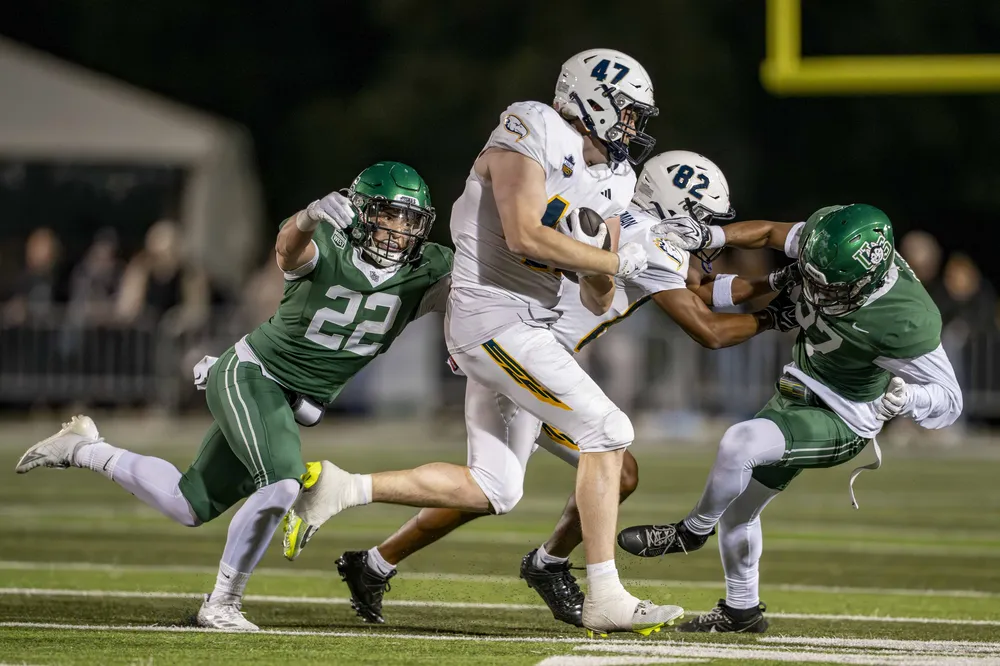
Saskatchewan has had UBC's number throughout the last decade.
UBC has closed that gap now, and despite the loss, it's something to celebrate. But they also could have done more.
Near the end of the first half, UBC not only had the upper hand, but a chance to start putting the Huskies away early, with a 14–3 lead with less than three minutes left in the quarter.
It was a lead that could've been even bigger. On a drive midway through the second quarter, offensive coordinator Khari Jones dialed up a deep shot for quarterback Drew Viotto, who launched a bomb from midfield to the five-yard line, dropping the ball right between three Saskatchewan defenders.
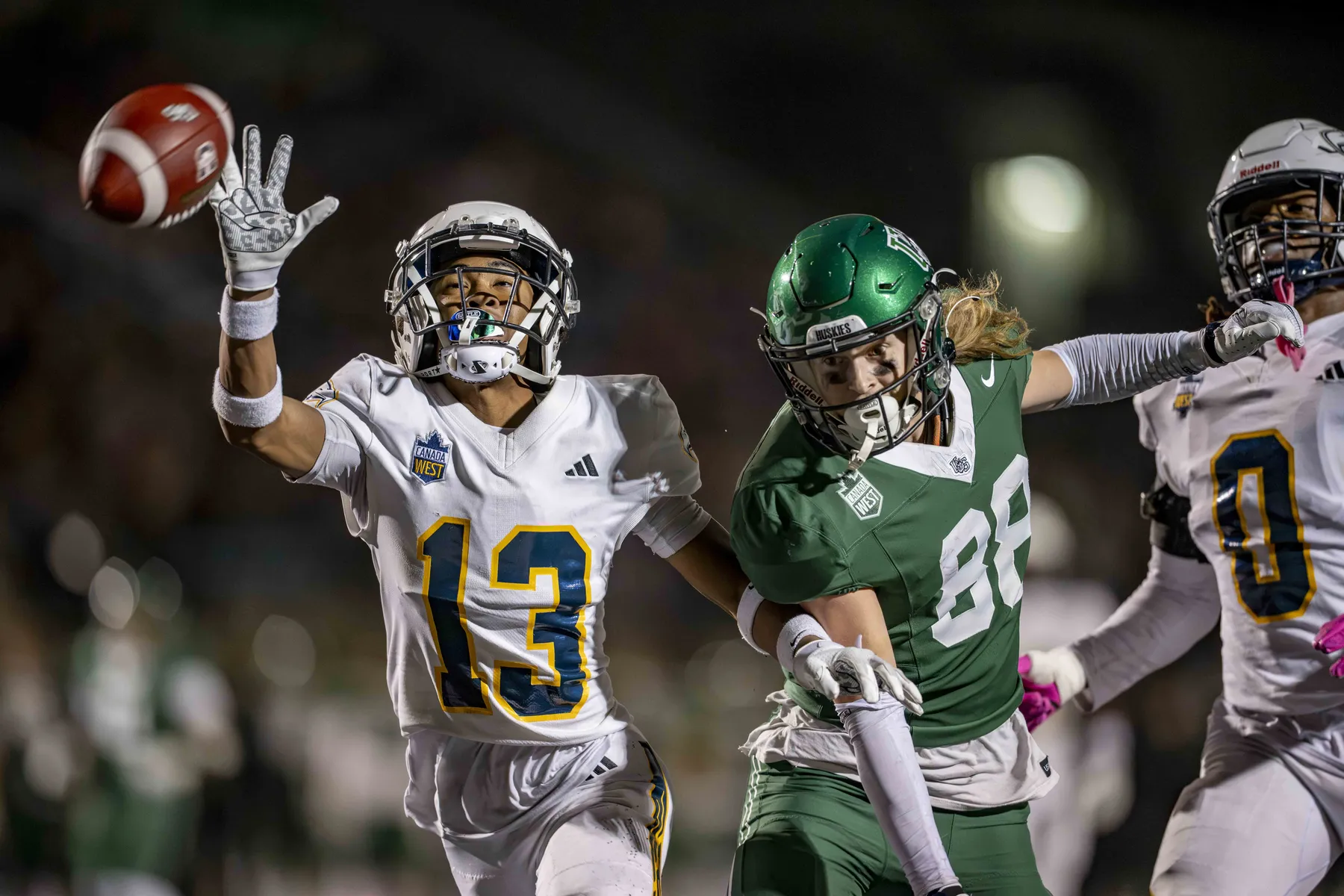
It wasn't a perfect throw — wobbling in the air as it came down — but it hit the hands of his receiver, Barron Miles Jr., who leapt up to make the catch. The ball hit the ground.
The incompletion would force UBC to punt, and while they'd pin Saskatchewan inside their own ten-yard line, it felt like a massive missed opportunity. To go up 21–3 in an environment where you haven't won a game in nine years would have been an impressive statement — keeping the Huskies at arm's length with a three-score lead. Instead, they got nothing, and things worsened quickly.
On the first play after UBC's punt, the 'Birds were caught flat-footed, with Saskatchewan quarterback Anton Amundrud finding receiver Rhett Vavra wide open nearly 40 yards downfield with room to run. Vavra rumbled downfield until being tackled at the UBC 40-yard line, a 62-yard pass that flipped the field and put the Huskies in scoring position.
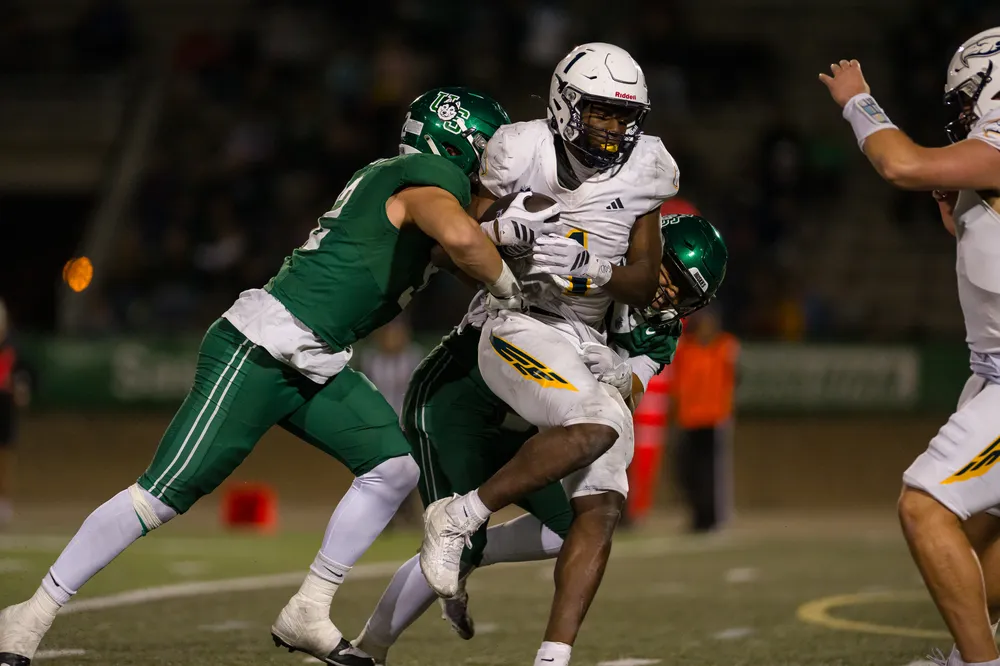
The 'Birds had a golden opportunity to go up 21–3 in the first half, but they blew it.
It was a strange error from UBC's defence, with the play call leaving the secondary out to dry. As the 'Birds rushed five, the three short zone defenders stuck to within five yards of the line of scrimmage, despite all of Saskatchewan's receivers having cleared that area of the field. That left a numbers advantage for the Huskies deep, and they took advantage.
But UBC's defence, the strength of the team this season, held up after that mistake. Saskatchewan went backwards on their next two plays thanks to a holding penalty, and they were forced to settle for a field goal. Or so the T-Birds thought.
Reaching deep into their bag of tricks, the Huskies motioned into a punt formation after setting up for the field goal, keeping three players onside when the ball was kicked, going for the recovery to keep the drive alive. But the Huskies didn't even need to keep players onside. UBC was caught so off-guard by the surprise punt that the ball hit a 'Bird in the back on the return, bouncing right back to the Huskies. First down.
Saskatchewan would convert for a touchdown, closing UBC's lead to 14–10 with 1:39 left in the half.
Most of the plays that led to that Saskatchewan touchdown were things you can't really practice for. An ill-timed drop. An onside punt. A coverage bust. Unfortunate one-offs. But the Huskies took advantage. Again, it's in the minutiae, in the margins, where the Huskies are great.
Another hallmark of a great team? Resilience. Despite the prior series going as poorly as it possibly could have, UBC still had the lead. With less than two minutes left in the half, even if the 'Birds could get a few first downs and take the lead into the third quarter, they could still feel good about their performance.
Instead, they crumbled. In their own territory, Viotto threw a back-breaking interception, sailing the ball over his intended receiver and into the arms of a diving Huskie. With all the momentum on their side, Saskatchewan drove back down and scored a touchdown to end the half, flipping a 14–3 UBC lead into a 17–14 Huskie advantage in less than two minutes.
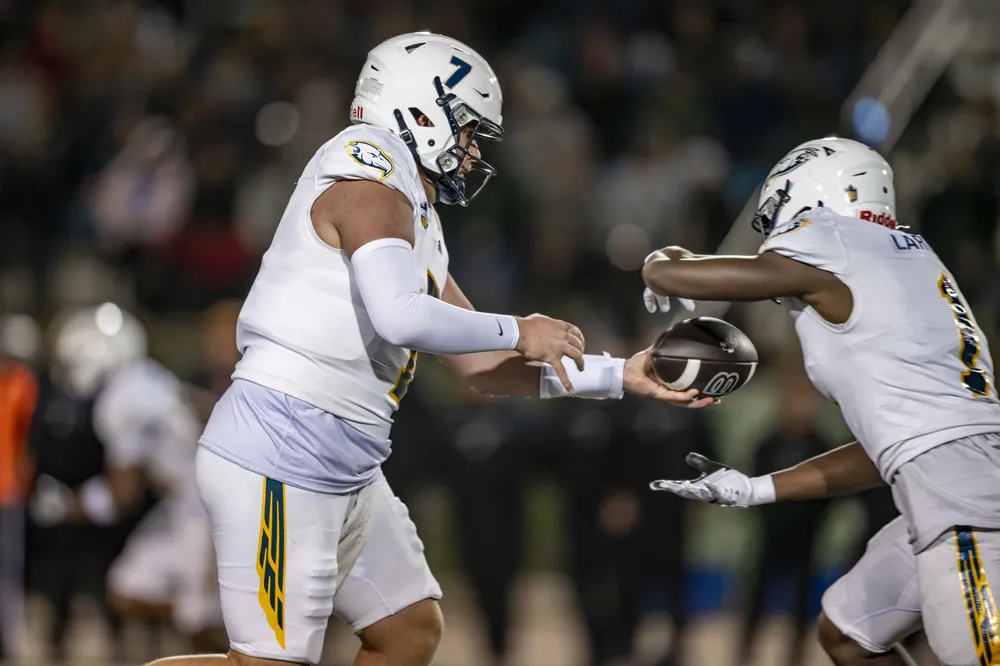
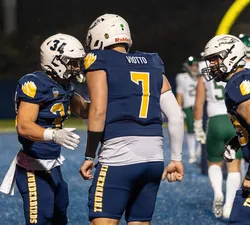
Drew Viotto (#7) played well for most of the game, but mistakes in critical moments cost the team.
Viotto cannot keep making these mistakes. While UBC's quarterback looks spectacular in moments, including on the T-Birds' first touchdown, where he impeccably placed a deep ball for Ben Gutek 36 yards downfield, he's also prone to errors.
A play before this pick, it seemed like Viotto had dodged a bullet. With pressure coming from his left side as he released the ball, he forced a throw down the middle of the field that went right to a Saskatchewan player. It was dropped. A clear indicator to play it safe, keep the ball out of danger, and live to fight another day. Instead, he did nearly the exact same thing again.
When Viotto has a clean pocket, he's exceptional. He's got the talent to be accurate, to make good reads, to push the ball downfield. But when he gets pressure in his face, though he can sometimes make superhuman plays to keep his offence alive, too often his heroics turn sour quickly, with poor decisions predicated by defenders in his face.
He typically doesn't take sacks. He rarely throws the ball away. That isn't good. Under pressure, Viotto has the tendency to trade negative outcomes for even worse ones. There was no reason to take a risk on that drive, and even after being given a lifeline, he threw seven points away to Saskatchewan.
After their end-of-half collapse, it seemed like UBC had settled themselves down in the third quarter. The breakneck pace had quieted to a tentative cold war.
Both teams knew that the next team to make a killer mistake would likely lose — a waiting game for the one critical play that would flip things. After the score settled at 20–17 for Saskatchewan in the fourth quarter, it looked like the Huskies had made that mistake.
With a 3rd and 2 near midfield, the Huskies went for it, and defensive coordinator Noah Cantor sent the blitz. It was the perfect call — Amundrud was immediately met in the backfield by linebacker Jack Pasloski, who wrapped up the QB for a critical turnover on downs.
The offence held up their end of the bargain too, with Viotto dealing to move them down the field, culminating in a touchdown pass to Trey Montour, reclaiming the lead 24–20 with seven minutes left in the game.
Considering how UBC's defence had played all game — and frankly, all season — the path to victory was clear. Hold off Saskatchewan's offence, and UBC could exorcise their Griffiths Stadium demons. The Huskies didn't blink.
Even after a near game-clinching forced fumble by UBC's defence was called back by penalty, Saskatchewan was unfazed. Unlike UBC's offence that panicked into a second-straight mistake after a near-turnover, the Huskies took advantage of the lifeline. Amundrud fired a shot through the heart of the defence, a 48-yard bomb to star rookie Keaton Belsher that would put Saskatchewan in scoring position.
The Huskies would convert and go up 27–24 with four minutes left.
The play to Belsher, and the earlier shot to Vavra, were the two plays that ruined an otherwise solid day for UBC's defence — and they were both out of character. The 'Birds typically seem to take pride in not being beat over the top, almost to the extent where it leaves them exposed underneath. These kinds of big plays have been rare — but Saskatchewan was able to make them when it counted most.
As Viotto and the offence got the ball for a potential game-winning drive, it felt like they were already consigned to the loss. With how the offence is built, they aren't the kind of team that can mount come-from-behind drives.
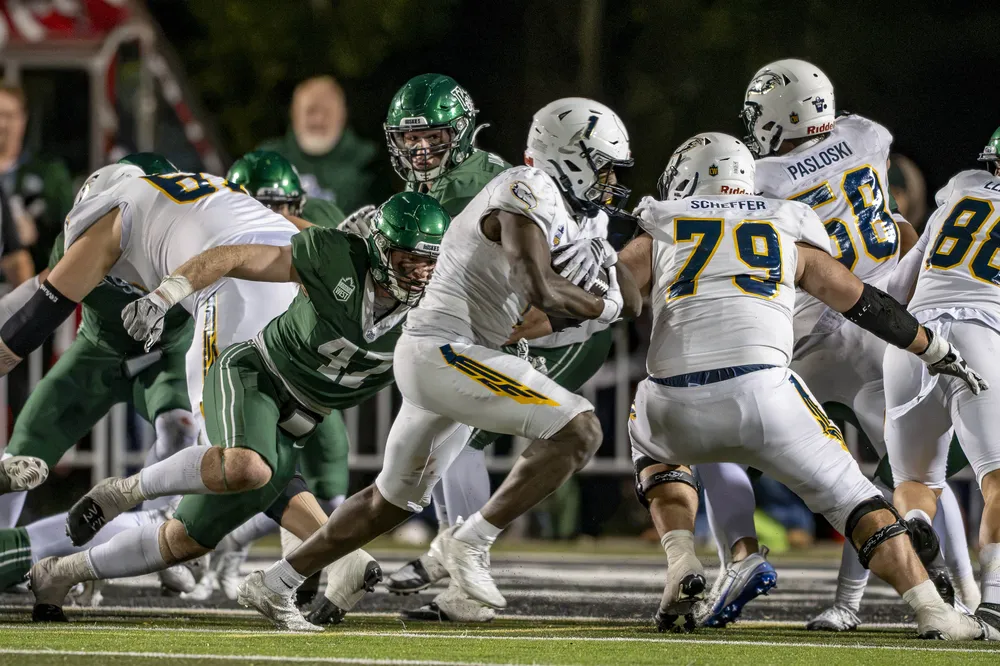
Marvyn Larozar (#1) has been the focal point of UBC's offence this year — but the running game isn't the most effective when the team has to play from behind.
UBC's offence this season has run almost entirely through star rookie back Marvyn Larozar, who leads the country in rushing yards with 724, picking up 137 on the ground against Saskatchewan. He's their bell-cow back, their home-run hitter, and their top threat. Even when he's not actively running the ball, the threat of him breaking off a run gives UBC an advantage in the passing game, with defences playing closer to the line of scrimmage to stop him.
But when the opposition knows that UBC needs to throw, like in a late-game situation, the Thunderbirds have little to offer.
It's a bit of a strange dynamic. For most teams, it's a common maxim that they should "establish the run" — the understanding that, if teams have to honour your run game, it'll open up windows for the passing game, a more potent form of attack. For UBC, it's the opposite. They have to establish the passing game — to make defences believe they're a threat downfield so that they can open up space for Larozar to make gains on the ground.
To put it simply, UBC is one-dimensional, and when they can't balance their attack with Larozar and the play-action game, they fall flat. With the game on the line, the offence went two-and-out.
It was an insurmountable three-point lead. Saskatchewan took the ball back, and while there was a window for UBC to get one more shot, an offside call on a field goal attempt erased that chance, and Saskatchewan scored the sealing touchdown on the next play.
The Huskies won this game in ten minutes. The five minutes at the end of the first half, and the five minutes at the end of the game. They met the moment, and UBC looked like the inexperienced, young team they are. The T-Birds aren't great, not yet.
But the fact that they were even in this contest is impressive. Even in a loss, it's clear that this game was a matchup between the two best teams in the conference.
Aside from their two inexplicable coverage busts, UBC's defence was still spectacular against a top-five offence in the country. While there is some reason for concern on offence, as Larozar limped off the field on UBC's second-to-last drive, if he's healthy and on the field, he's the best back in Canada.
Their passing game is the missing piece — and it's not bad, just inconsistent. Viotto makes the throws he needs to, and for most of the game, looks like an above-average U Sports quarterback. It's just about cutting out the critical mistakes.
UBC has a winning formula. They run the ball, play great defence, and hit splash plays with play-action. It's worked in almost every game, and it was working against Saskatchewan.
But when the ball bounced the other way, when things didn't go to plan, they weren't ready for it.
Only time will tell if next time, they will be.