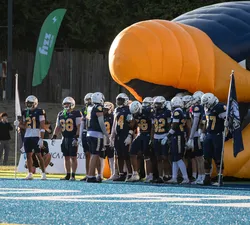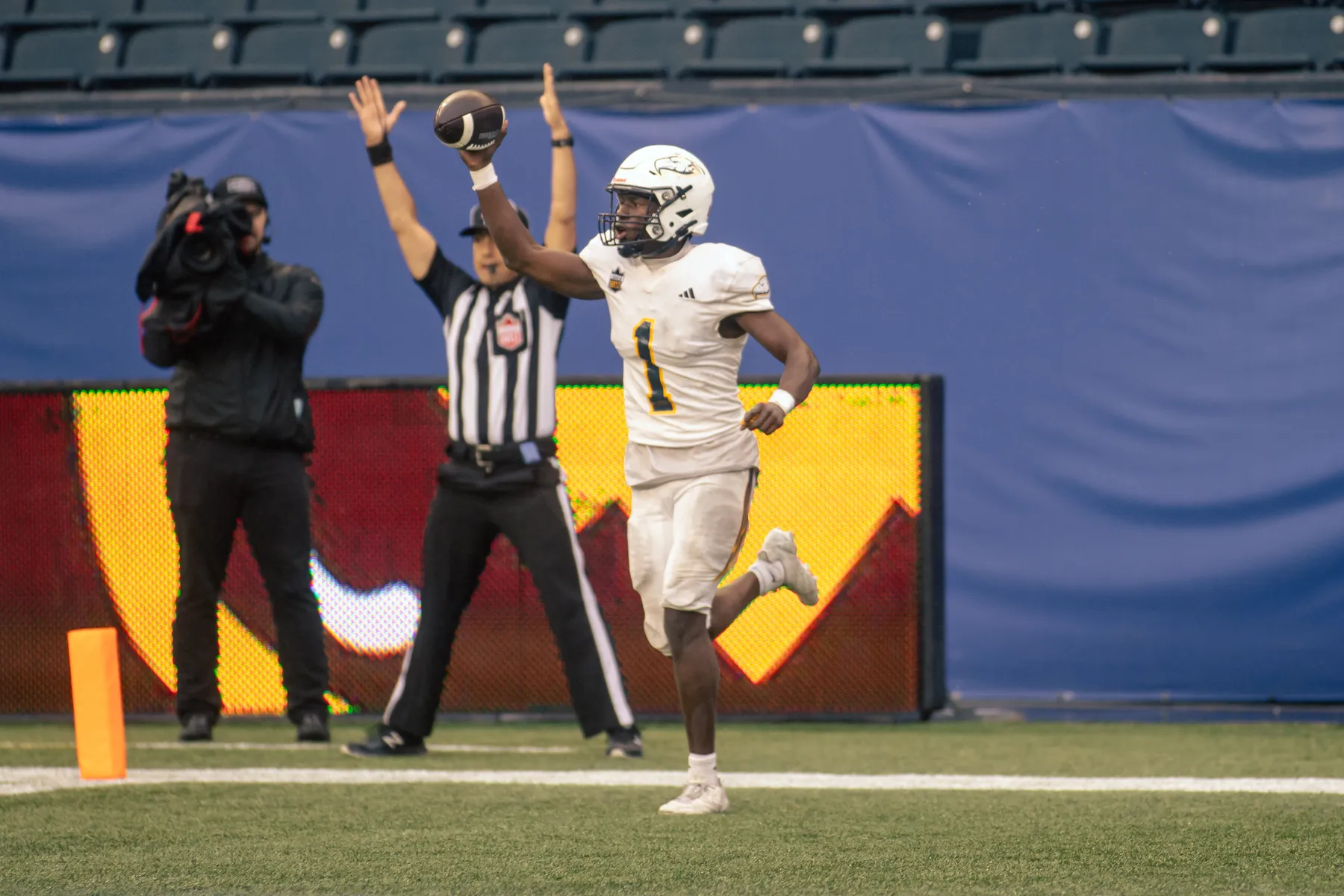

After four weeks, this UBC football team is finally coming into shape. Against all odds, they look pretty damn good.
All season, Football has been a frustrating watch. Not necessarily because the team hasn't played well — but rather because they haven't been able to find any consistency. One week, they looked horrible; the next, they looked fantastic; and last week, they somehow managed both at the same time.
But in Manitoba's homecoming game, the T-Birds finally put the hammer down, choking out the Bisons in a 31–6 victory, by far their best performance of the season.
The UBC Thunderbirds are now tied atop Canada West with a 3–1 record, a situation that seemed inconceivable less than a month ago.
After UBC came out flat against Calgary in their first week of the season, coming on the heels of a massively disappointing 2025 season where they went 3–5, it was easy to consign this team to their fate. Another lost year, another early exit. Instead, this team looks like the class of the conference and has answered a lot of questions about their composition.
It's hard not to look at this game as a turning point. Even in their wins, it was easy to cast doubt upon the success of the team. When they beat Alberta, it could be explained away because of how poor the Golden Bears were. When they beat Regina last week, it felt a tad lucky, given how terrible the offence looked for most of the contest.
In Winnipeg on Saturday, against the No. 10 team in the conference, the T-Birds were up by 23 at halftime. Try doubting them now.
To add to their growing confidence, the scoreline, as lopsided as it was, betrays how well UBC performed, especially on the defensive side of the ball. While Manitoba scored six points, all six came off the T-Birds voluntarily conceding safeties while backed up in their own end. In other words, UBC held an offence that scored more than 38 points in two of their last three games off the board entirely. A shutout.
While UBC's overall dominance against Manitoba might have been a surprise, the performance of their defence shouldn't be. While the team has been inconsistent, it's been mostly due to their offence. They've continually been exceptional when the other team has the ball.
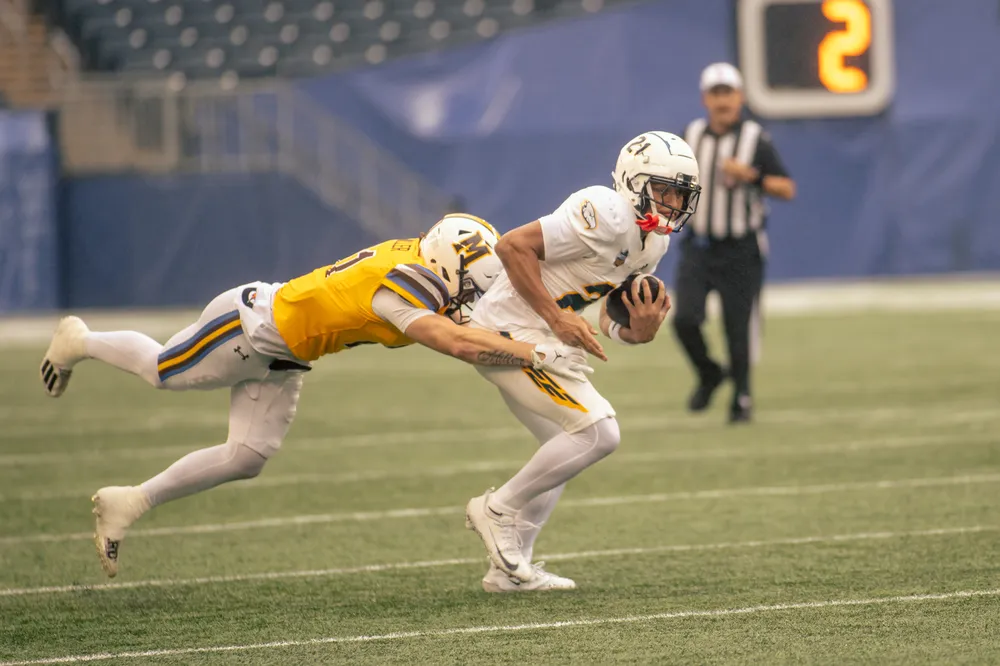
UBC's defence has held it down all year, and they once again showed out against the Bisons.
Excluding the first two drives of the season where UBC's defence gave up back-to-back touchdowns, the T-Birds have only allowed 11.5 points-per-game. It's an impressive number that is still better than it seems, being inflated by situations where UBC's offence put the defence in bad field position, either sputtering in their own territory or turning the ball over.
The 'Birds are currently the fourth-best scoring defence in the country. They might still be underrated.
It's frankly shocking given where they were last year. At the end of the season, they were the eighth-worst scoring defence in the country, performing particularly poorly against the run, giving up 170 yards per game on the ground, good for fifth-worst. Now, they're in the top-ten best run defences in the nation, and they continued that performance against Manitoba.
Especially early on, the Bisons couldn't get much going on the ground. On Manitoba's first eight carries, they only exceeded five yards once, often leaving them in second-and-long or medium situations, forcing them to throw the ball. Then, on second down, when the Bisons dropped back to pass, UBC looked even better.
This was, by far, the best game this UBC secondary has had all year. They rallied to short throws, jumped errant passes, and batted away contested balls. The Bisons' receivers rarely won jump balls. They were also aided by an impressive effort from UBC's pass rush. While they didn't notch a sack, the 'Birds routinely got pressure, despite rarely sending more than three or four rushers.
A week after throwing four touchdowns against Calgary, Manitoba quarterback Cole Anseeuw looked lost. He finished with only 104 passing yards, 42 of them coming on the final drive of the game, at which point the game was already well-decided. Anseeuw played so poorly that, near the end of the first half, Bisons head coach Stan Pierre pulled him in favour of backup quarterback Justin Sharp.
It didn't work. Sharp completed only two passes on seven attempts, and would be put back on the bench in favour of Anseeuw at the start of the fourth quarter. No matter who they faced, the 'Birds defence was suffocating.
They likely could have won this game on their own. Even though the offence eventually stepped up, the defence is clearly this team's strength. That was made abundantly clear early on, when they were forced to bail the team out of mistakes by their offence.
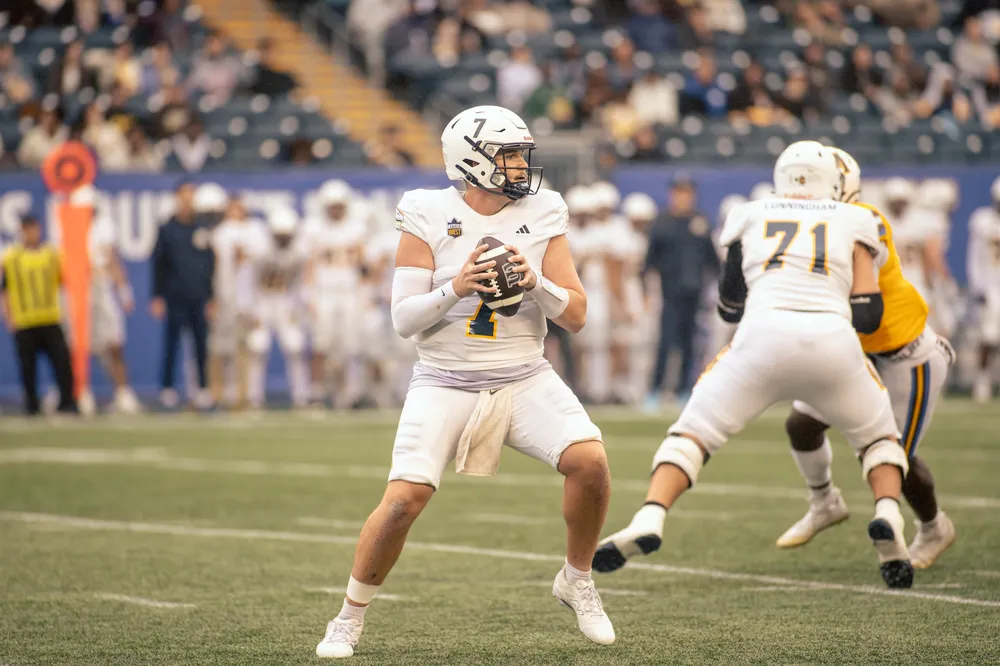
The 'Birds' offence also came along eventually, but this time, their passing game is what dominated.
After punting on their first two drives, UBC's offence looked like they'd put the first points on the board on their third possession. A great punt return by Josh Martin set up the 'Birds deep in Manitoba territory, and on their first play, rookie sensation Marvyn Larozar stepped up.
Larozar has rushed for over 200 yards in each of the last two games, breaking off massive runs with stunning consistency. On his third carry of the game, he broke free again. Prancing into the second level of the defence, he shed multiple tacklers before careening into the secondary at the five-yard line. There, however, came his first big mistake of his T-Birds tenure.
A hard hit from an incoming Bisons player popped the ball loose, and Manitoba quickly recovered. A promising UBC drive was for nought. But the defence stepped up. With a two-and-out, Manitoba was forced to concede a safety, giving UBC an early 2–0 lead, salvaging some points from the otherwise wasted drive.
On UBC's next possession, the defence would have to bail out the offence again. As Manitoba sent pressure at UBC quarterback Drew Viotto, the T-Birds signal-caller panicked, and threw a prayer up into the middle of the field as he got drilled by a free defender. It was a poor choice. Viotto was easily intercepted, and the Bisons returned the ball to the UBC 35-yard line. Their defence was back out there, now with their backs against the wall.
But once again, they held. Another two-and-out was followed by a missed field goal, and the Bisons remained scoreless. By the end of the first quarter, it seemed like as hard as UBC's offence might try to give the game away, their defence would be keeping the Thunderbirds in it.
UBC's early struggles on offence could be mostly attributed to the lack of a passing game. Through the opening frame, Viotto was 4/8 with only 21 yards passing and the aforementioned interception — not good enough.
The eye test didn't help his case much either. The interception was one that should have been thrown away, and many of his early throws lacked accuracy. These struggles have recurred throughout the season. Viotto was 3/9 at halftime against Regina last week. Despite scoring 43 points against Alberta, Viotto only put up a pedestrian 169 yards through the air.
In reality, the offence since Week 2 has been the Larozar show, often to their benefit. Against Alberta, when the rookie runner came out of nowhere, and the Golden Bears clearly didn't have a plan to stop him, Viotto didn't need to do anything.
But at certain points in the Regina game, it was clear that defences were keying in on Larozar, and quickly. While Larozar is still talented enough to break off long runs even when the focus is on stopping him, if the defence is crowding the line and daring you to throw, you're probably going to get stymied if you keep slamming your rookie into the line.
As Nill said in a post-game interview last week, when Viotto struggles, the team struggles, and it's not just because of the importance of the quarterback position. It's because if Viotto can't throw the ball downfield, the offence is one-dimensional, and Larozar can't do much with teams loading the box.
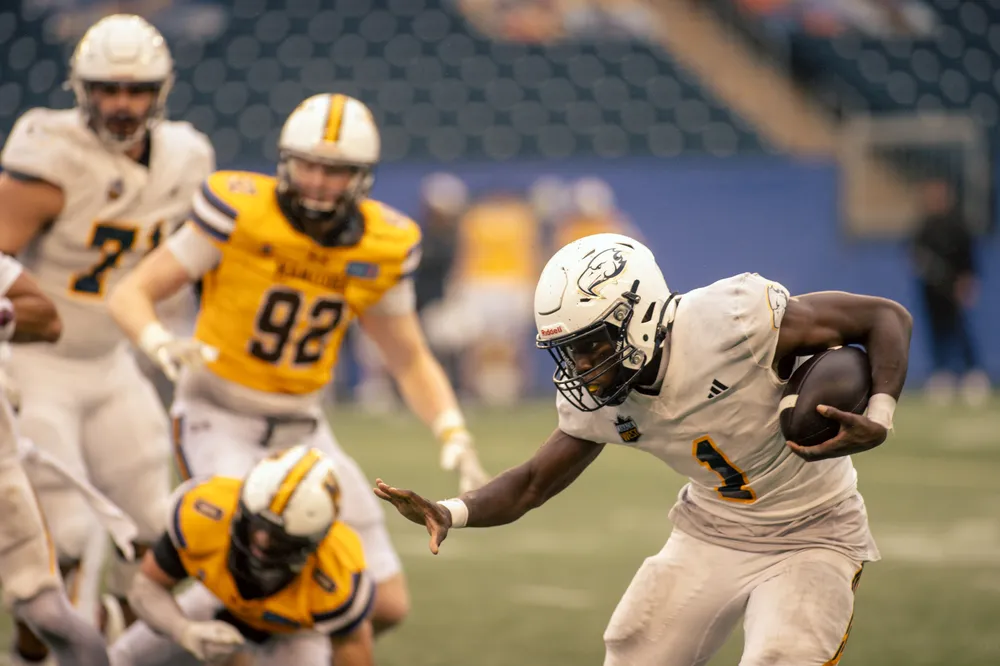
Viotto sparked a Thunderbirds surge in which they converted three touchdowns on four drives.
This was the story early against the Bisons. Through the first six drives, UBC had scored zero points and given up a safety of their own to tie the game at two.
But the thing about Viotto's game is that, no matter how poorly he's played beforehand, when he gets hot, he really gets hot.
After six drives of nothing, something clicked for Viotto and the T-Birds' offence. On their next four drives, the offence punched the ball in for three touchdowns, blowing away the Bisons with 23 unanswered points. Unlike prior weeks, this offensive came through the air.
Viotto was dealing. He completed seven of his last eight passes of the first half, with six of them going for more than 15 yards. Two of those passes were touchdowns. The ball was spread around to four different receivers. In a matter of minutes, UBC had blown the doors off one of the best teams in the country.
He was also helped by some creative play-calling. With Manitoba loading up to stop Larozar and the run game, offensive coordinator Khari Jones dialled up two well-timed play-action passes for Viotto to stretch the defence down the field.
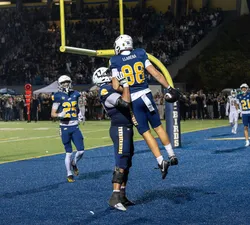
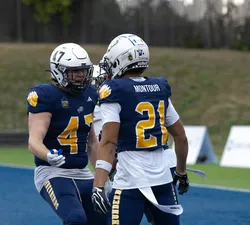
On the first, the run fake caused a miscommunication in the Bisons' secondary, leaving receiver Owen Herle wide-open for a walk-in score. The second was much more difficult for Viotto, with three defenders bailing back to cover Trey Montour in the back of the end zone. Despite the coverage, Viotto took advantage of the space the play-action concept had given him, immaculately placing the ball overtop of the Bisons' players and into the hands of his best receiver.
While Montour had his moment on that catch, part of why the offence's second-quarter explosion was so impressive was because Viotto was able to go away from Montour. Early in the season, UBC's passing game went almost entirely through their star third-year receiver, as through the first two games, Montour had nearly 100 more receiving yards than all the other wideouts on the team combined.
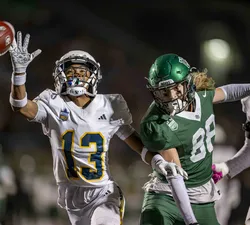
Against the Bisons, the distribution was significantly more even. The most impressive play of the day went to Kai Rednour-Bruckman, who came down with an acrobatic 33-yard catch on a 50/50 ball to put UBC in scoring position on their third touchdown drive. Before the season, UBC's receiving core had garnered plenty of praise — but this game against Manitoba was the first time that potential has paid off.
While the offence quieted down in the second half, only scoring a couple more field goals, they still looked impressive. Up by multiple possessions, they didn't need to score anymore. They played a ball-control offence, avoiding the big mistake that could have flipped the game, going on two drives of six plays, and one drive that went nine.
Perhaps the most notable part of UBC's offensive performance? They didn't need Larozar.
The rookie back had an off day, at least for his standards, only going for 81 net yards on 18 carries, with his longest run of 24 yards being mitigated by his fumble. With how the passing game was playing earlier in the season, that might have been a death knell. Here, it wasn't.
It's hard to view those rushing numbers as a worry, either. It's all symbiotic. If Viotto and the passing game can keep up their production, then Larozar will have more space. It's hard to hide a guy that runs for 285 yards in a game. Teams across the conference have noticed Larozar and are now game-planning to stop him. Those game plans can go out the window quickly, however, if those teams have to worry about being beat over the top.
This has been the only game this season in which all parts of UBC's system looked put-together. Against Calgary, they were missing a run game, and the defence was suspect early. Against Alberta and Regina, they were missing a pass game. But against Manitoba, it's hard to say they were missing anything.
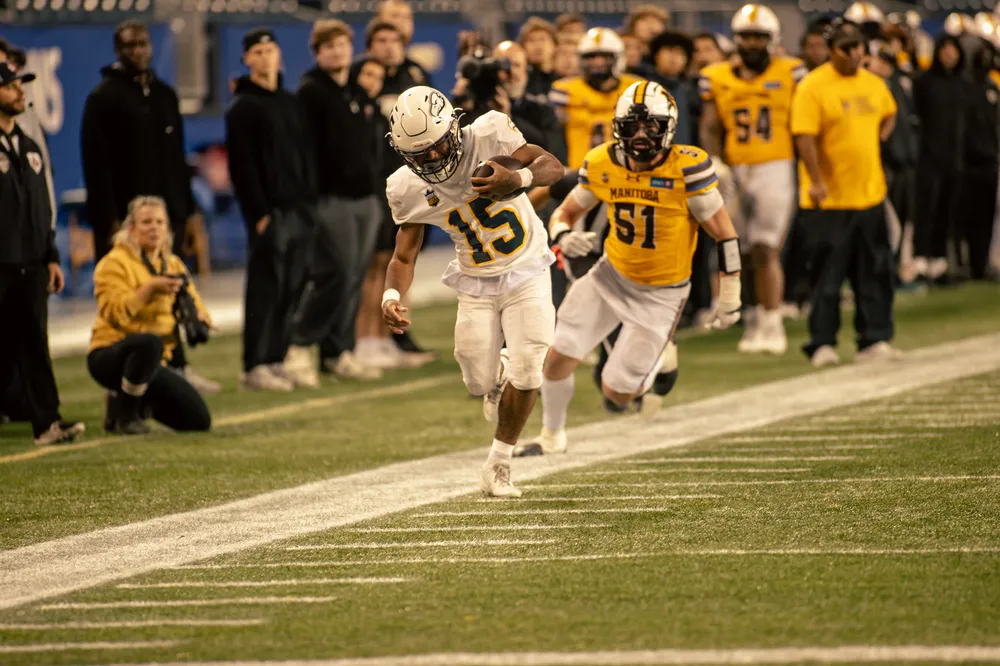
Despite Manitoba's weak performance, fans should be excited about UBC's prospects for the rest of the season.
The only possible reason to dull optimism around this result is that their opposition played terribly.
Manitoba did not look like a top-ten team against UBC. They continually shot themselves in the foot, whether that be through taking 10 penalties in the first half, Anseeuw throwing an inexplicably poor ball for an interception to set up UBC's third touchdown, or the mid-game quarterback musical chairs.
This Bisons team probably would have lost this game no matter who the competition was. It shouldn't take away from how significant this result is.
UBC has already equalled their number of wins throughout all of last season, where they went 3–5. They're tied for first in the conference, with a growing lead on Regina, Manitoba and Calgary. It's their best start to the season since 2023–24, their second-best record through four games since 2018–19. At the midway point of the year, UBC is a contender.
In their last four games, however, they'll be tested.
The T-Birds' remaining schedule is a gauntlet. They'll rematch Regina on the road, with the Rams getting back their top running back, Marshall Erichsen, from injury. They'll host Calgary, who handed them their only loss thus far this season.
Most concerning of all: they have to play the Saskatchewan Huskies twice.
The Huskies have been an eternal thorn in the side of the T-Birds. Even when they were at their best, UBC couldn't get past Saskatchewan. This decade, the Huskies are 9–2 against the 'Birds. In those nine victories, they won by an average of 18 points. Four of the last five years, the Huskies have ended UBC's season in the playoffs.
It would be unfair to count out this UBC team if they lose to Saskatchewan next week. They've already beaten two top-ten teams back-to-back, and have, in many ways, already exceeded expectations. Regardless of what happens against Saskatchewan, they should still be able to get into the playoffs and try to make a run.
But if this team somehow does something no UBC team this decade has been able to convincingly do — if they can somehow put it all together one more time and throw this province-sized monkey off its back — the ceiling comes off.
If UBC beats Saskatchewan, we have no idea how good this team can be.