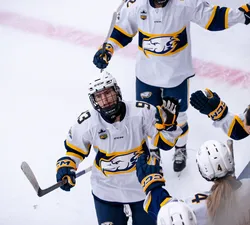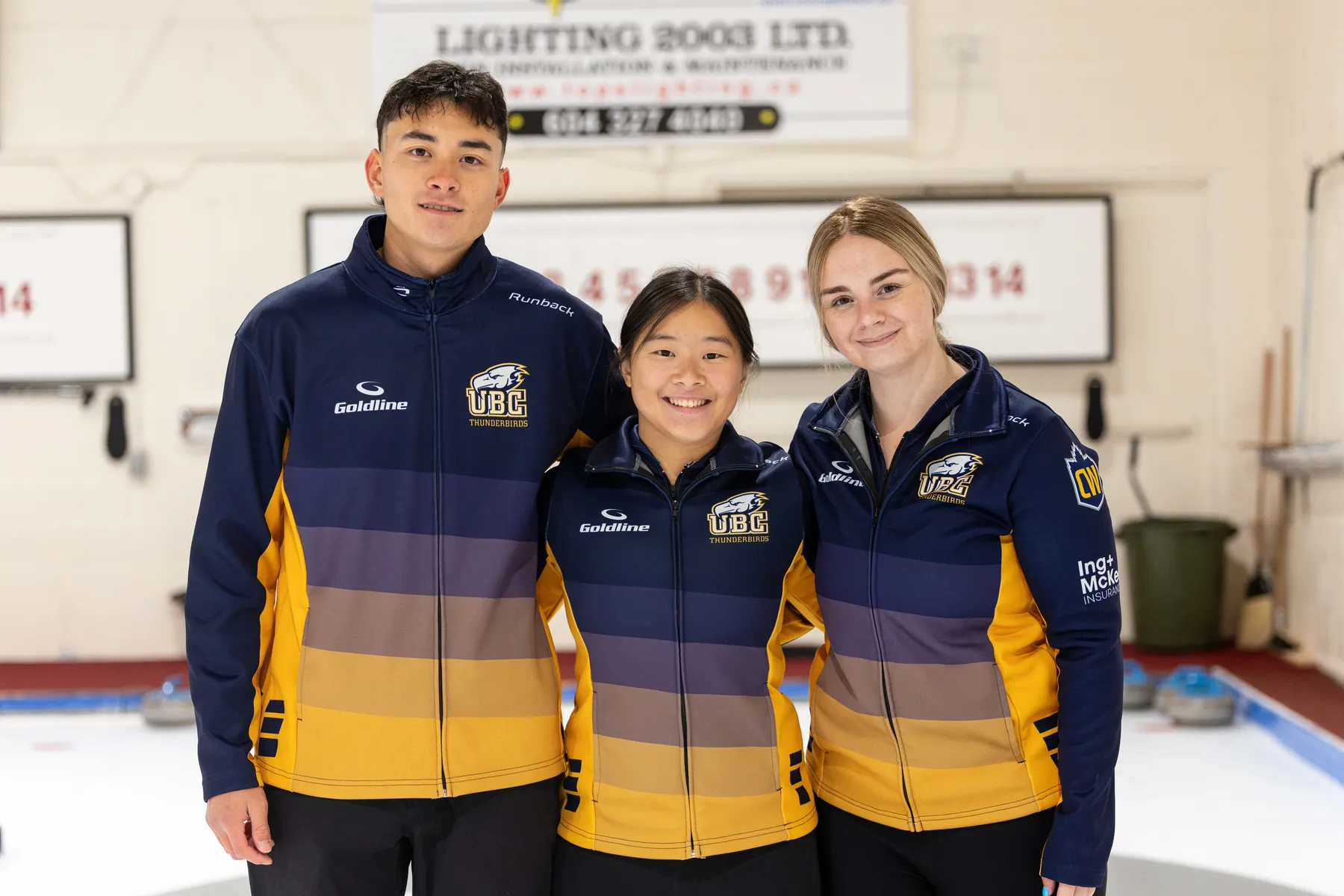

Every Sunday morning, CJ Jackson picks up her teammates at UBC and makes the 40-minute drive to the Richmond Curling Centre. By 10 a.m., the entire UBC Curling Thunderbird Sports Club is gathered on the ice for one of their few weekly opportunities to practice together.
Curling is a sport known to nearly everyone in Canada, but few people fully understand it. Beneath the ice, brooms, and rocks lies one of the most cerebral sports on the planet — a sport this team hopes to master in their push for a trip to U Sports Nationals. The Curling TSC is one of the university’s youngest competitive sports programs. It was resurrected as the AMS Curling Club in 2021 and officially became a TSC three years later in 2024, meaning that the self-funded program has competed at the university level for only the past two years.
The program now has two distinct teams: the Thunderbird team, geared toward more experienced curlers who compete in Canada West, and the Gold Team, focused on less experienced curlers who primarily focus on their development as athletes. However, the program's history actually extends far beyond the last half-decade.
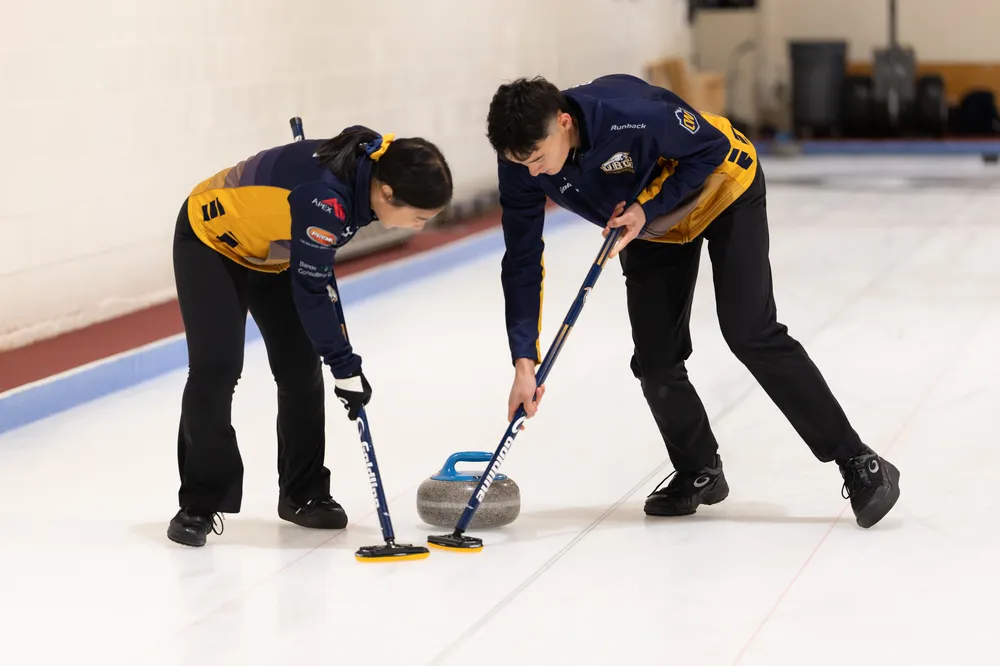
This iteration of UBC's curling team is new, but curling has a history on campus dating back decades.
For universities in Western Canada, competitive curling has existed since the 1950s for men. The UBC men's curling team captured its first Western Canadian Intercollegiate Athletic Union (WCIAU) — later renamed Canada West — title in the 1959–60 season. For women, it the program has existed since the 1970s, with the UBC women's curling team capturing the inaugural Canada West Championship in the 1971–72 season. However, when Canada West ceased operations from the early 1980s to the mid-2000s, UBC Curling was forced to stop competing — and they didn't return come back for four decades.
Since their return to the competitive landscape, the Thunderbirds have experienced a number of growing pains, much like expansion franchises often do in professional sports. In 2025, at the teams' first Canada West competition in over 40 years, they went a combined 3–5. Their second season painted a comparable picture — neither team left Canada West with a winning record, and both teams failed to advance to U Sports Nationals.
At any level, curling poses more logistical challenges than most sports. Curling stones can cost hundreds of dollars, and most towns are lucky to have even one dedicated curling facility. Curling rinks are high-maintenance, as the ice has to be regularly re-pebbled for proper use.
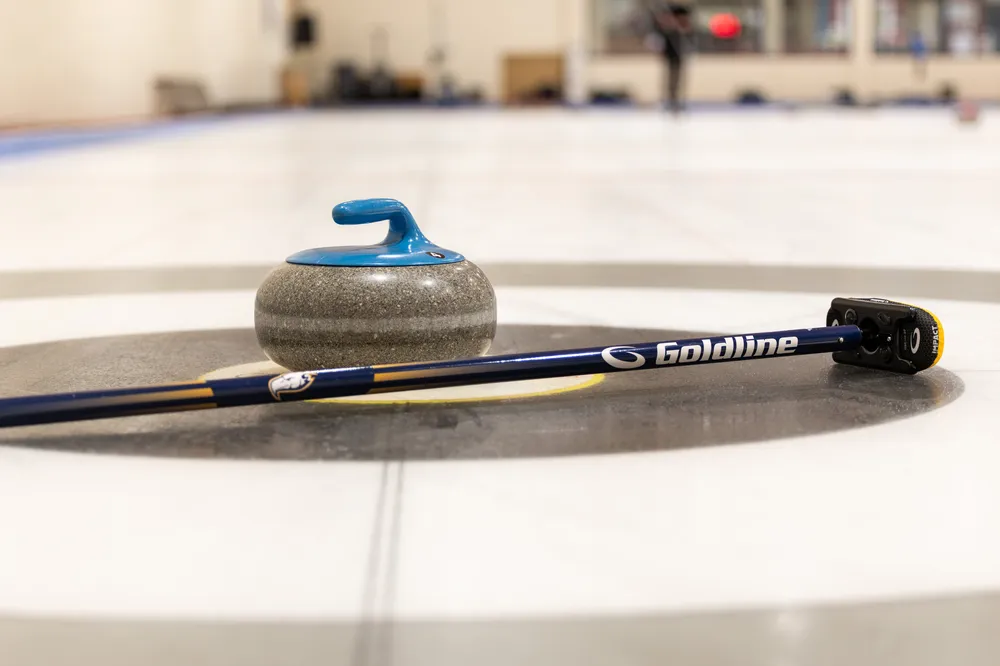
Curling poses many logistical challenges.
These same challenges are ever-present for the UBC team, and their ability to overcome them is crucial to for their success. In addition to the typical issues that curling presents, the UBC curling team also struggles with a relatively informal competition structure. The majority of varsity sports teams in Canada West always play a predetermined number of regular season games in the weeks and months leading to the playoffs, and there's no guarantee that these teams will make the playoffs. For curling, it's almost the exact opposite.
The team has no regular season, and in years past, the first time teams in the conference played one another was in the round-robin of the Canada West playoffs — a tournament which every team in the conference automatically qualifies for. With that, the team had to make a concerted effort to compete regularly throughout the school year and in the lead-up to the Canada West playoffs.
Now, the team is looking to learn from their previous shortcomings and successfully qualify for Nationals in Regina this year. To do so, they will have to make it to the finals at the Canada West tournament this coming January. The team’s qualification for Nationals hinges solely on the results of one tournament — so every opportunity they have to prepare is critical.
Unfortunately for UBC, those chances are often few and far between.
UBC Curling only practices as an entire program once a week, on Sundays, at the Richmond Curling Centre. The commute is significant, and with ice time costing hundreds of dollars per hour, every minute on the ice matters.
For the first hour, the men's and women's teams practice separately from one another and work on technical skills. As Alec Read — who began last season as a skip on the Gold Team before being promoted to the Thunderbirds team — explains, this usually means they start by refining their slides and lunges, often without a rock.
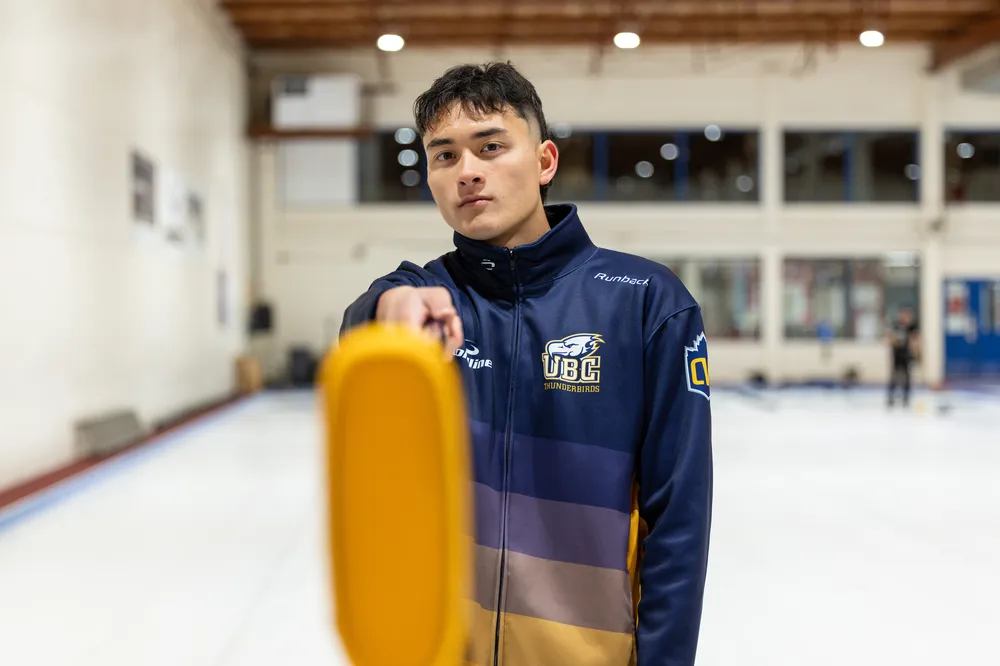
For skip Alec Read, curling is just as much a mental game as it is a physical one.
“We're looking at perfecting our form as you're sliding,” he said. “Curling is similar to golf, in that you're really perfecting this one kind of movement or stance.”
After that, the teams progress to gameplay and strategy. This is a mix of practicing different in-game scenarios and shots followed by match play. Read and Jackson both commented that their favourite aspect of curling is the strategic element involved.
“There's so much strategy and thinking that goes into it,” said Read. “People call it chess on ice.”
Finally, the teams reconvene at the end of practice and either play against one another or together in a mixed doubles format. Having only two hours a week of dedicated practice time is far from typical for competitive sports teams, but between costs and location, there's simply no other way for the program to operate.
Luckily, as the sport continues to re-establish itself in the university scene, more opportunities have arisen.
This year, the Thunderbird teams will both be traveling to UBCO to take part in a training camp, and they will also have the opportunity to play exhibition matches against all the university curling teams within British Columbia. On top of that, the teams will participate in a mix of local tournaments and events where they will face a range of competitors, including senior-level teams.
Read stated that the team's goal is to play at least one competitive event a month, and that this year, they will be playing once a week in a newly-formed league in Richmond that was started by a former UBC student.
All of these opportunities and tournaments are leading the team to their ultimate goal: to be prepared for match play during the playoffs. However, they also serve another important function: establishing much-needed team chemistry. Because of their constrained practice schedule, the time they get to spend with one another is often sparse, and as women’s head coach Diane Gushulak put it, teamwork is absolutely paramount to success in curling.
“You really have to work together,” she said. “Each player throws 25 per cent of the shots, so it's not like your better player can just throw more rocks. You're just in different positions, but you really have to have a great team dynamic — and that takes work.”
The team’s lack of ice time also makes coaching just as important to the team’s overall success. Gushulak has been curling for 45 years and has been coaching the UBC women’s team since its revival three years ago. When asked about Gushulak, Jackson was quick to offer heaps of praise for her coach.
“She's probably the best coach I've had in my 15 years of curling.”
To Jackson, part of the reason is that Gushulak focuses on her athletes as individuals and serves as a calming force for her pupils. Now, with a strong coaching staff and more robust schedule, both the men’s and women's teams will be looking to make a strong push this season. Jackson, in particular, is playing for more than just herself — this year, one of her close teammates, Michelle Wong, will be graduating, and Jackson has promised to win Wong her first banner this season.
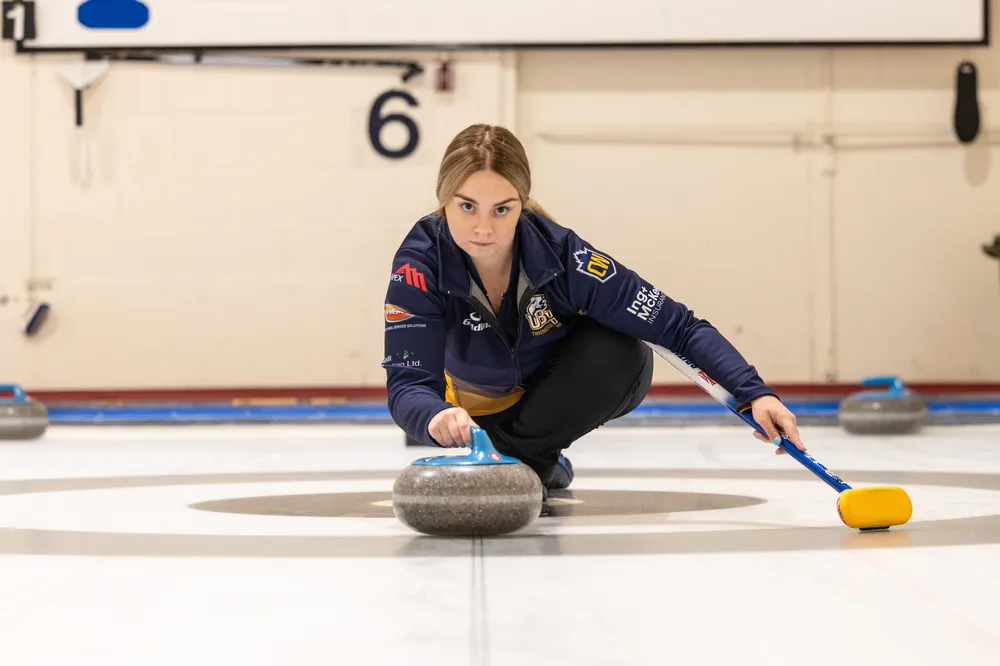
Skip CJ Jackson is setting the bar high for the team this year, intending to make good on her promise to her teammate to win a Canada West banner this season.
As it is the case with many TSCs, and with any and emerging sports teams, UBC Curling will certainly face more challenges in the upcoming years. Finding student-athletes willing to pay out-of-pocket to sacrifice their time and juggle school with sports will never be an easy task. However, as the club continues to grow, Read hopes to see things stabilize.
"We're really trying to grow our club into a little bit more sustainable kind of operation. Things like having agreements with sponsors that can support our team throughout the season and lower our costs is one of the main goals," he said.
But in the end, the biggest goal is ultimately the same as the goal of any sports team: improving, competing, and eventually winning championships.