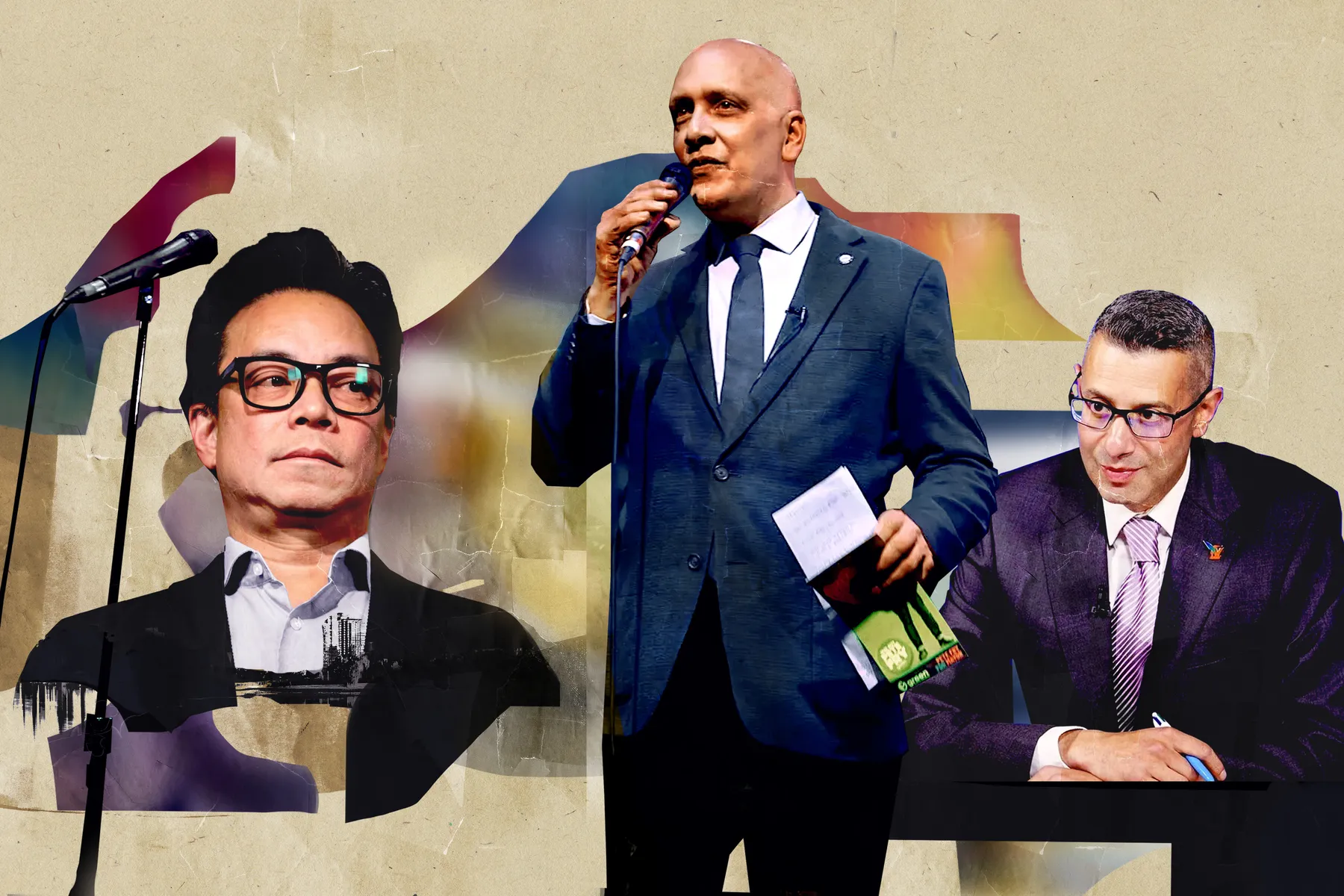

The Ubyssey's editorial board endorses Pete Fry for Vancouver mayor. If you've engaged at all with municipal politics, you've heard the name "Ken Sim." His challengers can't stop talking about the incumbent mayor — during debates, in interviews, and in their platforms.
Sim's mayorship under the ABC Vancouver party is being framed as the boogeyman of the right, for good reason, too.
During his initial mayoral campaign, Sim promised to hire 100 cops and 100 mental health nurses to expand the Car 87 program that responds to acute mental health calls.
Progress is faring better for the 100 cops. Business in Vancouver reported that 408 officers have been hired since 2022 (for a net gain of 97), and the Vancouver Police Department's funding is up by roughly $150 million. Given Sim has moved to freeze tax increases, this funding comes at the cost of municipal services.
Last year's cuts focused primarily on "planning, urban design, and sustainability" — which was cut by 14 per cent — and "arts, culture, and community services" which was cut by 12 per cent. Sim's aspiring police state is not coming from higher taxes or cuts in red tape; it's coming from what makes Vancouver worth living in.
Despite allocating $16 million to fulfill his campaign promise, the 100 nurses haven't shown up yet — but those were more rhetoric than anything else. Vancouver Coastal Health is now only trying to hire 47.5 full-time equivalents of nurses for the 100 nurses and cops program.
Perhaps the only people Sim might love more than cops are property developers. One of Sim's most controversial moves was altering the Downtown Eastside local area plan that kept housing affordable and halting the creation of supportive housing in the DTES. In so doing, Sim condemned Vancouver's most marginalized to homelessness. But at least property developers develop new buildings, charge exorbitant rents, and prosper. If that was not enough help, Sim chose to freeze property taxes — the very taxes needed to avoid further cuts to city services.
Fret not Vancouverites, when Sim isn't busy at work condemning our most marginalized, he finds time to flaunt his personal office gym, break municipal codes of conduct, and appear as a guest on podcasts to extol the virtues of cryptocurrency. How can he do it? Easy — he delegates his personal work to 11 AI agents.
How this helps his constituents? Honestly, we're still trying to wrap our head around that one.
His own party hasn't even made it out of his term unscathed. His former chief of staff, Kareem Allam, was fired (or, depending on who you ask, quit) after roughly three months on the job, following a controversy surrounding a potential coverup for Ken Sim. Allam is now running against Sim for mayor with the Vancouver Liberals.
Another to leave Sim's camp was Vote Vancouver mayoral candidate and councillor Rebecca Bligh, who was elected to council under the ABC banner in 2022. She was removed in 2025 after opposing the Sim motion to halt the creation of supportive housing in the Downtown Eastside.
Since leaving ABC, she has remained a councillor and created the Vote Vancouver party for her mayoral run. Bligh made the morally correct call in breaking with Sim. Her policies on public safety, harm reduction, and gendered violence all are a significant improvement over Sim.
However, most of her housing and economic policies represent no such break. Bligh might offer a reprieve from Sim's "bro culture," but she doesn't have a chance. At least, not according to mayoral polling done for CityNews, which has Bligh running at a cool seven per cent support.
Colleen Hardwick isn't doing much better. The media-executive-turned-urban-planner-turned-municipal-politician is running as the only notable candidate in her party, TEAM. She is sitting at an uninspiring 13 per cent support.
Hardwick opposes much of Vancouver's urbanization plans, invoking neighbourhood character to limit the number of units in multiplexes, the amount of a lot a construction can use, and mandatory minimums for residential parking.
There is a balance to strike between densification and existing neighborhood character — but Hardwick is all the way on the side of character. It is clear Hardwick loves the city. As a long-time resident, she exudes a nostalgic love of what the city was and her vision of what it could have been. But her nostalgia may prevent Hardwick from seeing what Vancouver could become.
There is precedent for this. In her time as NPA then TEAM city councillor, she was notoriously obstructionist, voting against most plans for new developments. This has not changed; just recently, she vowed that, if elected, she would repeal six new area development plans across the city.
Her unorthodox views — that Vancouver is on track to have enough homes by 2050 and that more homes will increase the value of homes — have some supporters. But more often than not, it has left her out of step with other municipal politicians.
The question with Hardwick is whether her unorthodoxy reveals a prophetic vision of Vancouver's future. We do not think so. Instead, we find her vision to be out of touch with the needs of the city, especially its younger generations. With the cost of living and housing being prohibitively high, we need more housing for students and young people if we want them to be able to stay in the city.
Based on polling, Sim has only two real challengers: the Liberals' Allam and the Greens' Fry.
If you want a clean break from the past four years of Ken Sim, Allam isn't your saviour. Though he fashions himself as Sim's "most vocal critic," you could expect more of the same from an Allam mayorship, given his past as Sim's campaign manager and chief of staff. Allam likely clears the low bar of having better governance and fewer stupid controversies.
His campaign is superficially appealing to the youth vote. Allam regularly decries the broken social contract that his generation would take care of the next generation.
He said building the SkyTrain to UBC is his No. 1 transit priority — something that is true for basically every relevant mayoral candidate.
Unique to Allam is a desire to amalgamate UBC's University Endowment Lands — the unincorporated, province-managed territory on Point Grey — into Vancouver. He says this would lead to "incredible economic synergies," referring to additional revenue from property taxes and the ability to host events.
However, as delightful as advocating for the SkyTrain is, it's not a controversial position and it isn't better for students than any other candidate's SkyTrain proposal. And while there are legitimate issues with the UEL lacking representative leadership, the benefit for UBC students or Vancouverites isn't clear.
We saved the best for last — undoubtedly Pete Fry.
He has been the obvious progressive choice since Sean Orr said he didn't intend to run for mayor. Though both COPE's Stephanie Allen and OneCity's William Azaroff ran in the "progressive primary" as relatively unknown outsiders, they never really stood a chance in the mayoral race.
The two-time Green Party councillor is the most experienced legislator in council (tied with Bligh and ABC's Kirby Sarah-Young). He mentored both Orr and OneCity's Lucy Maloney, establishing a working relationship with both fellow progressives.
Consistently putting project over party, Fry has positioned himself as a unity candidate. Having learned from Kennedy Stewart's fractured council, he's best placed to maintain the progressive unity required to become Vancouver's most effective progressive mayor in living memory. (Gregor Robertson's brand of centrism isn't within our definition of progressivism.)
Fry's mayorship will be defined by a confluence of his personal policies and those from the elected council. Should COPE, OneCity, and the Greens control council, this won't be an issue, given the parties' significant overlap. You can expect increased renter protections, public housing construction on public land, protections against intimate partner violence, support for safe supply sites, and increased transparency in City Hall.
Fry isn't going to become Vancouver's home-grown Mamdani. But he offers a break from both Ken Sim and Kennedy Stewart's chaos. Unlike Sim, he is competent and unlike Stewart, he is prepared to deal with a fractured progressive council.
Pete Fry will make a good Vancouver mayor. When we pit him against his closest competitors, Sim and Allam, he is the only one we can say that about.
Voting day is Oct. 17. If you're a Canadian citizen over the age of 18 who has lived in B.C. for six or more months, you're eligible to vote. You can find more information about how and where to vote on the City of Vancouver's voting guide.
Oliver Matisz wrote a candidate profile on Colleen Hardwick for the news section. Leah Grossman volunteered with COPE during this year's campaign. Both recused themselves from participating in the editorial board's endorsements — deliberations, drafting, and editing were conducted without either present.