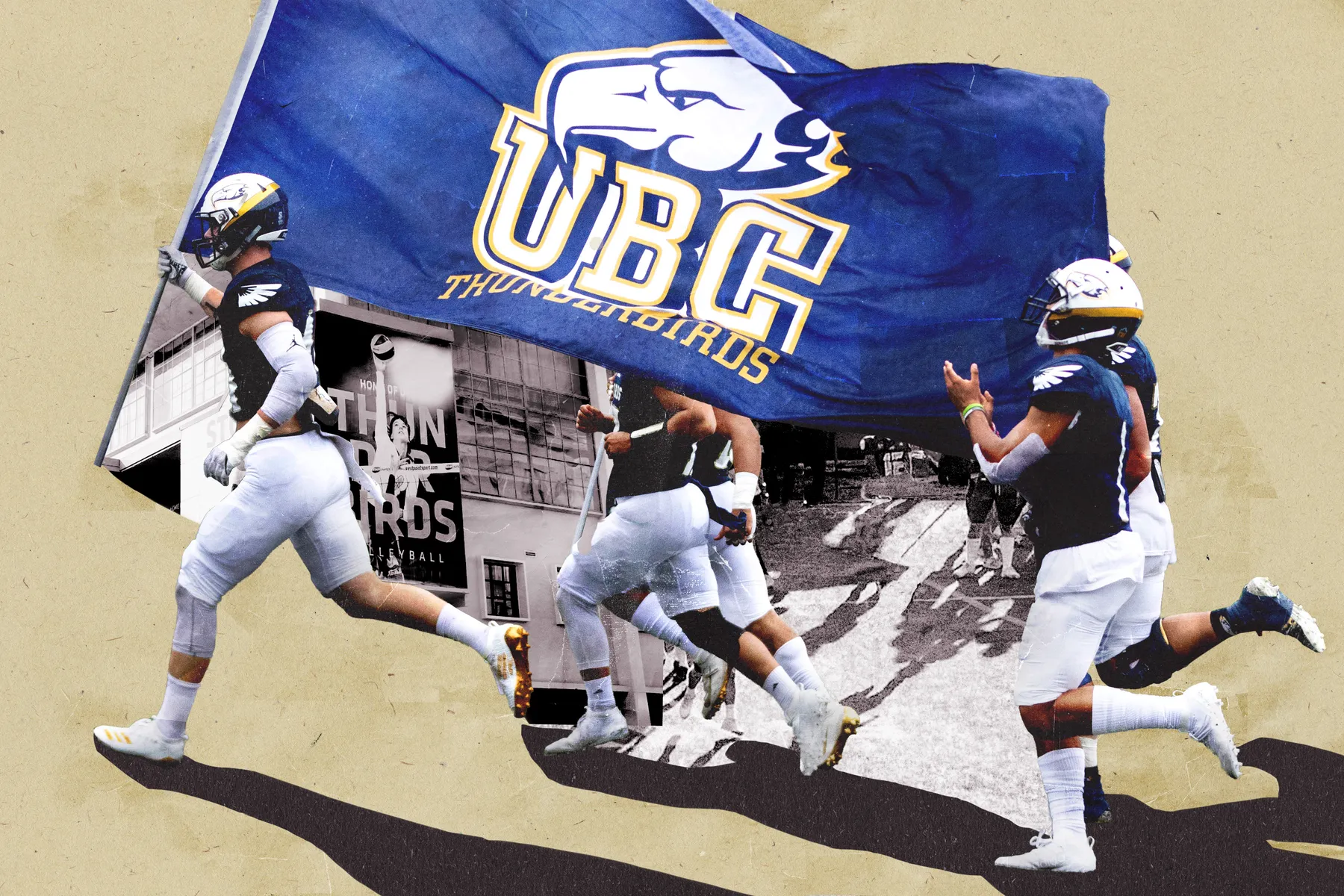

UBC has a sports problem. Not because our teams aren't good enough, and not because they don't have the resources — but because no one seems to know they're playing. Students have no reason to care.
The Thunderbirds constantly win regional and national championships year after year. They compete at the highest level of university sports in the country. Yet, if you walk into a UBC varsity game, you are likely to find more empty seats than students.
On Sept. 27, a men's soccer game drew 135 fans. On Feb. 7, the final game of the women's hockey season only drew 184. The men's basketball team drew a whopping 491 for their finale. Each of those venues can hold 2,000–5,000 people.
That isn't fair to our student-athletes and it's a missed opportunity for the university.
The problem isn't necessarily that students don't care about sports. Sure, some don't. But at a school with 60,000 students, it's impossible that all of them hate sports.
These games are usually free for students, so cost isn't the barrier to attending games either. The problem is that UBC doesn't seem interested in giving students a reason to care.
It's very feasible to get students invested in sports. This year's homecoming game drew 8,080 people, overflowing Thunderbird Stadium and filling the surrounding grass. Homecoming is one of the few games where students are charged a large admission fee — $20, in this case — but it was also, by far, the most-attended game.
This shows that students are willing to show up.
Homecoming is different from an ordinary varsity game. It's a major campus event with promotion and 78 years of tradition behind it. But that's precisely the point.
When UBC creates an occasion around a game, people come. When games are left to speak for themselves, they often go unheard. UBC has an entire collection of teams that students could rally around; instead, it feels like they are playing in the background.
UBC's marketing is part of the problem. There are social media posts, but students shouldn't have to follow UBC Athletics to know when the next game is. Thousands of students a day pass by War Memorial Gym, entirely unaware of the games inside.
Do you even know what team plays at War Memorial Gym?
Sports should be hard to miss. There should be posters around campus, promotions in residences and faculties, partnerships with student groups, and visible game-day events.
This may sound shallow. Put up more posters and suddenly students will care? Of course not. But people can't attend games they don't know exist. Almost 14,000 students live on campus. Seeing reminders of games every day doesn't mean they would go — but they would think about them more often.
Last year, UBC hosted the women's rugby championship, and the 'Birds were national champions. But the stadium wasn't full.
This year, UBC is hosting the U Sports national championship for women's soccer, an enormous event for a program with the most national titles. (UBC's women's soccer team hasn't lost a regular season game since Oct. 1, 2023.)
But why would students be excited for a championship if they never supported the team in the first place?
Long-term support can build the community that UBC needs more of.
A varsity game doesn't require students to know each other or know much about the sport itself. Anyone can cheer when UBC scores. You can even show up alone and become part of the crowd.
Not everyone needs to be a sports fan. But UBC needs to make sports accessible, both for those who already are and those who might become one.
The audience must expand beyond the traditional (and small) group of students who already follow athletics. Even first-time fans should feel that a T-Birds' match is for them, be they queer, international, a theatre kid, or a grad. student.
UBC Athletics and Recreation should invest more in the support surrounding varsity sports — not spending more money on the teams, but promoting their games as part of everyday campus life.
The AMS plays a role, too. They are starting to show varsity games on Nest televisions. This is a good start, but it's only just that.
While creating new campus traditions might be ideal, promoting games through student societies and putting up posters costs far less. Bars and restaurants on campus could host pre-game events. Game days could have visible, attention-grabbing events that make it difficult not to know there's a Thunderbirds game.
It's not possible to manufacture school spirit overnight, but we should give students opportunities to develop it — even if it takes 30 years to build that culture.
UBC has all the ingredients: national championship teams, Olympic athletes, and several venues on campus. The only thing missing is the connection with the average student.
We wait for homecoming to remind students that our university has teams worth cheering for. If UBC wants a stronger campus community, it should make the Thunderbirds impossible to ignore.