
Our province is going through multiple crises: housing, complex questions about the future of DRIPA and reconciliation, and climate change, to name a few. We need a party with a bold and positive vision for the province.
This vision is found in the Greens.
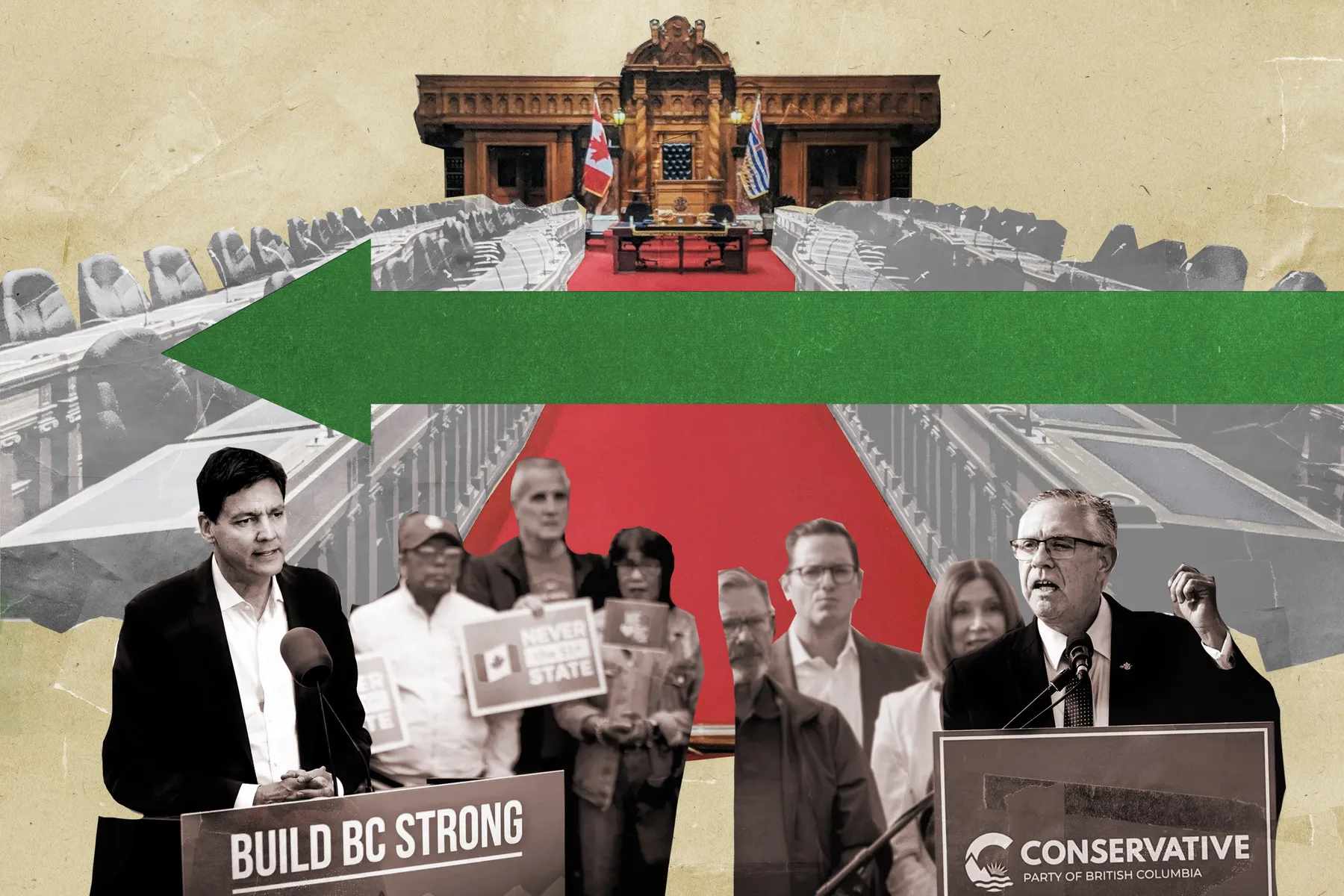
Realistically, the Greens won't win more than a couple seats. While David Eby's NDP is far from perfect, an NDP government would be better than one formed by Lorne Doerkson's Conservatives. In some ridings, voting NDP is more responsible to avoid splitting the left-of-centre vote.
The Greens are best poised to improve the lives of British Columbians. To address housing and the cost of living, they promise to build 26,000 permanently affordable non-market homes and to provide free transit, starting with youth under 25 and seniors. Their proposal to publicly cover mental health care will likely benefit students.
Unsurprisingly, the Greens also have the best policies on climate change. While the NDP and the federal government invest billions in liquid natural gas projects, the Greens are committed to ending fossil fuel expansion, including fracking and pipelines.
The Greens are the only party you can trust on Indigenous rights. In 2019, the NDP passed DRIPA, which fulfilled one of the Truth and Reconciliation Commission's calls to action by beginning to implement the UN Declaration of the Rights of Indigenous Peoples across B.C.
The NDP have since wavered on their support for the statute, nearly suspending the act following misinformation about it threatening private property ownership. They have vowed to maintain DRIPA, but when the political winds change, we aren't sure we can trust them given their history of flip-flopping at the first sign of pressure.
The Conservatives are committed to repealing DRIPA.
The Greens, however, are and always have been committed to implementing DRIPA. They will also uphold Indigenous self-determination and protect Indigenous languages.
On human rights, both the NDP and Conservatives support involuntary care. Voluntary care is far more humane. The Greens realize this and plan to invest in measures to that end.
The Greens' policies would be funded by a progressive tax on wealth above $50 million, which they estimate will raise $22.2 billion in the first year, followed by $5.4 billion each following year. And this tax would only affect 0.1% of the population. This is a far cry from the NDP's tax plan, which would raise taxes on individuals making above approximately $190k per year — decidedly not the ultra-rich.
Nevertheless, the Greens will not form a government.
In this election, only two parties have a realistic chance of leading the next provincial government: the incumbent NDP and the Conservatives. While we were not particularly impressed by either party, we find the NDP to be the better of the two.
The economy is perhaps the NDP's weakest area. Eby's government has brought increasing deficits and multiple credit downgrades. However, we are more concerned by the Conservatives' plan for an austerity government. Their signature economic proposal involves reducing taxes: $1000 across the board, tax cuts on alcohol, and a tax freeze. What the Conservatives haven't said is which services will be reduced to accommodate these tax cuts. When British Columbians are having a hard time making ends meet, service cuts are not the answer.
While Eby's spending has not always been the most targeted, the last few years have seen some improvement in our healthcare. Fewer British Columbians lack a family doctor, thanks to U.S. doctors being hired. Yet the crisis isn't solved. Measures like urgent and primary care centres help some, but will be limited as long as we have a doctor shortage. We expect continued incremental improvements from a re-elected Eby government. Even these mild improvements might not happen under Tory austerity.
In recent years, the average asking rent price has dropped, in part due to NDP policies, reducing the cost of living. The Conservatives, on the other hand, do not seem to have any robust policy on housing, outside cutting red tape. B.C. needs more housing, and the Conservatives won't deliver it.
While the Conservatives have dropped two candidates over offensive social media posts, we are still concerned by the Conservatives' decision to keep Heather Maahs — who said that books depicting queer characters were "grooming" — and their campaign director Katy Merrifield, who made an Islamophobic X post in June.
This behaviour from a few conservative candidates, and the type of politics OneBC promotes, is antithetical to the health of our society. Residential school denialism, anti-queer rhetoric, and religious discrimination do not have a place in our province. While there is much in politics for which there can be reasonable disagreement, OneBC and some Conservatives' figures fly in the face of any good-faith political discussion.
CentreBC is a party we respect. It hasn't promoted culture war issues and instead focuses on a platform of fiscal conservatism to address B.C.'s annual budget — even though we prefer the Greens' approach, this is a respectable stance. CentreBC would likely be a positive force in BC politics by moderating the further-right Conservatives. However, despite being led by longtime MLA Elenore Sturko, CentreBC might not make it into the legislature.
As much as we'd like to write an unequivocal endorsement for the BC Greens, that isn't responsible. A Tory majority government would be detrimental for British Columbians, as we said above.
While the outcomes for much of Vancouver are essentially decided, this is not a given everywhere. In municipalities such as Surrey and Maple Ridge, the race is neck and neck between the NDP and Conservatives.
In these areas, voting Green may do more harm than good. In splitting the vote on the left, a reduced NDP vote would increase Tory candidates' chances of winning.
The NDP isn't better than the Conservatives on every issue, but they are on most. We aren't happy to be bailing Eby out of the mess he made by calling this election, but the cost of his failure will be borne by all of us, not just the NDP.
If you are in a riding that is already likely to elect an NDP or Conservative candidate, you should vote Green. Their policies push the province in a direction that's better for all British Columbians.
Even though the Greens are unlikely to win, your vote sends a message about the type of politics that we need in this province.
Election day is Oct. 24. If you're a Canadian citizen who is at least 18 years old and has lived in B.C. since April 23, you're eligible to vote.
Oliver Matisz wrote about Eby's relationship to the post-secondary sector for the news section. He recused himself from participating in the editorial board's provincial elections endorsement — deliberations, drafting and editing were conducted without him present.