
The Indigenous Student Society wants to see more representation in the Vancouver Senate, but its specific proposed pathway hasn't secured unanimous support from the Student Senate Caucus (SSC). AMS Council was expected to discuss endorsing the move on Nov. 4, but deferred debate to their next meeting on Nov. 25.
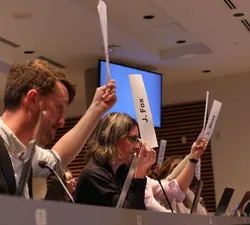
UBC's Vancouver Senate is the university's highest academic governing body. Their responsibilities include creating policies that affect admissions, approving course curriculums, and creating new departments. The Senate has over 80 faculty, staff, and alumni representatives, 18 of whom are student senators — one representative for each faculty plus five for students-at-large.
All student senators are members of the SSC, a group that aims to bring a united student voice to Senate. Previously, the SSC was mandated by AMS Bylaw Six, though that was repealed in 2013. Since then, the caucus has operated independently from the student union, but its co-chairs have a seat on the AMS University Advocacy Committee.
Since October, the SSC has been considering a proposal from the Indigenous Student Society to amend the Senate's composition. It's advocating for two of the five student-at-large seats to be dedicated to Indigenous students: one for undergraduate Indigenous students and the other for Indigenous graduate students.
The initiative — the result of discussions between ISS executives and members — was approved at the organization's general council meeting last month. ISS President Chelsea Neepin told The Ubyssey that all interested Indigenous students were welcome to participate.
Neepin said the purpose of the proposal is to amplify Indigenous voices in UBC governance — which she said is consistent with with the first goal of UBC's Indigenous Strategic Plan, to "prioritize the advancement of Indigenous peoples’ human rights and respect for Indigenous peoples at all levels of UBC’s leadership and accountability structure."
The plan, released in 2020, aims to support the university in "becoming a leading voice in the implementation of Indigenous peoples’ human rights" as defined in the United Nations Declaration on the Rights of Indigenous Peoples and other sources of international law.
"This is a way to ensure that Indigenous perspectives are valued and heard here at UBC," Neepin said. She added that developments in B.C.'s political climate underscore the need to thoughtfully consider Indigenous representation, pointing to Premier-designate Lorne Doerkson and the BC Conservatives' promise to repeal the Declaration on the Rights of Indigenous Peoples Act (DRIPA).
The First Nations Leadership Council has called for Doerkson's incoming government to keep DRIPA as the framework for reconciliation in British Columbia. In a news release, Union of British Columbia Indigenous Chiefs President Grand Chief Stewart Phillip said, "We are at a historical crossroads: Battleground B.C. or reconciliation through the principles and road map of the [DRIPA]."
Graduate Senator Bryan Buraga — who co-chairs the SSC — told The Ubyssey they consulted with the ISS during their campaign for Senate. After months of looking for options to add Indigenous student seats, he said, he landed on converting senator-at-large seats into Indigenous student seats. Buraga said they sought advice from the Senate's professional staff before consulting with the ISS again and before proposing one graduate and one undergraduate seat.
Buraga said the caucus is generally supportive of having increased Indigenous student representation, but acknowledged some senators aren't convinced that two of five seats strikes the right proportionality.
Student Senator-at-Large Drédyn Fontana, who is one of the most experienced students elected to the body, told The Ubyssey that while he supports increased Indigenous representation in principle, more conversation surrounding the logistics of the proposal in question is necessary. Fontana said he has not spoken with the ISS since the SSC discussed adding the seats.
"I'm missing context here," he said.
For instance, Fontana said the caucus has discussed how creating a seat for Indigenous graduate students would create a relatively narrow pool of eligible candidates.
"I think there's still a lot of conversations that need to be had on it. I'd like to get some context ... on why specifically [the ISS] would want undergraduate and graduate student representation separately," he said.
Buraga and Neepin said the size of UBC's Indigenous population is a result of Indigenous Peoples being disadvantaged by centuries of settler colonialism, with repercussions that continue broadly across Canada today. For Neepin, this makes Indigenous representatives in the Senate even more pressing.
"History is important to know during these types of conversations," Neepin said. "This is ... highlighting the systemic barriers that have caused Indigenous students to not be a part of these conversations."
"I think denying Indigenous graduate students a seat just because we don't think they're going to be able to fill it is almost like speaking on their behalf about what they are and are not able to do," Buraga said.
"I think we need to consider all our options here ... it feels like we're moving pretty fast," Fontana said.
In the 2025–26 school year, 403 of the 11,144 students enrolled in a UBC graduate program were Indigenous — roughly 3.6 per cent of the group.
According to Neepin, the ISS and SSC have planned to meet in the near future to further discuss the proposal. She said she is looking forward to meeting with the SSC, and that collaboration and open communication are the way forward.
On the Senate, Neepin said "these are colonial systems that haven't included Indigenous voices until recently ... All we're asking is just for our voices to be heard."
The replacement of both seats is not necessarily in the hands of the student senators, though, and may stall on the Senate floor. The ISS is looking for support from AMS Council and student senators for their proposal.
The Ubyssey reached out to Student Senator Zarifa Nawar, AMS President Dylan Evans, and Vice-President Academic & University Affairs Jaiya Panchi, to speak in their capacity as student senators. None replied to multiple requests for comment.
On Nov 4. AMS Council was expected to vote on a motion which said: "Whereas the land, water, air, and beings holding the institution of University of British Columbia (UBC) is on the unceded, illegally occupied, unextinguished territory of the hən̓q̓əmin̓əm̓ speaking xʷməθkʷəy̓əm people ... be it resolved Council adopts the position that the AMS is in support of converting two of the UBC Vancouver Student Senator At-Large seats to one Indigenous undergraduate student seat and one Indigenous graduate student seat."
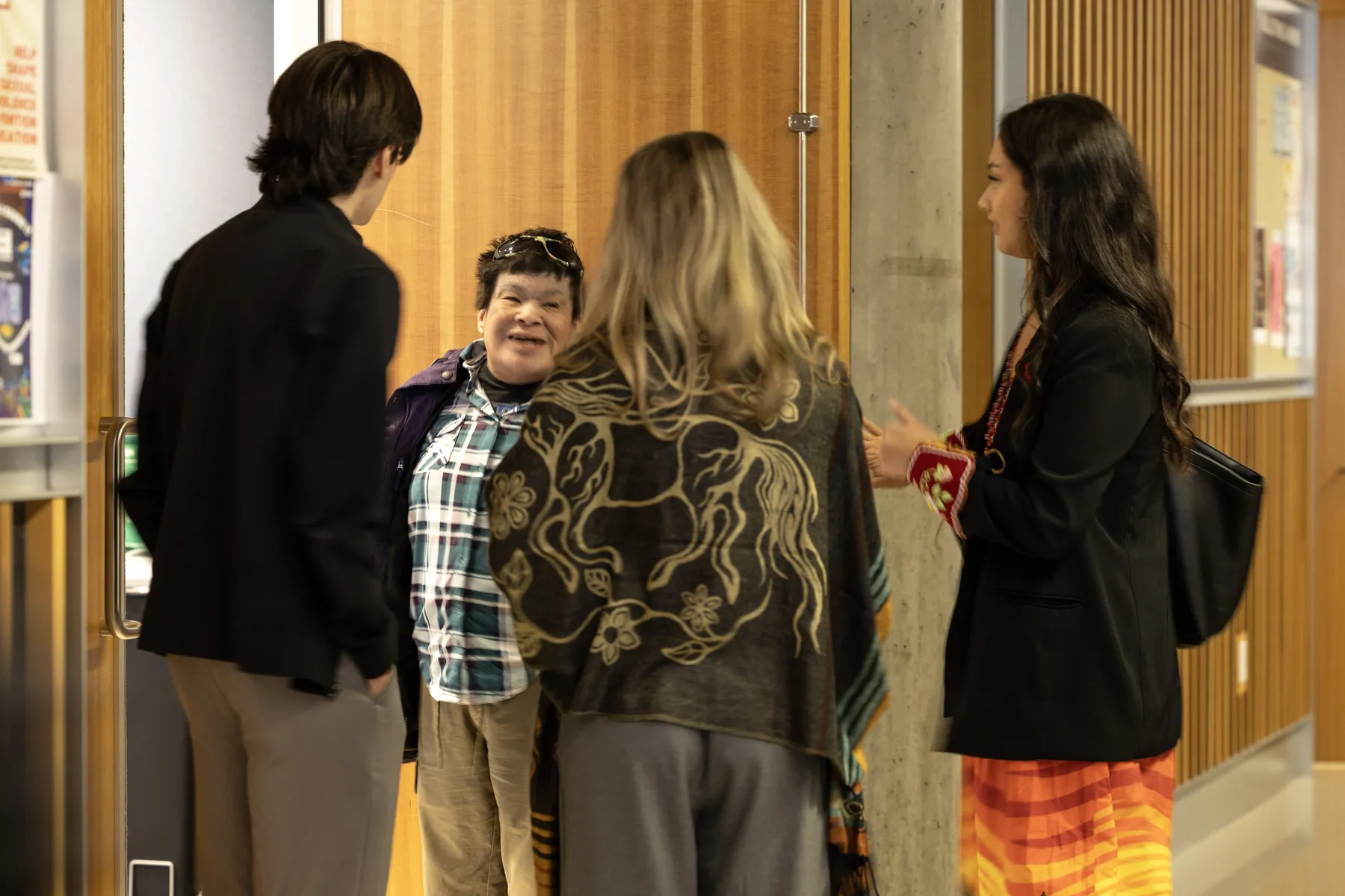
Instead, the motion was deferred after a conversation between AMS President Evans ISS President Neepin, and ISS Councillor Jaylenn Tourangeau outside Michael Kingsmill Forum, where the meeting was set to begin. Reasons for deferral remain unclear. The motion is expected to return on Nov. 25 at the next meeting of Council.
A previous version of this story said endorsing the ISS' proposal was expected to be debated at AMS Council on Nov. 4. During that meeting Council deferred discussion to the next meeting without giving an explanation. This story was updated to reflect that change at 11:57 a.m. on Nov. 5.