
Editor's Note
People across the province are heading to the polls on Oct. 17 to elect their local governments. The Ubyssey is covering Vancouver's mayoral race, the city council and park board races, and mayoral races around the Metro Vancouver area. This piece is part of that coverage. Click here to find the rest of our coverage, and look out for our live coverage of results on election night.
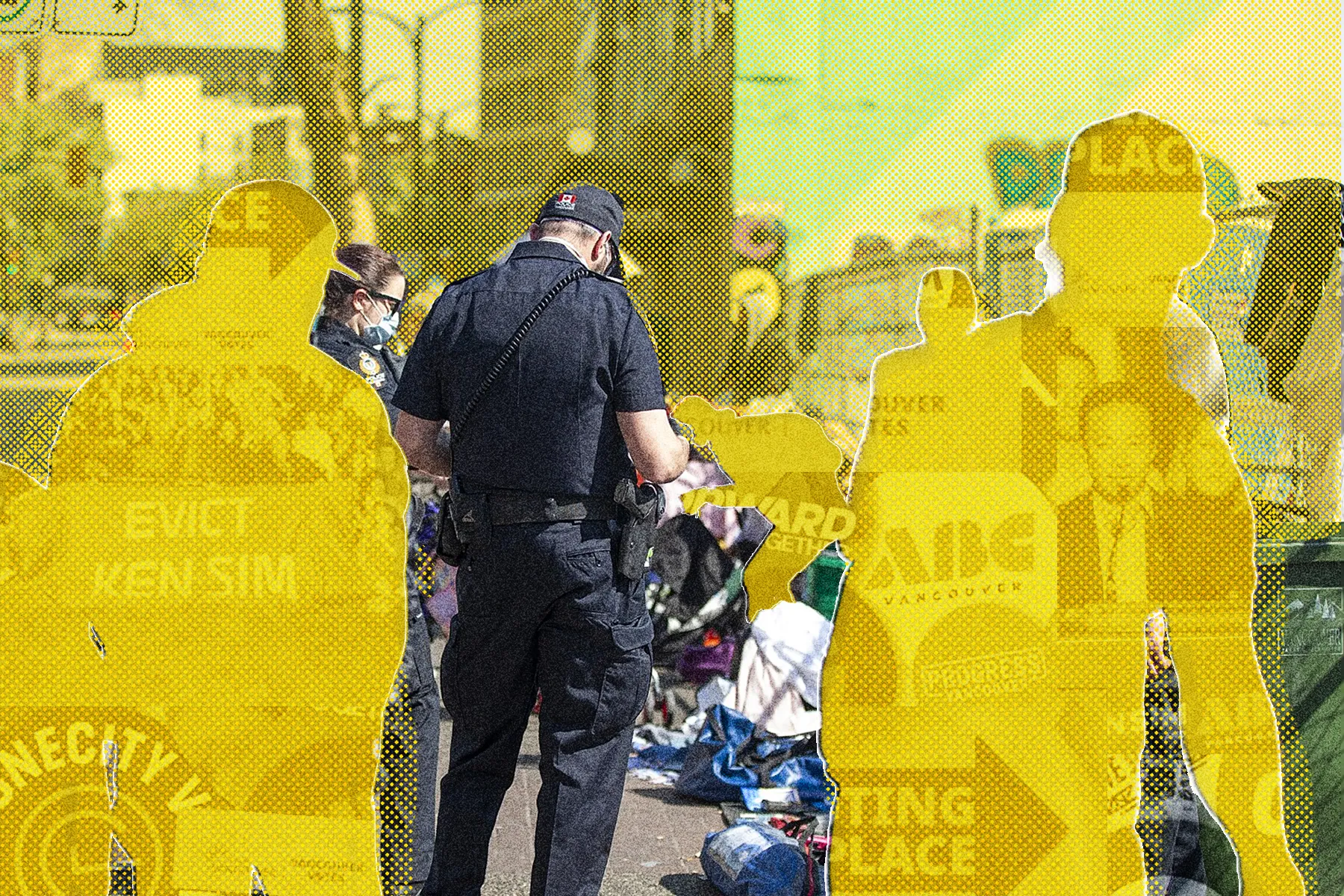
On Oct. 17, Vancouver voters will be asked two questions on public drug use and involuntary treatment in a non-binding plebiscite. Council directed staff to add the question to the ballot at a special meeting on Aug. 14.
The motion carried, with OneCity Councillor Lucy Maloney opposed. Councillors Rebecca Bligh and Pete Fry — both running for Vancouver mayor — as well as Sean Orr left before the final vote and were recorded as absent.
Proposed by ABC Vancouver, the plebiscite will ask voters two questions. The results will have no legal effect on the city — ABC Vancouver city Councillor Lisa Dominato said the plebiscite is intended to give the next council a stronger mandate to address concerns about public safety and street disorder.
"Are you in favour of the City of Vancouver strengthening its laws to forbid open-air hard drug (Heroin, Meth, Fentanyl, and Crack) use in public spaces?"
The text of the first plebiscite question.
Dominato, who previously chaired the Kettle Society, a non-profit supporting people struggling with mental health and addiction, said the first question would allow the city to pursue additional enforcement measures against public drug use.
The question does not say what the stronger laws would contain. According to ABC’s policy paper, as reported by CTV News, officers would be able to issue a bylaw ticket of $0, detain the individual and seize the drugs. Dominato said officers would not need to pursue criminal charges. She described the tickets as "non-monetary" and intended to discourage drug consumption in places such as parks, playgrounds, and business entrances.
The proposal follows the end of B.C.’s three-year decriminalization pilot earlier this year. Since then, possession of any amount of illicit substances has been illegal and enforceable anywhere that lacks an exemption, such as a supervised consumption site. Dominato said the Vancouver Police Department (VPD) has not been referring people in possession of small quantities of drugs for criminal charges “for years and years.”
Rebecca Hasdell, a city council candidate with Vote Vancouver and a public health researcher, questioned whether increased enforcement would meaningfully address addiction or public safety. “We know that if someone is in active addiction, just taking substances away does not solve that problem,” Hasdell said in an interview with The Ubyssey.
She argued that such measures risk pushing vulnerable people further into poverty rather than connecting them with housing, services and community supports.
"Should the City of Vancouver formally ask the Province of B.C. to convert portions of the old St. Paul’s Hospital, or another similar site, into a secure medical facility that provides acute voluntary and 100-plus involuntary care beds for individuals posing a serious risk to themselves or others due to severe substance use and mental health disorders?"
The text of the second plebiscite question.
If the second question receives strong support, Dominato said ABC Vancouver would bring the results to Victoria to advocate for additional treatment facilities. “We will be taking that message to the incoming government in Victoria and saying we have a mandate. Here’s the results of this plebiscite. We need action,” Dominato said.
B.C. is holding a snap provincial election on Oct. 24, which Premier David Eby called on Sept. 22. Eby has said his government already supports creating involuntary care capacity in Vancouver and has been looking for a suitable site, and he questioned the need for a plebiscite on an idea he said has broad agreement.
Mayor Ken Sim has said the city has spent roughly two years making public and private appeals to the province without a single new involuntary care bed announced in Vancouver.
Hasdell, however, questioned the emphasis on involuntary treatment when access to voluntary services remains limited. “We don't have enough voluntary care beds, and we need to start there first,” she said. “I think the evidence tells us that people do best in seeking care when they have autonomy to seek that care.”
TEAM for a Livable Vancouver has also said a plebiscite is not needed to show that open-air drug use is unacceptable. Kareem Allam of the Vancouver Liberals said he supports involuntary care in some circumstances but opposes using the old hospital site because of its central location.
Beyond the questions, the plebiscite has also become a point of political contention. Asked about criticism that ABC Vancouver was using the ballot questions to advance one of its central campaign issues, Dominato rejected the characterization.
“I categorically disagree with that assertion,” she said. “This is about addressing what are real, tangible issues affecting communities and affecting our neighbourhoods.”
Hasdell said the city should already be working with provincial and federal partners on these issues. “Ken Sim has had four years to pick up the phone. He shouldn’t need Vancouverites answering this question to be able to do his job,” she said.
Hasdell also questioned whether the plebiscite's results could provide a clear mandate for specific policies, arguing that voters might support the questions for different reasons. “The yes could be a sense of frustration that the city is not doing enough to help their neighbours, who they see facing unimaginable struggles day to day,” she said.
“We won’t know where people’s ['yes' is] coming from on these questions.”
Vancouver voters will receive a separate ballot for the two plebiscite questions alongside their regular municipal ballot, and they do not have to answer every question. Residents of UBC and the University Endowment Lands can only vote for school trustees and are not eligible to vote on the plebiscite.
The final day to vote in Vancouver's municipal election is Oct. 17.