
Editor's Note
People across the province are heading to the polls on Oct. 17 to elect their local governments. The Ubyssey is covering Vancouver's mayoral race, the city council and park board races, and mayoral races around the Metro Vancouver area. This piece is part of that coverage. Click here to find the rest of our coverage, and look out for our live coverage of results on election night.
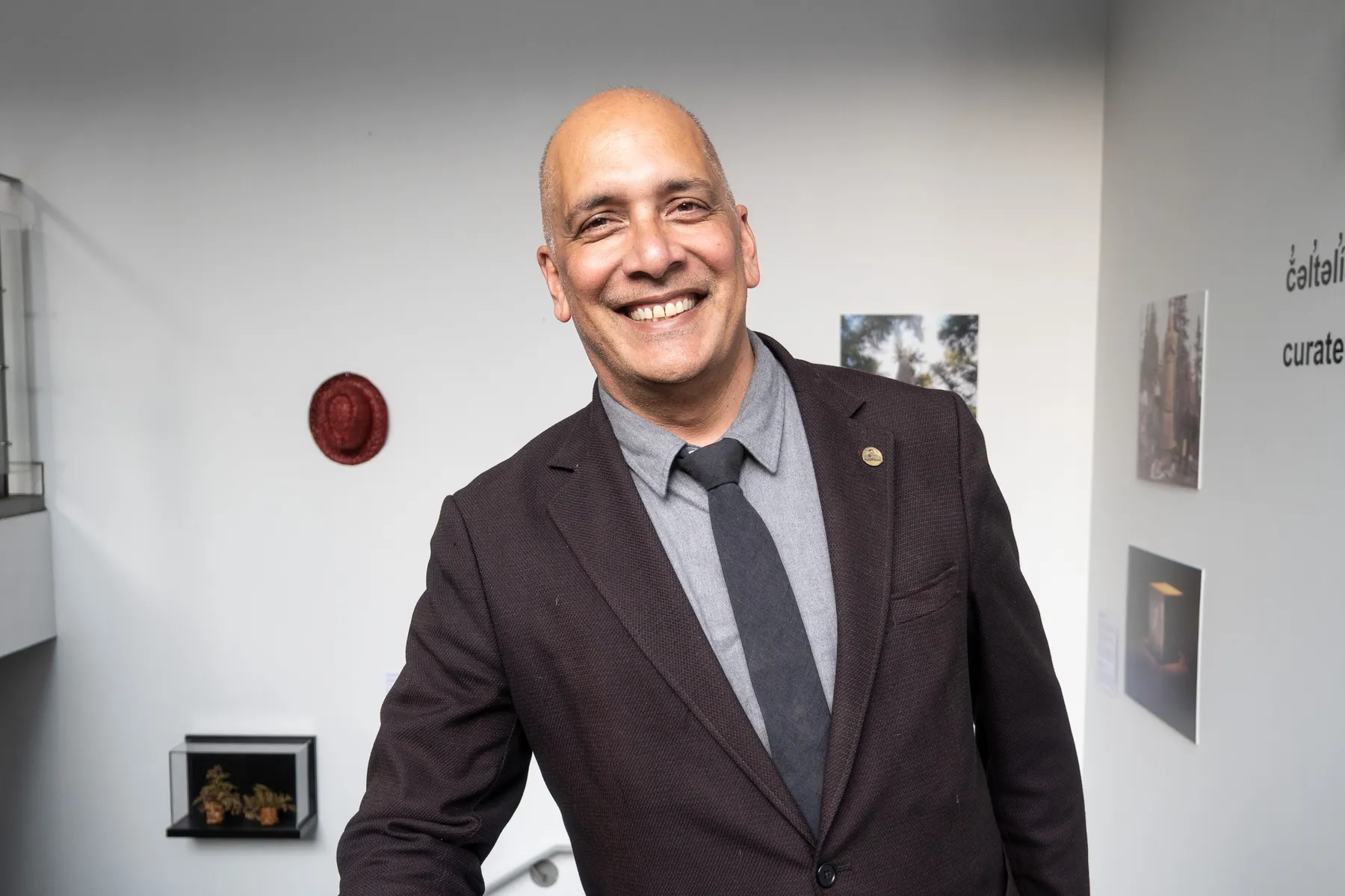
Councillor Pete Fry told The Ubyssey that despite his mother being a member of Parliament for over 20 years, he "didn't really grow up around politics." For him, the decision to run for mayor is about "nature more than nurture."
"It's just sort of a predisposition that we both have towards public service and leaning in and getting things done."
Fry has been a city councillor for the Vancouver Greens for eight years. His biography on the City of Vancouver's website says he is focused on "tenant protections and housing affordability, slower, safer streets, mental health and addictions," among other things.
This year, he is campaigning to address concerns around affordability and to bring "good government" to Vancouver, something he believes has been lacking under Mayor Ken Sim.
"I do feel that the last four years have been largely dysfunctional under Ken Sim and the ABC majority ... when I look at some of the issues in the city of Vancouver, the issues around quality of life — and that's everything from affordability to housing to community safety and red tape at the business level — I feel like there's a lot of work to be done, and I don't think it's happening from ABC."
The race remains tight, with Fry polling just one percentage point ahead of Sim. In a recent interview, Fry spoke to The Ubyssey about his plans for housing and transportation, as well as how his experience in council could be an asset if he is elected as mayor.
For Fry, Vancouver's housing issues are due to a disconnect between median household income and market rates for rent. According to the Canada Mortgage and Housing Corporation, average rent for a one bedroom in Vancouver was $1,807 a month in 2025. In the University Endowment Lands, that number rises to $2,469. Meanwhile, income-per-resident sits at around $75,308 per year. A 2024 report found that renters in Metro Vancouver spend around 60 per cent of their income on housing.
Fry proposes using city land to build affordable housing and "fast-track[ing]" zoning that enables the building of such housing. He has also vouched to repeal ABC's decision to eliminate the Renter's Office — which he introduced via a motion in 2018 and Sim's coalition removed in 2023. He has also promised to reverse ABC's ban on supportive housing.
Supportive housing is "subsidized housing with on-site supports for single adults, seniors, and people with disabilities at risk of or experiencing homelessness," according to BC Housing.
Despite his broad criticism of ABC's policies, Erick Villagomez at Spacing Magazine reported this year that Fry voted with ABC over 80 per cent of the time, when taking a sample of 23 "significant" votes at council — landing behind only ABC councillors and former-ABC-member-turned-independent Rebecca Bligh.
"There is a little bit of selective reporting when those kind of votes are compiled ... to cherry-pick a small number of them to make a point isn't necessarily super accurate," Fry said when asked. He said he often defaults to voting in line with existing policies, but that he aims to "bring forward new policy and new direction."
"But until those new directions and new policies are approved by council and given as direction to staff, we have to work with what we have on the books, which is legal and fair."
One of those new directions would be bringing back the Renter's Office. Fry told The Ubyssey his push to bring it back is centred on getting more input from renters at City Hall.
"We get lots of lobbying from the development and landlord industry. They're actively engaged in communicating their needs and interests to City Hall and to the Planning Department. We don't get that level of input from the broader renters' interests," he said.
"We need to know where we increasingly see these big real-estate investment trusts are buying up older apartment buildings and subdividing them into smaller units, and using a variety of techniques that don't necessarily require a building permit. We need to be on top of stuff like that ... and that is the role where a Renter's Office can be a little bit more proactive."
He also said it is important that Vancouver keeps its stand-alone building bylaws. Under the Vancouver Charter — a provincial act — Vancouver has distinct building regulations from the rest of the province. Vancouver Liberals candidate Kareem Allam has vouched to remove the code if elected. Fry said he has heard criticism from "larger developers" that the unique code can be a "headache" when building, but he believes those can be "streamlined" and maintained the importance of Vancouver's charter.
"It's allowed us to do things differently. It's allowed us to innovate on different housing typologies ... We do have unique circumstances. We have different infrastructure ... We have different housing needs. The Vancouver Building Bylaw has enabled us to build differently."
The Vancouver Greens' platform says they will focus on "dynamic housing," which reflects the "unique cultural, architectural, environmental, and geographic features that make each of Vancouver’s communities special."
Some of Fry's housing promises rely on partnership with the federal government. This summer, a collaboration between the federal and provincial governments that aimed to address housing prices in B.C. came under fire. The plan would see Build Canada Homes — a recently-created federal agency — buy empty condos around the province and turn them into affordable housing. Its critics called it a "bailout" for developers who refuse to lower prices.
For Fry, the first step when advocating to senior levels of government is to "repair" the relationships he says Sim has neglected. And if he aims to make the SkyTrain to UBC a reality, he must build those alliances. The project has been stalled due to lack of funding from senior governments and TransLink.
"I'm not a big bullshit-promise guy ... I find that's what turns people off of politics," Fry said about UBCx. "I would love to just wave a magic wand and make it happen, [but] it's not something that the city of Vancouver is paying for."
"For me the priority is [that] we will continue to advocate for that and do the work in good faith ... In the meantime, I'm more interested in seeing how we can actually get something like rapid transit or some kind of actual solution to speed up access to UBC."
If elected, Fry won't be facing an entirely friendly council. Due to an earlier agreement with COPE and OneCity, the Vancouver Greens are only running four candidates for council out of a possible nine. Even if they are all elected, and even if COPE and OneCity's councillors side with Fry, there is still a chance that ABC will have seats at council to oppose the Greens' proposals. Fry said his experience with the Union of B.C. Municipalities, which he has been a member of for eight years, will orient his efforts to lead a divided council.
"That's the kind of leadership I'm cultivating for a future council ... everybody [leaves] their partisan politics ... at the door. You can pick it back up again when it comes time for the next election."
To him, working with other parties would not be a betrayal of values. "Greens, globally, are more of a values-driven party. We're more idealists than ideologues, but our values, our global green principles, include respect for diversity and participatory democracy ... We embrace the plurality of parties and different ideas, and we strive to work towards consensus ... It's not an abdication of our mandate. It's a mandate to do things differently."
The final day to vote in Vancouver's municipal election is Oct. 17.