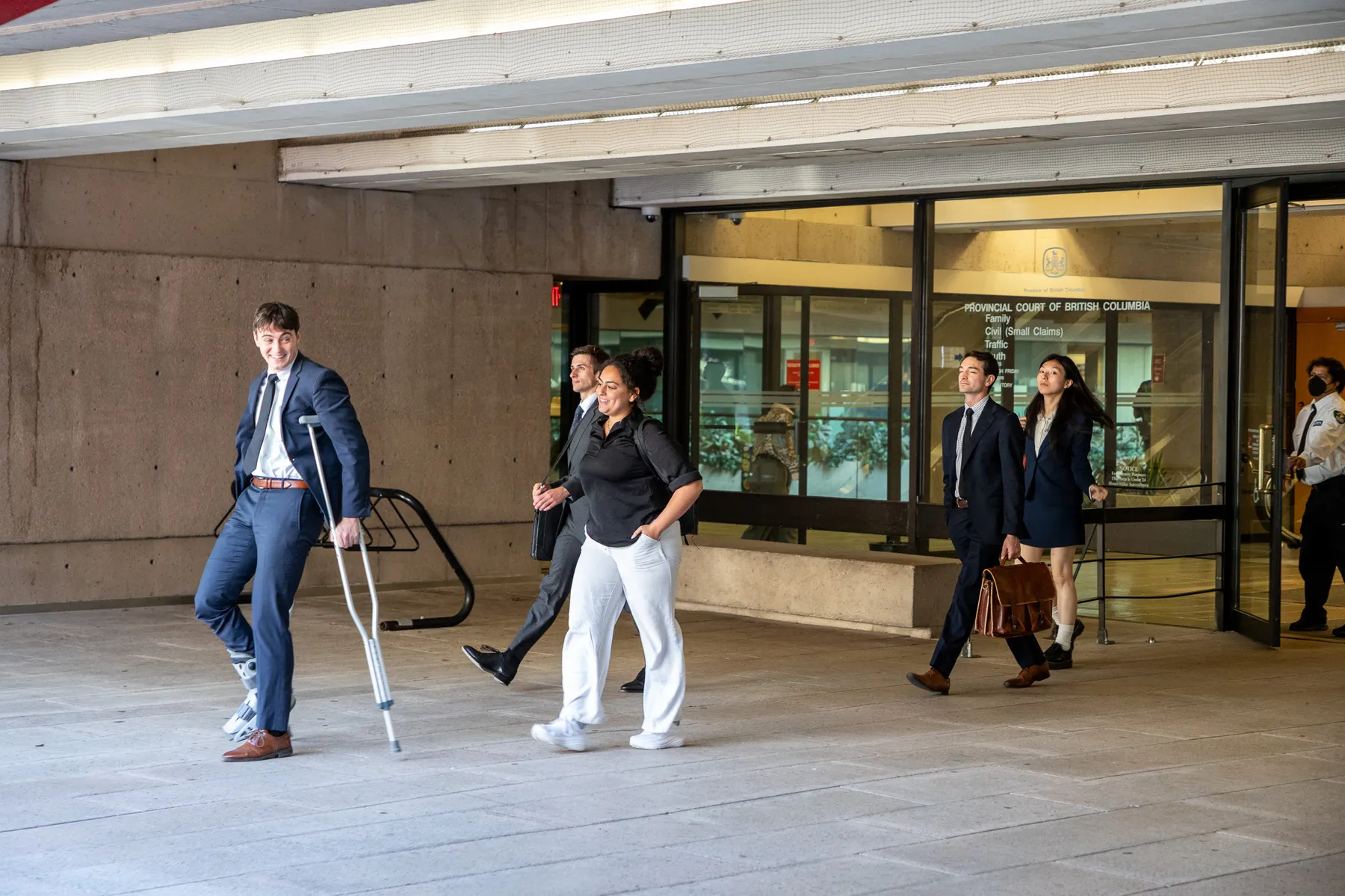


Hearings for the long-awaited trial of Drédyn Fontana — the removed AMS VP Academic & University Affairs — against the Alma Mater Society for wrongful termination ended Wednesday last week, pending the court’s judgement.
Fontana, who was elected VP AUA for the student union in March 2024, was removed from the role in November of that year following an investigation into his performance by Council’s Executive Accountability & Performance Committee.
He was given the chance to resign, but refused, saying he wanted his removal on the public record. Council voted 17–3, with one abstention, to remove Fontana. He was the first person to be removed as an executive of the AMS.
An alleged report from the committee, obtained by The Ubyssey in early 2025, found that Fontana had made misrepresentations to Council and had exhibited poor performance and conduct while in his role. Fontana has disputed these findings, and previously said that the way the student union treated him was indicative of larger transparency and accountability issues in the AMS.
In May 2025, Fontana filed suit against the AMS, alleging that he was fired due to “an internal procedural process” unrelated to his job performance. He also claimed that the conduct of the student union during and after his termination was “malicious and harmful” to his reputation.
Fontana has sued the AMS for $32,914 in severance pay, aggravated damages and filing fees, but later dropped the aggravated damage claims, meaning only $21,777 was contested during the trial.
The trial, which originally had six days of hearings scheduled but was later pared down to two, was heard by provincial court Judge Karen Leung at the Robson Square courthouse on Aug. 25 and 26.
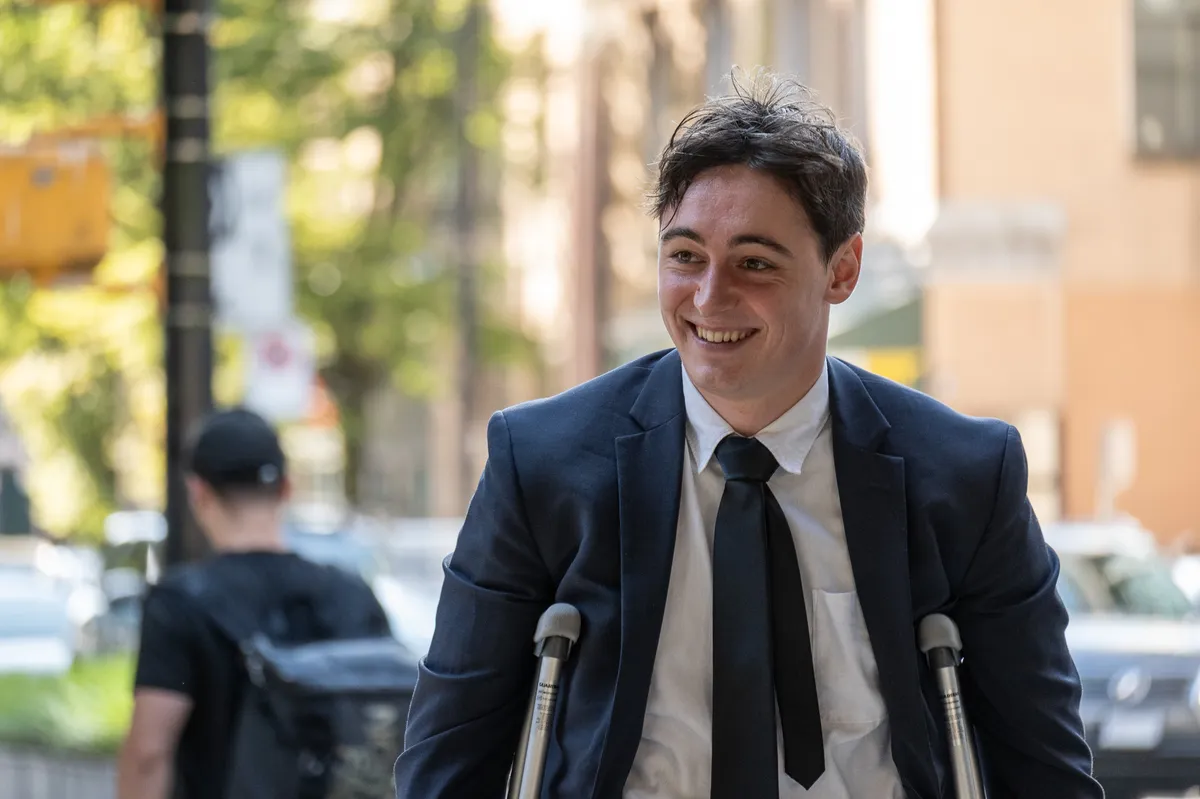
Drédyn Fontana, the former AMS VP AUA, walks into provincial court.
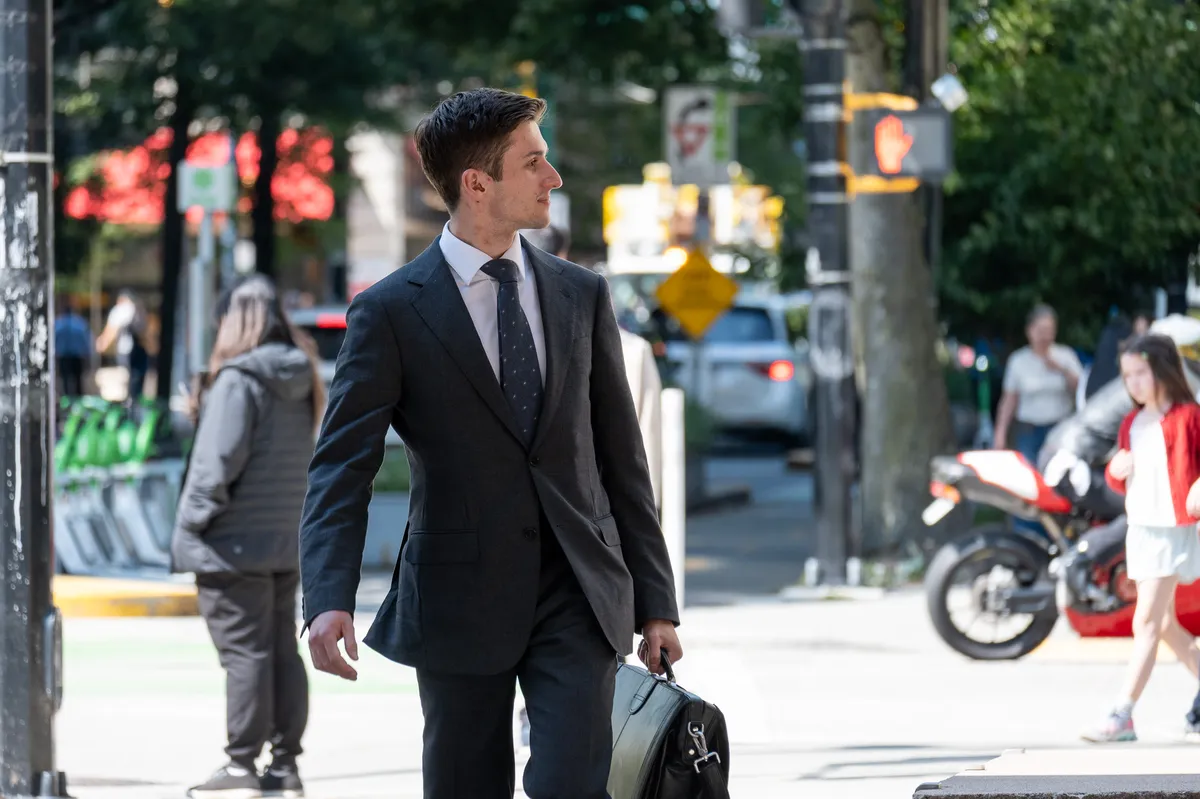
Fontana's legal counsel Noah Macdonald.
At issue in the case was whether Fontana was improperly fired. Fontana’s lawyers argued that in order for the court to rule in Fontana’s favour, he only needs to prove that there was an employment contract between Fontana and the AMS, that the AMS ended the contract prematurely and that the termination led to a financial loss due to an unpaid salary.
Noah Macdonald, one of Fontana’s counsellors and a UBC law student, said that the parties agree on the first two conditions. The case, he said, will come down to if the AMS had the right to terminate such an agreement, and the burden of proof falls on the AMS’s shoulders.
Macdonald argued that Fontana is a student who was “invited into a political context, invited to sacrifice his education,” and when “politics got in the way,” he became victim of an employment agreement he’d played no part in crafting.
Fontana argued that the process for his removal failed to follow conventional proceedings and was “unorthodox.” He said he did not have an opportunity to challenge the motion to remove him from office once it was brought forward, as he was ruled to be in conflict of interest at the time.
Sheldon Goldfarb, AMS clerk of Council since 2012 and a witness for the student union, said during his testimony to the court that the removal followed proper procedure and Robert’s Rules of Order.
Under cross-examination, he acknowledged he could find no provisions under those Bylaws that would have prevented Council from appointing Fontana as interim VP AUA after his removal.
Lawyer for the AMS Cléa Catona argued that holding the VP AUA office was a fundamental precondition of Fontana’s employment, and that once Council had removed him from office, the contract was frustrated. “Without elected office, there was no employment,” she told the court. She maintained that the AMS itself never voted to end Fontana’s employment — only Council voted to remove him from office, and the AMS, as a distinct body, had no authority to override that decision.
For a contract to be frustrated, unforeseen events outside of the control of both parties that radically change the agreement have to happen, according to a 2024 BC Court of Appeal decision.
AMS witnesses Betty Huang and Justin Lieu — the student union’s HR generalist and managing director, respectively — also testified that employment was conditioned on holding office. Both said Fontana’s day-to-day duties as VP AUA did not change until an interim was appointed.
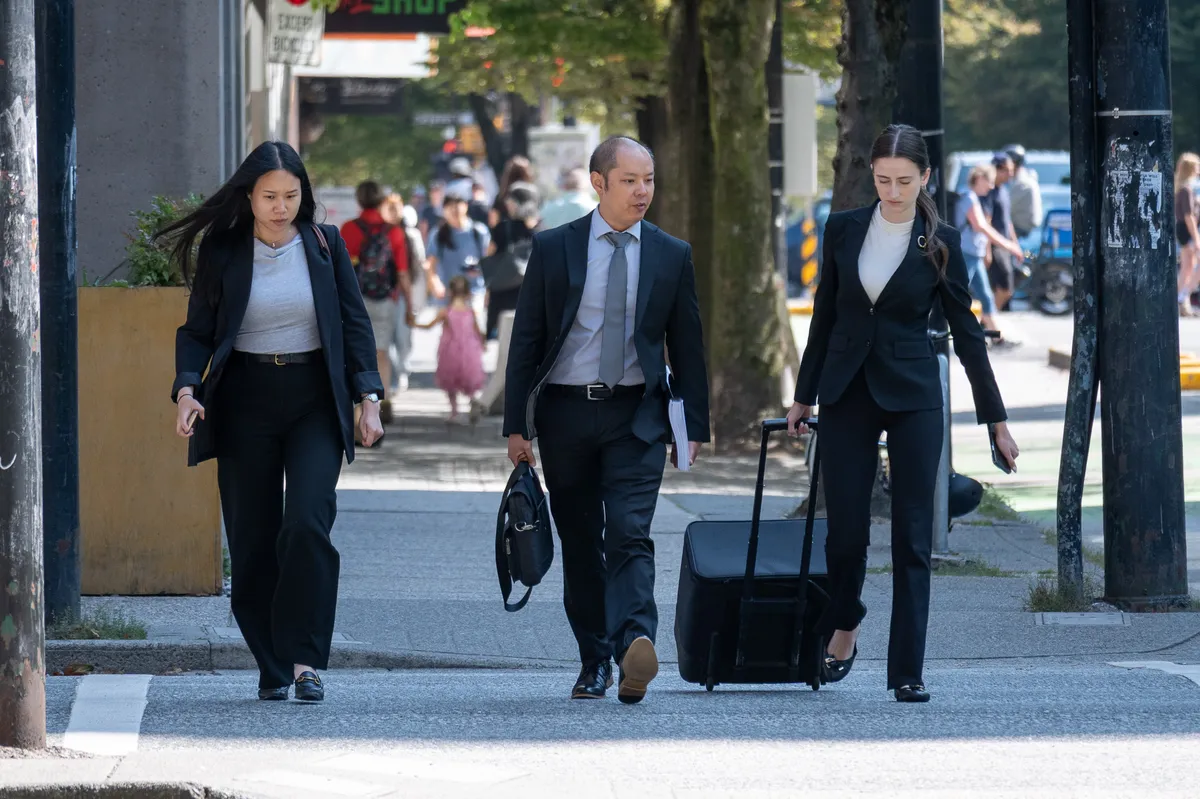
Betty Huang, Justin Lieu and Cléa Catona, with the AMS, going to trial.

AMS Managing Director Justin Lieu and HR Generalist Betty Huang outside the courthouse on the second day of the trial.
Catona also asked the court to dismiss the claim, or if not, to reduce damages, arguing Fontana had not done enough to find comparable work after his removal and noting he submitted no formal job applications between November 2024 and April 2025, despite a “low course load.”
Fontana testified, in turn, that during those months, he attended a career fair, discussed opportunities with UBC administration, scheduled coffee chats, attended a networking dinner and tried to run for his former position’s by-election, despite being ineligible due to his removal. His counsel claimed this was an exhaustive effort to mitigate damages considering his background, age and the availability of such opportunities.
Macdonald argued that the AMS’s “frustration of contract” argument doesn’t hold since the AMS and Council are effectively the same body wearing “different hats.” The AMS can’t use its own vote as the unforeseen event, he continued, calling the AMS’s position “tortured and circular.”
On the AMS’s “fundamental precondition" claims, Macdonald argued that a condition must be satisfied before a contract is formed, rather than read into it afterward. The precondition Catona described, he said, wasn’t clearly stated or implied in the contract, and if the AMS meant for continued employment to depend on holding office, that should have been reflected in the contract.
In relation to Goldfarb’s testimony, Macdonald argued the AMS had the discretion to appoint Fontana as his own interim, yet they chose not to. Fontana further testified that he could have kept lobbying the university or advising his constituencies as an employee without holding office, and that losing his vote on Council — a duty he argues wasn’t part of the VP AUA job description — was the only real change to his role after removal.
With the end of the hearings, the court will deliver an oral decision after Sept. 16.