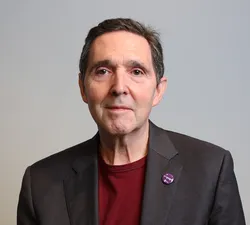
Alex Bush is running to be a staff representative on UBC’s Board of Governors. He is the manager of student services in the department of civil engineering.
The Ubyssey spoke to Bush about his campaign and what he hopes to bring to the board. We asked him the same questions we asked all candidates, and edited this interview for length and clarity.
The Ubyssey: Why are you running and why should people elect you?
Alex Bush: I would like to volunteer for the board, particularly because I’d like to be a staff representative for student interests. As a manager of student services in the civil engineering department, it’s really important to me that students get a positive experience. UBC is a student institution first. What motivated me to run was that a couple of years ago, one of our students transferred between two related master’s programs, and after he had transferred, all of the tuition he’d paid towards the first program was erased, and he had to start again from scratch. It felt unfair to me that he couldn’t count that money towards the new program.
These were very related programs. It’s not like he was moving from, say, engineering to history. The transfer was within our department and within our program. I looked into what are called legacy tuition rules, and they’re written by the Board of Governors. I thought I could join and maybe advocate for tuition reform for some of our students.
Last week, the federal government announced it would be further reducing the number of new international study permits from 437,000 in 2025 to 155,000 in 2026. This is a 65 percent decline. How should the university respond to budget shortfalls that may result from this?
We all know that international students make up a large portion of UBC's budget. We need to continue to provide the same level of service to our students, because the student experience is at the heart of being at university. That was my experience as a student, and that’s my experience as a staff member. In order to do that, we need to make sure we have the right number of staff in the right positions across all faculties, including teaching assistants. It’s important that UBC recognizes that when the budget crunches happen, we don’t push that burden onto our students because it’s not a student’s responsibility to ensure proper funding from the government. It’s a tough situation going forward with a lower number of international students. In the last meeting I had, which was a year ago, after the federal government cut the numbers, UBC did not receive a drastic cut in its own international student pool, but people weren’t applying. UBC really needs to look at its budget and decide where we can make cuts — if we have to make cuts — in ways that don’t drastically and negatively affect the student experience.
Earlier this year, the UBC Library announced a “significant structural deficit” in its funding, despite UBC President Benoit-Antoine Bacon stating that the university is in a financially strong position. What do you believe is the correct response to the library’s problems?
I don't know a lot about the library, which unfortunately makes me feel like I’m not in a good position to make an intelligent comment. I definitely think that the library is an important part for all students. When I was a student, I spent a lot of time in the library. I loved it and had great experiences. I think it comes back to the broader picture: what is the appropriate student experience, and how do we provide a good experience to all students?
Should UBC organize teaching and learning around the tradition of a university as a place of pure knowledge-seeking, or around the interests of the post-graduation labour market?
My background is in teaching, and I think teaching and how we approach education is such an interesting conversation. I definitely don't think we should move away from the traditional education model for the sake of knowledge. But I also think we now need to start incorporating new aspects of teaching. I don't like to see the university at the behest of the labour market, because not everything you do in university needs to apply to your job. I have a master’s in chemistry, which I don’t use at any point in my job, but the knowledge that I learned during my master’s, like how to do research and think and work independently, that I use every day. I would love to see an increase in more applied learning, like co-ops, seminars, and hands-on experiences through teaching labs, the workplace or co-op placements. But I don’t want to move away from that esoteric teaching and learning that teaches people the knowledge that we need.
Over the last three years, some students and staff have called on the university to divest from companies they say are complicit in the Palestinian genocide. If elected, will you push for divestment from these companies?
Many people in our community care deeply about what's happening in Gaza and in other parts of the world, and it's truly tragic what's going on there. These are complex and painful issues, and we all have very personal connections to them. At the same time, I think the role of the Board of Governors is to focus on governance of the university, like oversight and financial accountability and long-term planning. It’s important that the board remains a space for all members of our community, regardless of their political and personal views, to feel represented. It's in my role to help ensure that the university continues to be a place for open and respectful dialogue, but the board itself stays focused on governance, rather than becoming a forum for international political advocacy.
Despite a 44 per cent decrease in UBCV greenhouse gas emissions since 2007, the university is not on track to meet its 85 per cent reduction goal by 2030. Is there anything you would do differently to attempt to meet this goal? If not, how do you plan to approach climate-related issues at UBC?
Climate change matters immensely to me. I have two young children, and it scares me to think of the world that they have to grow up in. I often think back to my own childhood when it was minus 20 degrees all the time in Ottawa in the winter, and now it's zero, and that's scary. I think
UBC needs to be a leader in climate change initiatives. It's nice to hear that we've cut 44 per cent of greenhouse gas emissions, but we need to continue to do better. I would love to see an investment in clean energy, a move towards electric vehicles for UBC vehicles, and further research into how we can lower greenhouse gas emissions to meet these necessary targets.
Back to the student experience, we want students to learn that this is a place that incorporates all and is a leader for the future, so we must continue to aim for these goals. You need to set high goals. Even if we don't meet them, we are making a meaningful change, and that’s the future. We just have to continue to make meaningful change.
Are there any issues important to your candidacy that you haven’t gotten the chance to talk about already?
I want to emphasize that I know this is a staff-related position, but in my role, because I work so closely with students, I see this as a position to be a voice for the students at the university. The university, first and foremost, is education, and what education means to students at the graduate, undergraduate and postgraduate levels. These people are here to learn, so I want to stay engaged with the students, to hear what matters most to them and to advocate for what is in the best interest of our students on campus.