
As The Ubyssey's sports editor, I had to face an existential question on my first day on the job. In an age where any interested sports fan can search for scores, statistics and play-by-play information near-instantaneously, what place do we serve in covering games?
It seems like it should be inherent to the section. We're the Sports section, so of course we cover sporting events on campus. But in taking a step back to look at our place within the sports media landscape at UBC, our role becomes less apparent.
Are we strictly reporting the result of the game? Well, we probably won't be bringing anything new to the table, since anyone can get the gist through the box score that updates live throughout the game. Are we attempting to bring a written report to students? If so, we're beaten almost every time by UBC Athletics' own media department, which publishes their recaps of games faster than we ever could. So, if we're not filling those niches, where do we fit?
For a long time, the answer was nowhere.
The identity of our game coverage changed from year to year. Some past editors chose to cram every result from the weekend into a single "round-up" post. Some editors chose to cover games sporadically, with quick, 500-word "recaps" that often didn't convey more than the box score. Some editors cut game coverage entirely. Throughout these different approaches, there's been a sense that game coverage was fulfilling an obligation rather than actually elevating the section.
Covering games the way we did was a relic of pre-internet information-seeking. Back in the earlier days of The Ubyssey, the goal of sports reporting on campus was clear: it was the 1960s, so you couldn't go and Google the score of a game. To find out what happened in the last football game — unless you went to the game, or heard from someone else who did — you'd have to go to The Ubyssey. Then, the world moved online, and it made our old approach obsolete. But we didn't evolve with the times.
We kept reporting with the assumption that people would still read a basic rundown. They didn't. Perhaps that should have been the sign to change how we did things, but in the words of a past sports editor's transition report, "sometimes you simply need more content." So, we continued to cover games, but mostly for our own convenience.
Last year, we tried to change that. We went about it in two key ways: one, we changed how we wrote, and two, we established beats.
In our writing, we couldn't just talk about results anymore — so we created the game analysis.
We removed some of the limits we had been placing on our coverage. Before, articles about games were typically capped at 500 words. Now, game analyses run about 1,500–2,000. Before, the content of game reports was strictly about what occurred in the game. Now, reporters are encouraged to be more analytical, to talk about why the game played out the way it did and to give their own assessment as to what happened on the field, rink or court.
This analytical turn — an emphasis on the why and how of a game, rather than purely the what — was how we found our niche. While the box score and UBC Athletics might beat us to the punch on speed, we won't be beaten in our analysis. We set ourselves apart by offering a quality perspective on the game from a place of expertise. But in order to do that, we also had to develop our reporters.
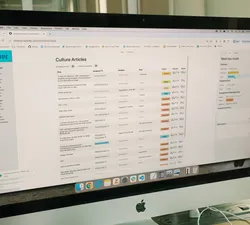
Previously, across The Ubyssey, we used to rely on a pitch list system. Essentially, anyone across campus could subscribe to an email list, and be sent a list of potential pitches to write about. Anyone could cover the upcoming hockey game, provided they responded to the email quickly enough. This worked to source writers — but it didn't work well to source expertise.
Because anyone could pick up a pitch, there was no guarantee that the writer covering a game would have the skills needed to write game coverage, let alone provide analysis on said game. This has been detailed at length in our Ubyssey, Reloaded report, but in essence, we weren't adequately preparing anyone to do their jobs, leaving behind frustrated reporters, frustrated editors, and often, poor-quality writing.
With beats, that changed. Instead of relying on ad hoc participation, we assigned reporters a specific sport to focus on. They would go to all of the games, talking to the players and coaches for that team specifically, building up the knowledge and experience needed to produce insightful analysis.
Now, when you read a game analysis from the Sports section, you should expect an in-depth review of why a game went the way it did, written by a reporter who has the requisite situated knowledge to speak from an informed perspective. All of that was missing before. We have a niche now.
But there was still one problem we hadn't solved. Consistency.
Last year, we ran the section through a team of six writers, including myself as the editor. They were all dedicated and talented, but with so few people, we couldn't cover everything.
We tried our best, but we missed some pretty crucial matches. We covered all of Football's games last season, but not their improbable, miracle comeback win against Regina. We didn't cover either of Women's Hockey's regular season losses. We didn't cover Women's Rugby until nationals. These were some of the most important sports stories from across campus last year, and we entirely missed them.
If there is a dividing line between something we cover and something we don’t, there should be a rationale behind it. Sports has never had that. Why did we cover the Nov. 22 Men’s Hockey game against Alberta, but not the Nov. 21 game? Why did we not have Men’s Volleyball coverage past Nov. 21? There’s really no good reason beyond our section’s capacity, and if we want to serve readers to the fullest, that’s simply not good enough. Men’s Volleyball was one of UBC’s most successful teams this year, making it to the national championship game. But we didn’t have a Men’s Volleyball writer, so we didn’t cover it. That’s not right.
Every game matters. We can’t be excluding any of them from our report, because sometimes, even the games you expect to be skippable may become anything but.
In order for readers to trust our reporting, we need consistency. If someone wants to follow Men's Hockey throughout the season, when we start not covering some games, we're not telling them the full story. We're mumbling through it, being coherent for parts of the conversation, before inexplicably going silent for others. If we keep cutting out mid-sentence, people will stop listening.
When I first came to campus four years ago, I wanted to immerse myself in the sports culture at UBC. I happily went to the Women's Soccer home opener when presented with the opportunity during Jump Start. I didn't even like soccer all that much. I just wanted something.
While in line for the soccer game, I hurriedly Googled how I could buy tickets for the upcoming football game — my favourite sport. As I got the tickets, I tried to do more research into the team. I couldn't find much. I wanted to follow the team more than anyone else on campus, and aside from reading what was written by the team itself, I wasn't able to do so. The Ubyssey wasn't giving me what I needed.
It's my hope that, with the changes we've made to the section this year, this won't happen again.
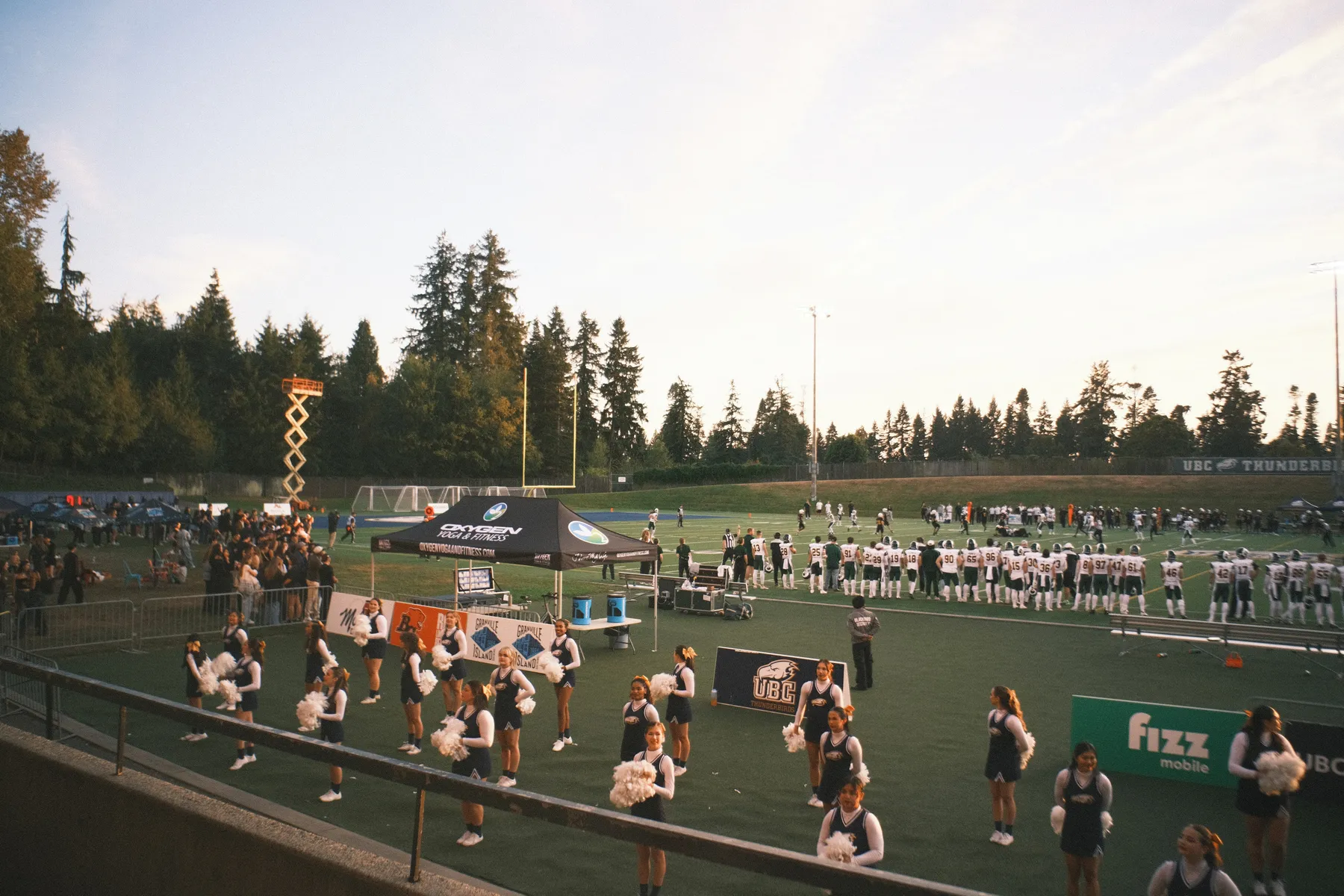
This year, we're aiming to cover every single game from the football team, both hockey teams, both basketball teams, both volleyball teams and both soccer teams. While it's unlikely they'll hit this number, if every team goes all the way to a championship, that could be as many as 247 game analyses by the end of the year. That's a lot of writing. It's a lot of work. But we think it's worth it.
Because now, if you care about a sport, you can follow it from the beginning of the season until the very end, without missing a beat. This is reflected in how our website has been re-designed. Right below our top stories of the day, you'll be able to see the most recent game analyses, both generally, across all sports, but also for each specific sport. Staying up-to-date on your favourite sport is now more accessible than ever, right from the home page.
But how are we doing this? Last year, we couldn't accomplish this because of capacity issues. Now, we're doing everything we can to solve that. We're expanding from a team of six to a team of 17, nearly tripling the number of writers we have, going from one of the smallest sections of the newspaper to one of the largest.
This means that, aside from Football, which plays fewer games than most other sports, each team will have two beat writers focused specifically on covering that team. Each writer will cover one game per week, working together to tackle the twice-weekly games each team typically plays.
But that gets to our biggest impediment to our goal: we need more writers. An additional 11 reporters don't just materialize out of thin air. Our goal as a section this year is exactly as the title says: "every game, no matter what." But if we don't have the people, we lose our ability to do that.
Unfortunately, we've already seen this. If you are wondering why we've restricted our coverage to the nine teams I mentioned above, there are a couple reasons. First, UBC has 26 varsity sports, and even with 17 writers, we don't have the capacity to cover all of them yet. We'd love to report on baseball, softball, swimming, track and field and more, but we don't have the resources. For now, we're restricting ourselves to the sports that U Sports itself elevates above the rest, their 10 core team sports. But if there are 10 core sports, then we're missing one.
We tried to hire for a Women's Rugby Reporter role earlier this year, and we didn't get any applications. Considering how short their season is — mostly completed before Oct. 5 — we decided that since we didn't have applicants, we had to cut the position. If we hired another reporter now, it would be too late.
A lack of writers is the only thing that can hold us back. And you can help us. We're hiring sports reporters until Sept. 22, and any student on campus can apply. If you're passionate about sports, this is the place for you. I've stuck around for four, heading into five, years now, and it's the most rewarding thing I've done at UBC. It's a great opportunity, and we'd love to have you.
If we don't have the people, we won't be able to cover every game, no matter what. It's the unfortunate reality. But if we do, we'll have the most extensive network of sports reporting at any publication in the country. It's a pretty damn cool thing to be a part of.
From my perspective as an editor, it's a lot to worry about. It's a lot of people to manage, articles to edit, advice to give, and games to attend and report on myself. There's a reason no other student publications do this. Almost 250 articles in the span of a year is a lot, and that doesn't include any non-game-related coverage (of which there will be plenty).
But just because something is hard isn't a reason not to do it.
We're doing it because we hope it helps you, as a reader, to stay connected to the teams you care about. We're doing it so that no more budding UBC sports fans get left behind by a lack of coverage of the teams that play on campus.
We're doing it because, as the Sports section, it's what we're here for.