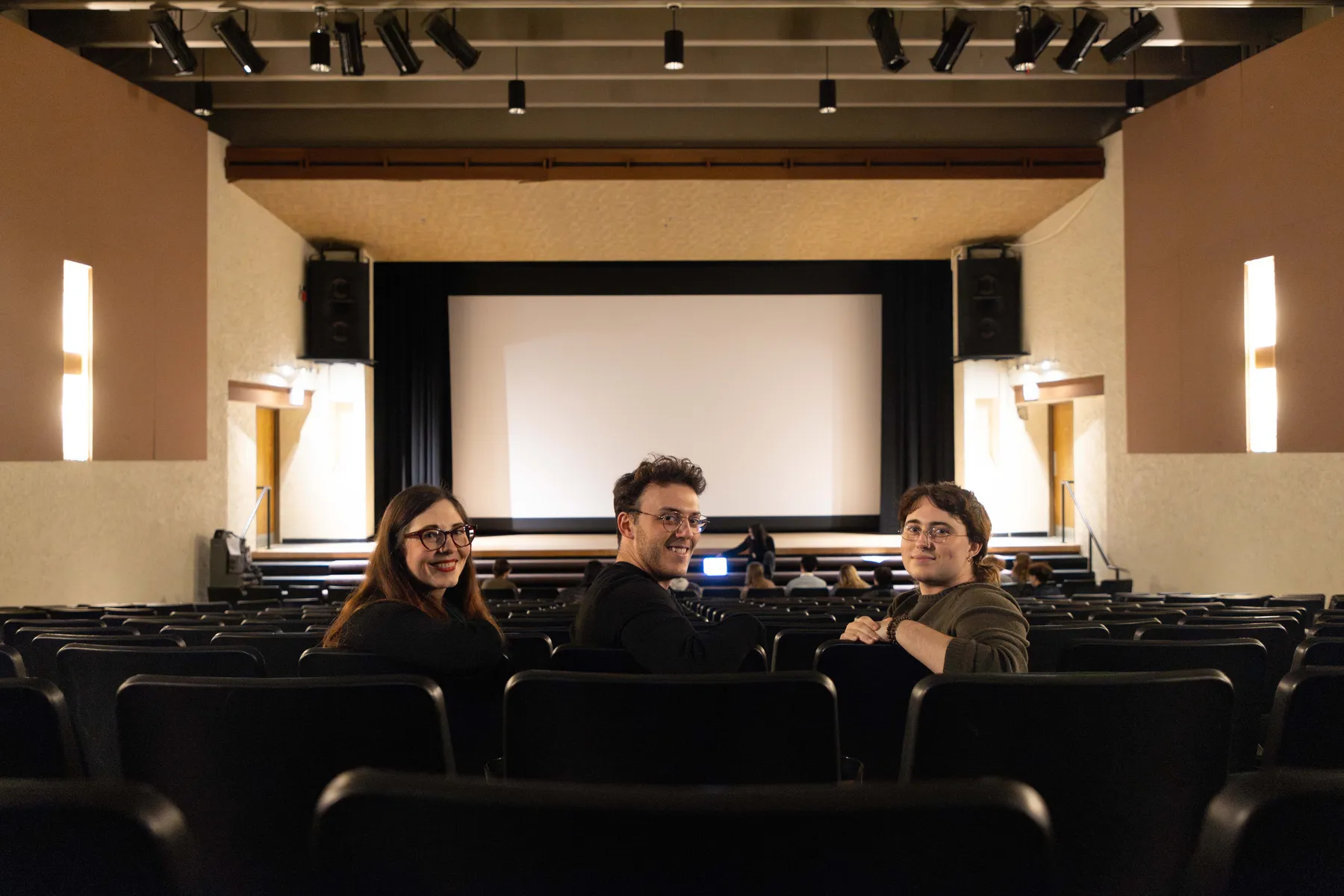
Cheap thrills and artsy kills — this is the best way to describe Italian slasher films, and Dario Argento’s eighth slasher is no exception. Averaging a murder every 10 minutes, boasting gory madness to a '70s synth score, Tenebre is now renowned as a cult classic in the giallo genre in spite of its lukewarm reception in Italy upon release and its complete flop in the U.S. two years later. The film stars Anthony Franciosa as Peter Neal, an American writer visiting Italy who gets pulled into a murder mystery when a series of killings mimicking his novels occurs. It was screened for the conclusion of the Global Horror Film Festival, organized in collaboration with the UBC Film Society and the Arts Languages Max Working Group as part of Arts Multilingual Week at UBC.
The Film Society, established in 1936, is one of the oldest organizations at UBC. Everett Goodyear, a first-year MA student in the cinema and media studies program and co-programming coordinator for the society said their long-standing mission is to “get butts in seats,” especially in the post-COVID era where the number of people going out and seeing films have plummeted due to the rising popularity of streaming services and issues of affordability. As opposed to an $18 movie ticket, UBC Film Society charges $5 for a yearlong membership which grants students access to all of the club’s screenings.
“We want people to come and see things, we want them to trust [our film selection],” said Goodyear. “The goal with this festival was to take our audience base and push them towards something just slightly outside of their comfort zone.”
The Global Horror Film Festival ran from Oct. 27-30 and was free to attend at The Normand Bouchard Memorial Theatre. It featured a variety of films sponsored by student clubs. From East Asian horror anthology Three… Extremes promoted by UBC K-Wave, to Swedish vampire film Let the Right One In introduced by the Scandinavian Students Association, to stop-motion animation horrorscape Lunacy as part of the “Surreal Slavic Specters” showcase of the festival, there was something for everyone, horror fans and curious film enthusiasts alike.
Dr. Elizabeth “Biz” Nijdam, an Assistant Professor of Teaching in the department of central, eastern, & northern European studies (CENES) was involved with organizing the festival in her capacity as co-lead of the Languages Max working group.
At times, university language programs can feel in competition with each other, she said, “but at UBC, we decided as language instructors that [we] wanted to work together instead of apart.” Dr. David Gramling, a faculty member in CENES, established Languages Max in 2020, bringing together over 20 faculty members to draw attention to and celebrate the value of instructed language learning on campus, the role of multilingualism and language diversity in students’ lives.
“The idea came to us that we could support programming around multilingualism through horror films, and have a global perspective, partnering with various units and clubs on campus,” said Biz.
Arts Multilingual Week was one of the working group’s first initiatives. The annual event sees the collective organizing student-facing programming that allows students to exercise creative expression through multilingual modalities. “We're in our fourth year and we have some key events, including the Multilingual Poetry Slam, an open mic night, and now, for our second year, the Global Horror Film Festival, [which has] become part of our programming,” Biz said.
“Of course, there's multilingual programming across campus all year round, but we wanted to carve out one week where we really showed the university community how important multilingualism is to our students and how it's so fundamental to their identity. We exist in this monolingual institution where French should be our second language, and hən̓q̓əmin̓əm̓ is actually the first language of UBC Vancouver, and yet we speak almost exclusively English,” Biz said.
This commitment to celebrating multilingualism is a natural bridge to screening foreign language horror films for the Halloween season. While there is vast variety in English-language horror classics, from supernatural horror like The Exorcist or Pet Sematary to more experimental films that influenced the genre like The Blair Witch Project and of course the classic Rocky Horror Picture Show, there are multitudes of horror films, and films in general, to be discovered that showcase familiar themes with cultural twists from other parts of the world.
“I think often you are made to be slightly insecure if you're going to go see foreign language films. It's ‘film bro-y,’ it's a little pretentious,” said Goodyear. “I wanted to expand people's perception of what non-English language movies can be like. They can be fun, and they can be cultish, and you can come and just have a good time.”
“I think that's a barrier for quite a lot of people. Maybe they don't want to watch a serious movie, but actually, there's lots of fun, funky horror. [We are] trying to get people to recognize that the things they like in familiar movies, there are also bits of that cross-culturally as well.”
Tenebre is an excellent encapsulation of this sentiment. Fun, funky, campy and featuring many beautiful women getting murdered, it presents a familiar Western slasher plot with Italian influences. The cinematography is impressive — for one example, many of the indoor scenes are filmed on plain sets and the actors wear pale clothing to accentuate the gallons of bright red, sticky, fake blood they use in the murder scenes. The film has artifacts of the ‘whodunit’-style plot as a thinly-veiled excuse for the kind of excessive killing you would find in more well-known classic slashers like Scream or Halloween, while introducing the stunning camerawork that familiar viewers expect from giallo.
It was clear to me that I was not alone in the pure joy and incredulity watching Tenebre. The rest of the audience was also invested, laughing at the sillier more stereotypical slasher scenes; launching gasps of disbelief and staggered, uncomfortable laughter at the tension-built, horrifying deaths in spite of its campy nature and framing. When the screen faded to black, the audience, myself included, burst into laughter and clapped like we were watching an international comedy debut at Cannes.