Taiko drums echoed through the historic Paueru Gai neighbourhood on August 2 and 3, as one of Canada’s largest and longest-running community arts festivals filled the Downtown Eastside with sound and celebration.
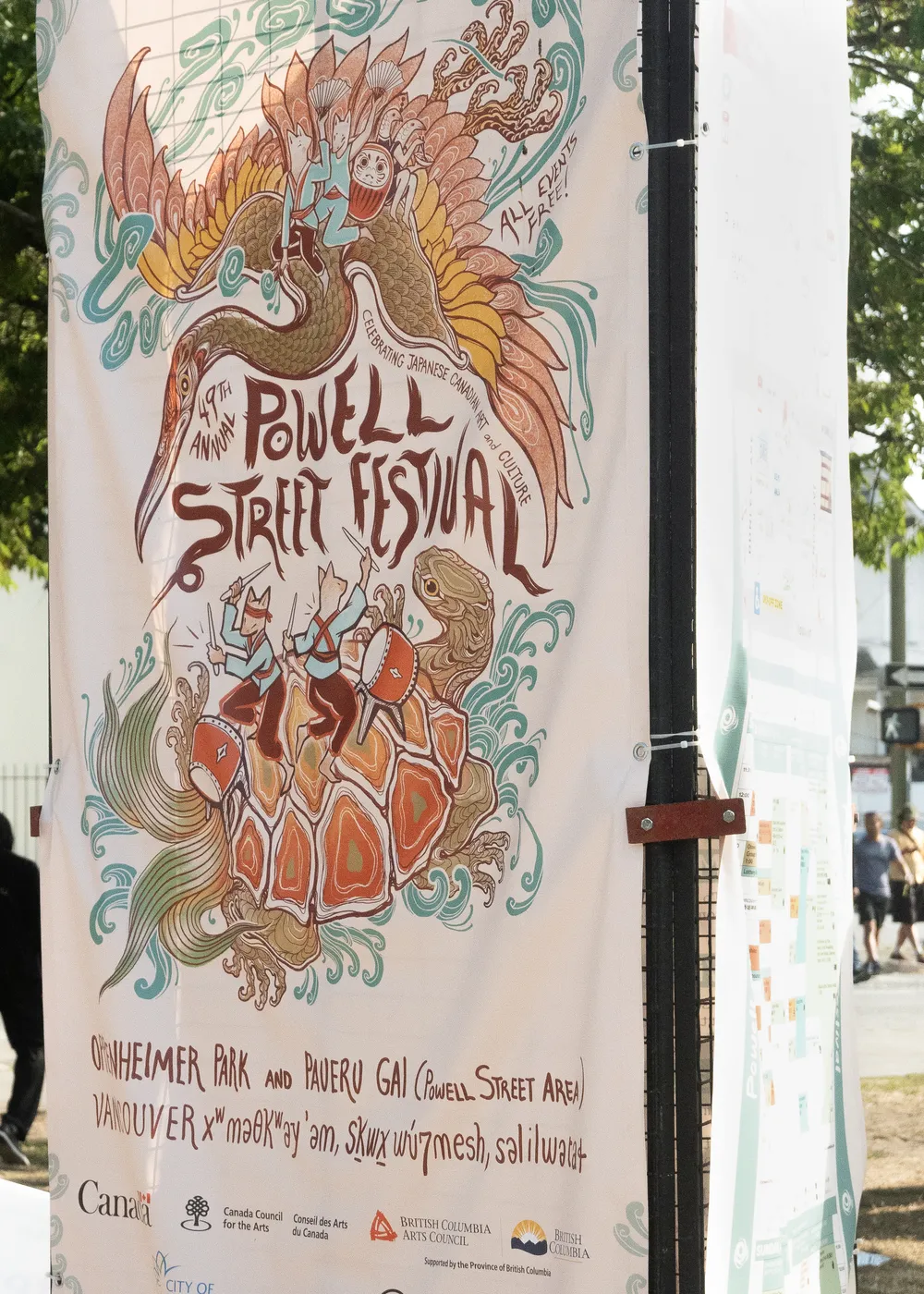
The Powell Street Festival takes place annually on the unceded territories of the Skwxwú7mesh (Squamish), Səl̓ílwətaɬ (Tsleil-Waututh) and xʷməθkwəy̓əm (Musqueam) Nations, in Vancouver’s historic Japantown. It honours and celebrates Japanese-Canadian culture, history and resilience.
The festival is inspired by Matsuri, a practice of traditional celebrations in Japan often sponsored by local shrines or temples. They usually involve food stalls, entertainment, games and processions. The two-day event on Powell Street recreates this practice in Canada annually, with a mix of food stalls, traditional displays, dance, music, martial arts demonstrations and walking tours of the neighbourhood. Each year, Oppenheimer Park, once the heart of the historic Japanese-Canadian neighbourhood, transforms into a hub of activity with a main stage at its centre and tents spilling out in every direction.
The Powell Street Festival began in 1977, making this year its 49th anniversary. It was launched initially to mark 100 years since the arrival of Manzo Nagano, the first recorded Japanese immigrant to Canada. Many immigrants from Japan followed, settling in British Columbia as fishermen, farmers, and small business owners, building a thriving community in what is now the Downtown Eastside.
Among the rows of food stalls, art displays, and craft vendors at this year’s festival, several booths offered visitors a deeper look into this history, offering snippets from the lives of early settlers and the challenges faced by the Japanese-Canadian community. These exhibits helped bridge the festival’s lively atmosphere with moments of reflection, acknowledging the community’s displacement during World War II, when most Japanese-Canadians were forcibly removed from the coast and interned.
In 1977, Vancouver’s Japanese-Canadian community celebrated the first Powell Street Festival, marking a resurgence of community and ethnic pride under repressive systems of racism and the legacy of internment, and it continues to foster Japanese-Canadian artists and embrace an intergenerational legacy.
This year’s program brought in vibrant acts from across the country and abroad.
The Yosakoi show, a traditional Japanese dance form originating from Kochi prefecture, Japan, was showcased by the APPARE team. Their name is a play on words, meaning both “clear skies and sunny,” as well as an exclamation shouted after an excellent performance. The highly energetic and colourful performance concluded with a joyful group dance finale with the audience participating.
Another standout was Hitotose, a samurai performance troupe blending dramatic acting with choreographed swordplay, known as Tate (殺陣). The end result is like the thrilling fight sequences one would watch in movies. A teenage volunteer was the star of the show, decimating the performers in an epic sword battle after an interactive instructional session.
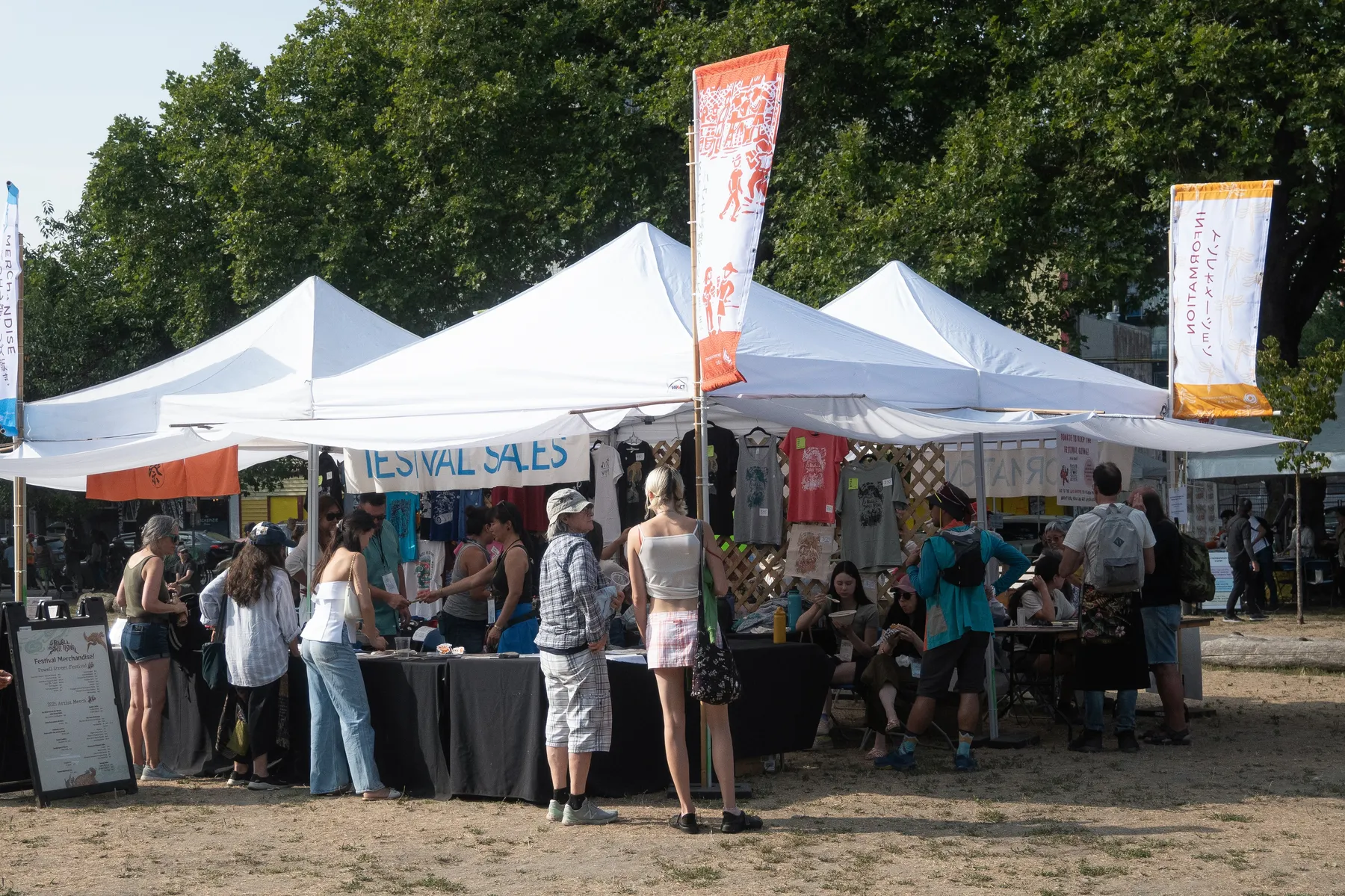
Beyond the performances, the festival offered something for everyone: local art, vintage finds, handmade zines, community booths and, of course, food. My friends and I handmade Paueru gazette zines at the art stall while learning about the history of The Bulletin — a nonprofit Vancouver journal of Japanese-Canadian community, history and culture. Large crowds gathered at the food stalls, with the shaved ice being a particular favourite in the sweltering heat.
Lastly, the Vancouver Buddhist Temple had an open house, where the Sogetsu Ikebana (flower arrangement) school had beautiful, unconventional and avant-garde displays of flower arrangements for visitors to learn about, as well as Yukata (traditional outfit) rentals.
The 49th Powell Street Festival was not only a celebration of Japanese-Canadian culture, but also a call to preserve its living history. One tradition, the hachimaki headbands given to volunteers at the festival since 1989, is the focus of the Powell Street Festival’s 50th retrospective exhibition in 2026.
The exhibition will be held at the Nikkei National Museum and will spotlight the community’s long-standing contributions by displaying headbands collected through the decades. Additionally, volunteers asked people to speak with their parents and grandparents about past festivals, searching for photos, stories and memories to help commemorate next year’s milestone 50th anniversary.
As the festival looks ahead, it becomes clear that its future is being shaped not only by celebration, but also by the shared effort of a community to remember, record and pass on its story.