
Dance is a meditation on embodiment. It's hypnotic, watching dancers twirl and leap in ways that seem to defy physics, seemingly possessing an unearthly control over their muscles and joints. But any dancer will know that in reality, there is nothing more grounding. For those who need to dance, movement doesn’t just bring them down to earth — it lays the foundation of daily life.
It is this foundation that we see uprooted, then re-established, in Mina Shum’s new film Whatcha Want, which screened at the Vancouver International Film Festival earlier this month.
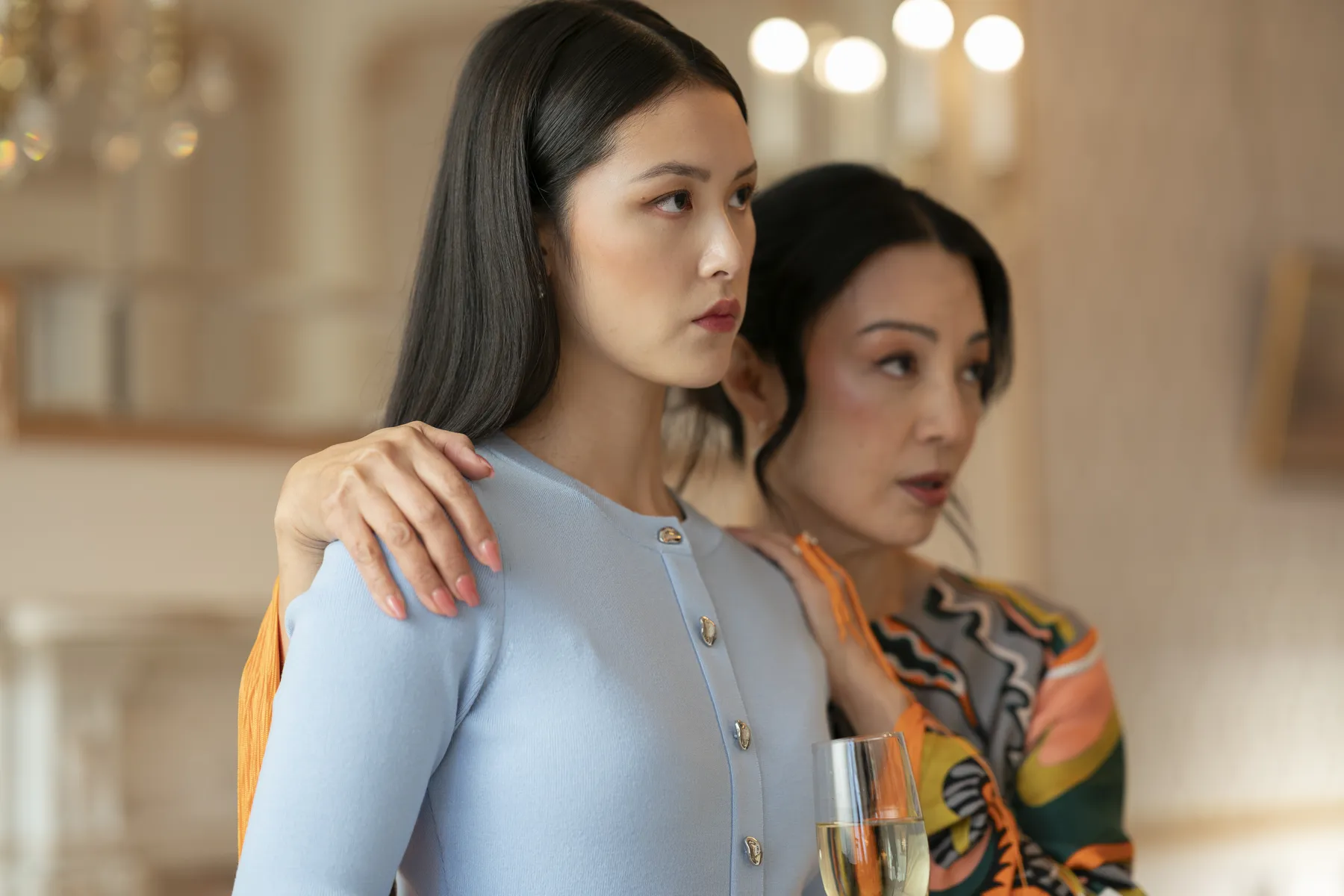
Yin Tse, played by Bridgerton’s Isabella Wei, was always a dancer. Whatcha Want opens with Yin dancing through her childhood in a home-movie style montage. However, this version of Yin is long gone by the time we’re introduced to her as a glamorous young woman living in Vancouver. Having left her life in Hong Kong behind, Yin dreams of a happily ever after with her new — and extremely wealthy — husband, BT. But BT is still frequently tied up with work back in Hong Kong, so Yin quickly realizes that her plan is nothing more than a fantasy.
Yin is suffocated by her loneliness. She spends most of her days lazing around her luxury apartment in floor-length dresses, occasionally video-calling BT back in China — as long as it fits into his rigid work schedule. Her in-person social interactions are confined to her friend Mary Wu, played by Ming-Na Wen, and her driver Ming, played by Tzi Ma.
As Yin grows increasingly dissatisfied with her trophy-wife lifestyle, she begins wondering if more is possible for her. Her breaking point comes after a comically predictable cheating reveal, where BT exposes his affair to Yin over video call. She's heartbroken, but her husband's infidelity makes space for Yin's inner desires to take hold. A chance encounter with dance studio owner Penny, played by Helen Dang, turns into a fruitful opportunity when she commits to joining Penny's dance troupe.
As her love for dance blossoms once again, Yin is forced back to her life with BT after he threatens to cut off financial support until she accepts his apology. Questions of economic privilege and the sacrifices women make for security are brought to the surface, especially in Mary, who encourages Yin to look past BT's behaviour in order to retain access to his wealth. Throughout the latter half of the film, BT attempts to control Yin's dancing by asking her driver to keep tabs on her location and activity — but she pushes back, all in hopes of living on her own terms.
It is perhaps unsurprising, then, that dance sequences made for the best moments of Whatcha Want. Hip-hop — the main style explored in the film — encapsulates Yin's desire to recapture her power. Bold and unapologetic movements demand attention, and Yin physically reclaims the space she is otherwise denied.
There's a beautiful parallel between Yin’s relationship with physical expression and her sense of empowerment. In the first few scenes, Wei makes it known that dance is an integral part of Yin. She energetically bobs her head to music while waiting at a bus stop, and releases her frustration with BT through an emotional dance party on the balcony of her apartment. These small moments of release build anticipation for when Yin fully gives in to her yearning for dance.
Well-choreographed scenes later in the film — like the bus sequence — are a satisfying payoff to Yin's restrained physicality in the first act. After Yin decides to audition for the dance program, Penny suggests she join a somewhat strange dance class, in which the dancers are encouraged to explore how a bus's movement could direct their bodies. The choreography is dream-like, set in the peculiar environment of a Vancouver bus interior. Dancers suspend themselves from handrails and shimmy into bus seats as warm daylight floods through the windows. It was in these unique moments that I truly understood the characters — watching their relationships develop in ways the script couldn't capture.
Unfortunately, the film’s writing was its biggest weakness; the less characters spoke, the more I believed them.
While the performances of most of the supporting cast were decent, cliché dialogue and clunky moments of intimacy led the film’s themes to come across as generic and underdeveloped. Yin and BT’s romance was the main culprit. The central tension is built around Yin gaining independence from her controlling husband, but it was difficult to believe there was much of a relationship to preserve. Wei’s performance saved much of her material, but the same can't be said of Hugh Tran’s portrayal of BT — who came off as a parody of the wealthy and disconnected husband, rather than someone Yin could genuinely love. The film lacked the stakes it needed in order for its emotional beats to land as intended.
Even so, with Wei’s movement and internal struggle as the undercurrent of the film, emotional depth still came through. In one of the final sequences, we watch Yin fully come into herself through her love of dance. No longer is she constrained by the floor-length dresses and rigid rules of her former life — now, she is free to move and act as exactly who she always has been.