Silence hung in the air as the ceiling-vent-wearing killer thrust a spear into their victim. Then, a geyser of blood erupted like striking oil, and the seats around me released their bated breaths in raucous laughter. This was the opening scene of Jane Schoenbrun’s Teenage Sex and Death at Camp Miasma. I had forgotten what a completely packed Rio Theatre looked like — a body in every floor seat forcing you to climb to the balcony where an employee’s stationed to direct traffic for concessions. Although unsure of exactly what to expect, I was positive Schoenbrun would subvert my expectations at every turn.
In the film, overintellectual queer director Kris, played by Hannah Einbinder, is selected to revive an exhausted in-universe slasher franchise, Camp Miasma. She must amend the transphobic representation of the franchise’s killer, Little Death, as a gender-transgressing monster and adapt it for modern audiences. Kris is intent on casting the final girl from the first Camp Miasma movie, Billy Presley (Gillian Anderson), who has since become a recluse, choosing to reside in the sleepaway camp where the first Camp Miasma film was shot. Kris’s introduction to Billy is where the gore-infused, sensual ride begins.
The opening credits, set to Okay Kaya’s take on “Nightswimming“ by R.E.M, were a beautifully-executed introduction to the lore of Camp Miasma. The montage sequence was replete with images of memorabilia, comics and news headlines, all speaking to the film’s cultural impact in Schoenbrun’s constructed world. Production designers Brandon Tonner-Connolly and Matt Hyland created fake Camp Miasma DVD covers, trading cards and board games, which were featured in the credits — the effort put into creating a realized world for Camp Miasma elevated it beyond the run-of-the-mill movie-within-a-movie.
The film also veered away from the bland uniformity — and often excessive darkness — of the Netflix colour palette, allowing the shots to retain their vibrant colours without sacrificing visibility. Filmed in British Columbia, the movie incorporated occasional painted backdrops using in-camera matte glass shots.
In an interview with Deadline, Tonner-Connolly and Hyland said the matte paintings were an entryway to the characters’ emotional landscapes, as well as Kris’s introduction to the world of fantasy at Camp Miasma. Snow, in these landscapes, had beautiful hues of pink and purple. The night sky, with speckled blues and a circular moon, led the viewer into a world of imagination. It reminded me of Run Lola Run or The Grand Budapest Hotel.
The interplay of beautiful visuals with Schoenbrun’s splendid taste in music created my favourite scene in the entire movie: Little Death’s killing spree in the first Camp Miasma, seen through the lens of Billy and Kris watching the film together. The one-take sequence was set to the Counting Crows’ “A Long December,” with time-synced choreography. Blood shot out in fountain fashion. Heads were sliced clean off, still speaking as they rolled away.
The sequence was filmed by attaching a Bolex, and subsequently a 35mm, camera to a rig worn by Little Death’s actor, Jack Haven. It kept the audience fixed on the killer’s face while they saw the carnage Little Death had left behind. Bloodshed was detached from what real, nauseating injury looks like. In this obvious deviation from realism, the slasher genre’s purpose was not its horror, but its dissection of the tropes of the monster and sexuality central to the form.
On tackling the transgender monster trope in slashers, Schoenbrun has previously spoken about the likes of Buffalo Bill and Norman Bates. The gender non-conforming body is something the genre is both drawn to and afraid of. Challenging the gender binary becomes synonymous with evil, and these characters also portray transness as the result of trauma.
TSDCM replicates these tropes heavy-handedly in its killer. Born to two hermaphrodite parents, Little Death spends a few days in the girls’ cabin and a few in the boys’ cabin during their stay at Camp Miasma. Targeted, harassed and ultimately drowned by other campers, Little Death seeks revenge by going on a killing spree, donning a ceiling vent as a helmet. The incredulous campers who tell this story — in a scene spliced with images of a crazed Haven twirling in a half-suit, half-dress get-up — frame Little Death differently than other gender-non-conforming monsters. The behavioural manifestation of gender transgression, paired with this outfit and the campfire horror story cliché, satirizes Little Death as the “transsexual monster.” Schoenbrun plays into age-old conventions in a way that signals to the audience they know exactly what they’re doing.
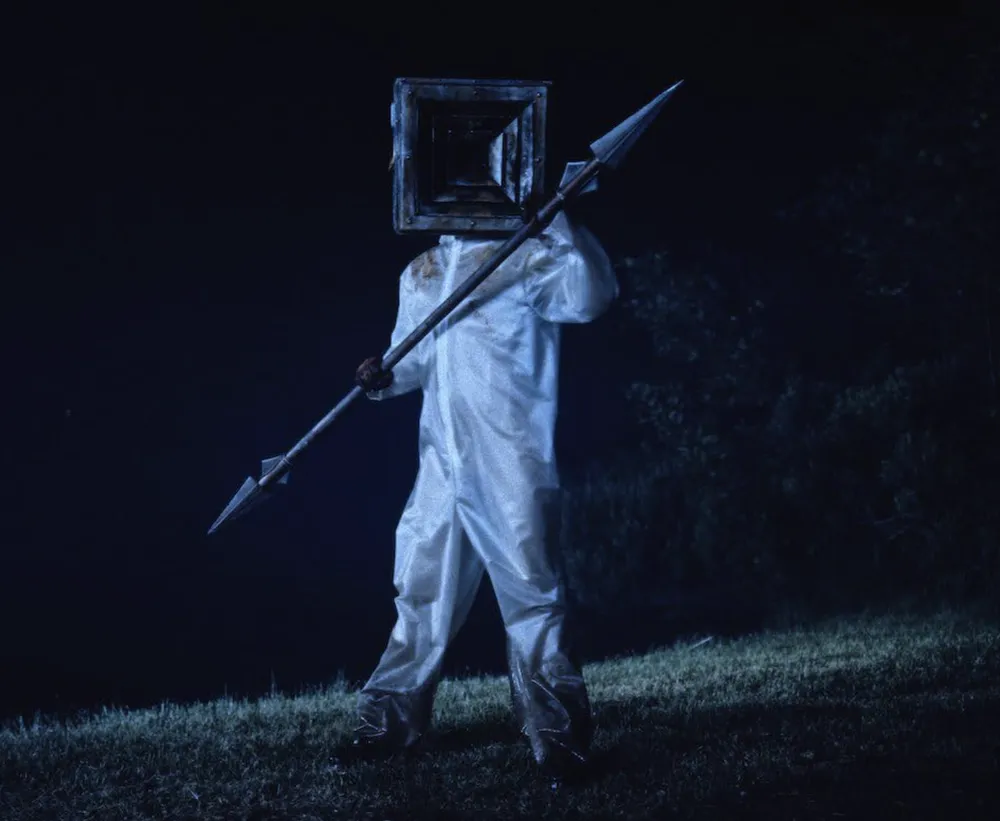
Little Death seeks revenge by going on a killing spree, donning a ceiling vent as a helmet
But Billy herself is the ultimate manifestation of fun. Anderson, whom I have loved since my mother and I saw her as Scully in X-Files, played into Billy’s unexpected old Hollywood aesthetic with a Southern accent. The first time she laughed, it was an exhilarated shriek. She was a little tacky, but in an irresistible way. When she first introduced Kris into her home, she ordered KFC and set it out on a large platter, making sure to touch each piece of chicken with her fingers.
“Do you like dipping sauce,” she asked, sighing like a romantic lead in a 1920s black-and-white film. “I love dipping sauce,” Kris replied, enamoured. An on-the-nose romantic montage followed — sauce packets were opened and chicken was slowly submerged, then brought to their mouths in excruciating hyperfocus. Every tear and crunch could be heard in erotic detail.
Unlike TSDCM, Schoenbrun’s first two films, I Saw the TV Glow and We’re All Going to the World’s Fair, were made during a period of self-actualization. They described transitioning as blowing up one’s life and becoming something new in the hopes of feeling more like oneself — of being able to stop watching the screen and finally enter it. I Saw the TV Glow and TSDCM use the media-within-media approach to construct allegories for queerness. Where the former depicts the haunting tension of discovering one’s identity, the latter relishes in that discovery.
What people figure out in their teenage years, Schoenbrun said they were reckoning with in their 30s. After experiencing a puberty that felt wrong, they were learning to love their body, identity, and having sex. This is where the “teenage” in the title stemmed from — and Kris’s youth perfectly channelled the word. Kris’s enthusiasm for the Camp Miasma franchise is revealed to be not just artistic, but also sexual — she only derives pleasure from role-playing as the final girl.
Schoenbrun has referenced philosopher George Bataille in their ideological exploration of fantasy, especially those that are taboo or transgressive. For Schoenbrun, confronting what was considered culturally forbidden opened up new possibilities, allowing safer exploration of suppressed fantasies and the ability to experience pleasure with others.
Schoenbrun’s incorporation of this idea manifests in Billy and Kris’ dynamic. Billy helps Kris be authentically present during sex by incorporating a fantasy about being pursued by Little Death. In the first Camp Miasma film, Billy’s character was coerced into sex by a fellow camp counsellor, and she admitted to completely dissociating during the experience. She somehow saw herself through the eyes of Little Death, lying on the bed helplessly before being impaled by Little Death’s spear.
Having taken the time to heal, an older Billy was able to bestow wisdom on the sexually repressed Kris, urging her to lean into her fantasy. And boy, did she. Einbinder skilfully embodied the role of the final girl in the film's terrific climax. Scantily-clad, she ran through the forest surrounding Camp Miasma, escaping Little Death and finding herself in Billy’s arms. She overcame her fear and finally accepted pleasure, as Little Death approached.
Schoenbrun was initially unsuccessful in finding a distributor for the film. There were discussions around its commercial viability, which was unusual considering the historical success of the slasher genre. “It's getting harder for queer people to make honest stories about [their] lives, especially if those stories aren't like trauma porn,” Schoenbrun said.
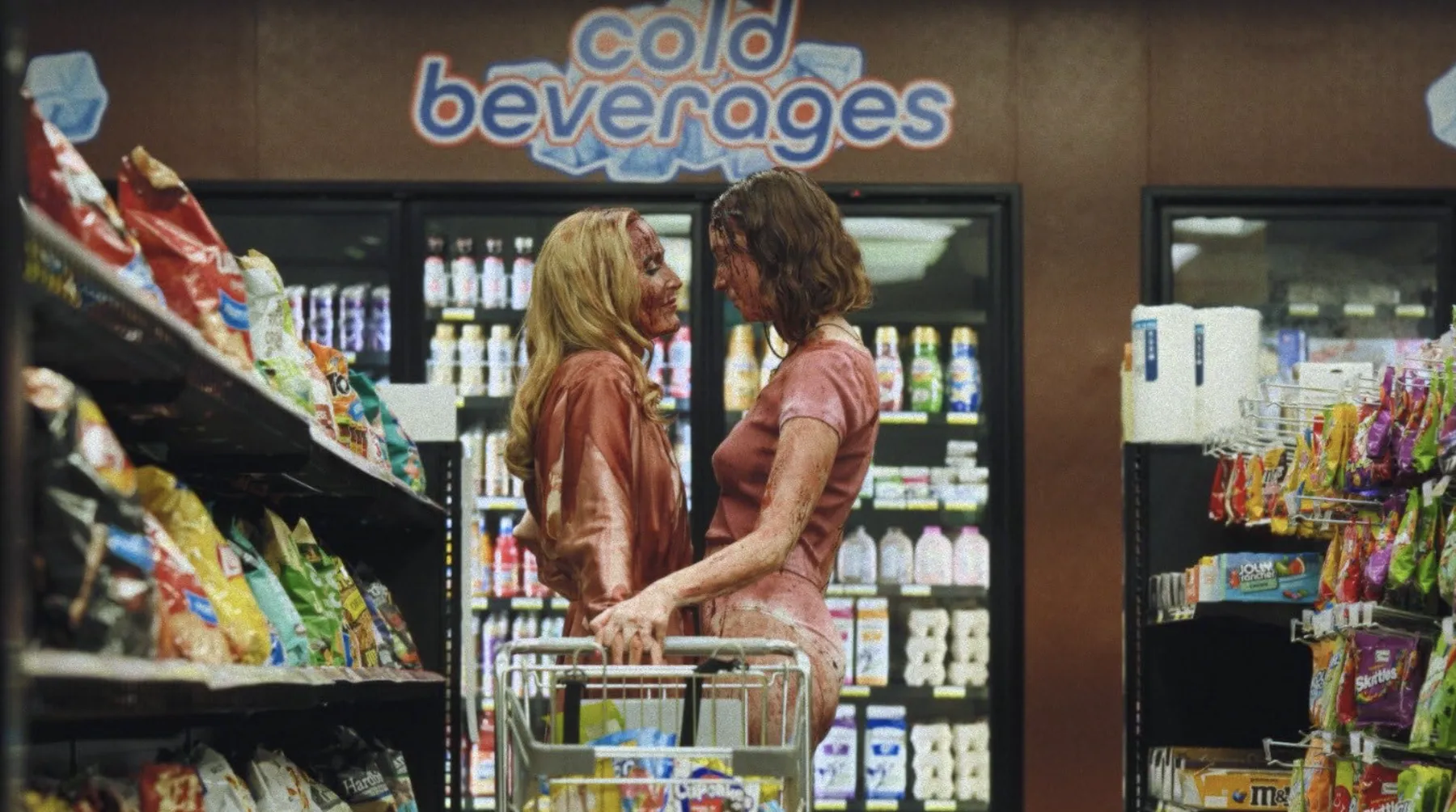
TSDCM was made from the perspective of not just queer liberation, but sexual liberation, too. Teenage Sex and Death at Camp Miasma acknowledges that desire can and should be navigated safely — and sometimes that means being covered in your own blood at the gas station.