
At the penultimate night of VanJazz '26 — a new jazz festival — a crowd of all ages filled the Chan Shun Concert Hall for the Ghibli Jazz Orchestra’s largest gig to date.
The ensemble plays soundtracks from Studio Ghibli films, the Japanese animation studio behind Howl's Moving Castle and My Neighbor Totoro. Performing Joe Hisaishi's scores is not a radically new idea. Many an orchestra have taken a swing at Studio Ghibli's repertoire. Even Hisaishi's non-Ghibli works havefilled arenas, which is a feat not many classical composers can lay claim to.
But the Ghibli Jazz Orchestra is no symphony — swapping strings for saxes, it offers reimagined jazz arrangements of familiar tracks.
Led by UBC alum Isabel Leong, the 18-piece ensemble is comprised entirely of musicians based in the Lower Mainland, many of whom met while studying at the Capilano University jazz program. VanJazz founder Tim Reinert spoke of the Ghibli Jazz Orchestra fondly in his introduction that night, recalling their first show with Infidels Jazz — Reinert's events company — four years ago, at Frankie’s Jazz Club. Audience members had to be turned away that night as the venue reached capacity. He knew Leong and her band had something special.
Since selling out Frankie’s, the group has hit most of Vancouver's main venues, including The Pearl, The Rickshaw, and The Hollywood.
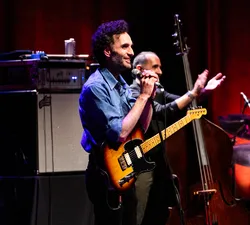
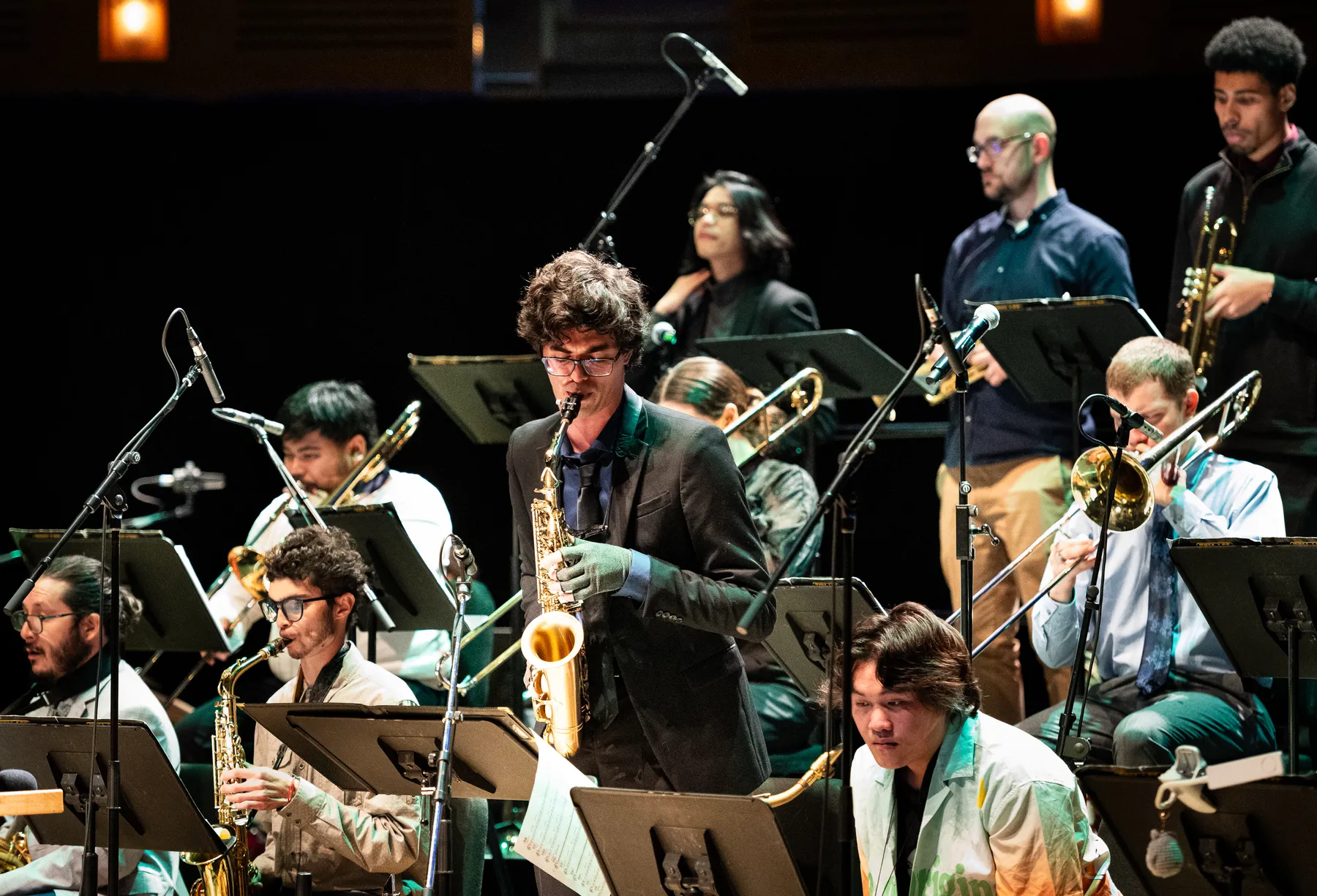
As the ensemble took the Chan stage, the brass section — with four trumpets and four trombones — filled the back row's risers. The front row had a six-seat saxophone section, with players doubling on various woodwind instruments throughout the set. On the left side of the stage was the rhythm section: an upright bass, an electric guitar, a piano and a drum kit. Dressed in an assortment of business-casual attire, there was an air of bewilderment and anxiety on the musicians' faces as they made their way to their seats. Beyond the stage lights was the largest audience they’d ever seen as a group — over a thousand people — eagerly awaited the music.
The evening began with “Ponyo on the Cliff by the Sea," the upbeat theme from Ponyo, featuring a charming pizzicato introduction from bassist Bella Fedrigo. By the second piece — “Ask Me Why” from Ghibli’s latest release The Boy and The Heron — the ensemble started settling into the space, listening to their balance and utilizing the Chan Centre’s (perhaps unfamiliar) acoustic capacity to their benefit.
Leong’s approach to conducting caught my attention almost immediately. She studied jazz guitar at Capilano, then went on to graduate with a bachelor's of education from UBC last year. Limiting her hand movements to home in on valuable cues, she demonstrates the laid-back groove of a big band leader. But her pedagogical approach shines through in precise, clear gestures uncharacteristic of the average jazz conductor. Leong's blended background makes for a unique style — one the ensemble responds to with enthusiasm.
Stills from each film were projected above the stage during their corresponding pieces. An image of Totoro accompanying Leong’s arrangement of “The Wind Forest" elicited a collective chuckle of adoration from the room. During that piece’s soulful flugelhorn solo from Nick Pataky, I caught a glimpse of a trombonist adjusting Pataky’s mic for him. It's a rarity to see performers' quick-thinking revisions firsthand, and even more so for such adjustments to support not just themselves, but their peers onstage.
Once the piece came to a close, Leong took to the microphone, admitting this was a simpler arrangement than they would typically perform, but she had hoped to give the ensemble a chance to relax before launching into the final piece of their first set. It would be 16 minutes long, she said, sending a murmur of disbelief trickling through the audience. That shifted to gasps of excitement when Leong introduced "Merry-Go-Round of Life,” the centrepiece of Howl’s Moving Castle. It's one of Hisaishi’s most famous works; it made the rounds on TikTok and gained a new life independent of the film it originated from.
Trombonist Michael Millo’s arrangement of the work had captivating, unexpected moments around every corner. The tune began with a familiar piano introduction before jumping into a lively swung repetition of the introductory theme passed to the saxophone section. Soloists across the ensemble improvised on Hisaishi's material before returning to the initial theme, the piano driving the waltz’s “oom-pah-pah.”
The band’s second set showcased the most lush, orchestral piece of the night: “The Procession of Celestial Beings”from The Tale of Princess Kaguya. A lesser-known Ghibli film, it is a retelling of an ancient Japanese literary tale. An elderly couple finds a glowing baby in a bamboo shoot. They decide to raise her in their small village, where she grows into a young woman beloved by all. Eventually, her true identity is revealed as a daughter of the moon.
This piece was bookended by two works from the 1992 film Porco Rosso. The first, “Il Porco Rosso,” was arranged by Pataky, featuring Joshua Young on piano and Kayla Ferguson on flute. Ferguson demonstrated remarkable adaptability throughout the evening, endlessly switching between flute and soprano saxophone while maintaining a beautiful tone quality. The second Porco Rosso piece was a mellow rendition of “To the Adriatic Sea” arranged by saxophonist Nicholas Wise.
Another Pataky arrangement, “One Summer Day” from Ghibli’s highest-grossing film Spirited Away, concluded the night. Scarce instrumentation evoked an intimate jazz club setting, drawing the audience in close one last time before sending them off with a vibrant encore: “Cat Bus” from My Neighbor Totoro.
Studio Ghibli films are emblematic of comfort and optimism for audiences worldwide. The Ghibli Jazz Orchestra's re-contextualization of thematic material demonstrated exactly what makes these films — and the sounds within them — captivating: the band sweeps listeners into the swinging, improvisatory realm of jazz, but they will always return to the familiar warmth of the beloved original works.