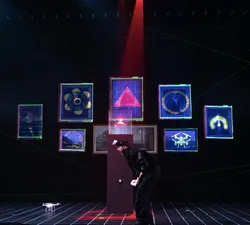

A businessman in a work suit wanders onto an empty street. He starts to tap dance. He can’t control it. With each heel click, the man starts to quietly yelp, then cry, then scream. His clothes smoke, then burn. He spontaneously combusts and falls to the ground. The audience at the Douglas Park Community Centre cheers and applauds as the demon responsible drags the corpse away.
This is the demon that Buffy Summers, hero of ‘90s television classic Buffy the Vampire Slayer, must fight in Yellow House Theatre Co.’s stage adaptation of the episode titled “Once More, With Feeling.”
UBC alumni and Yellow House Theatre Co. founders Olivia Richards and Marcus Rahal are former members of UBC Musical Theatre Troupe. Richards, a longtime Buffy fan, had pitched Once More, With Feeling several times as a cheap show for UBC MTT to produce, but it was rejected because no one else on the club’s executive team knew what it was. Now, with complete creative control, Richards and Rahal got to stage their dream production and cast MTT members with no summer theatrical obligations.
The original show follows Buffy, a high school student anointed as the Slayer — a member of a mystical succession of chosen ones destined to fight and destroy evil. She has to balance being a young adult, transitioning from high school to college, dealing with interpersonal drama, saving the world and confronting the constant tragedies that befall heroes of myth. Buffy the Vampire Slayer was created by Joss Whedon, director of era-defining works such as Firefly and The Avengers. Although the show was alleged to be a toxic work environment under Whedon — he was called a “vampire” and accused by cast members of abusing his power on set — it still holds a strong fan base today.
Alongside Buffy is her coterie of powerful and well-written friends — and Xander Harris. Rupert Giles acts as her wise older mentor. Willow Rosenberg starts as a shy nerd and gradually becomes a world-shatteringly powerful witch. Spike, a vampire villain and Buffy’s later love interest, is accurately described by Richards and Rahal as a “sad puppy.” These characters and more fill the main Scooby Gang and help the Slayer fight forces of evil. Also, Xander Harris is there. He’s the Sokka-type character: a guy without powers who serves as comedic relief. Unfortunately, he’s the Whedon stand-in, which makes him a horny, awful bastard.
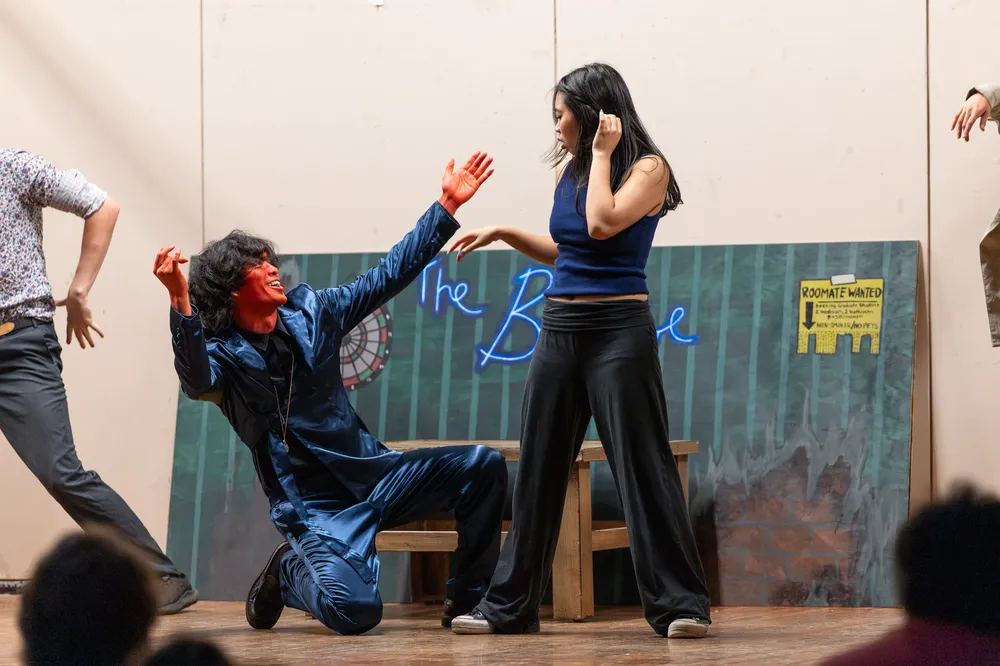
The intensified choreography also made the villain, Sweet, more threatening. Him and his henchmen moved in sync across the stage, turning the character and his goons into a sort of a hive mind.
Season six, episode seven — “Once More, With Feeling” — is one of Buffy’s most unique and celebrated episodes, situated at a time of intense interpersonal turmoil for the characters. Unlike the rest of the series, it’s a musical. The demon, Sweet (unnamed in the episode, but played by Tony winner Hinton Battle) infects the town with his magic, forcing everyone to sing and dance, even as they beg to stop.
At the start of the episode, every character has a secret. Buffy died at the end of season five. Her friends brought her back to life thinking she was in hell, but had instead pulled her from heaven. Willow is using mind-control magic to make her girlfriend forget about a fight they had. Xander and his fiancée Anya are terrified about getting married. Everyone has hidden wants and desires waiting to be set free.
There is an old musical theatre adage: “when the emotion becomes too strong for speech, you sing; when it becomes too strong for song, you dance.” And “Once More, With Feeling” serves as forced emotional catharsis, with each character being compelled by Sweet to sing their heart out and finally reveal their true feelings. It's all very meta — mechanistic “I Want” songs serve as eerie magic pulling at their souls. It's a catabasis for the series; characters must go through hell to make it to the other side.
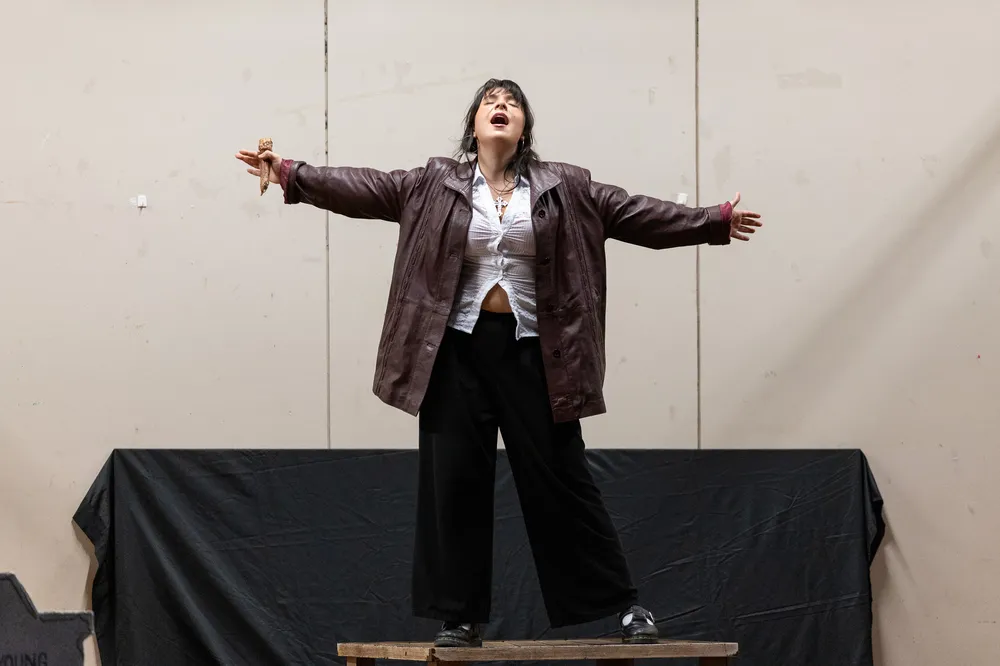
Richards plays the turmoil of heaven-denied Buffy so fantastically it almost changed my opinion on the character in this episode entirely.
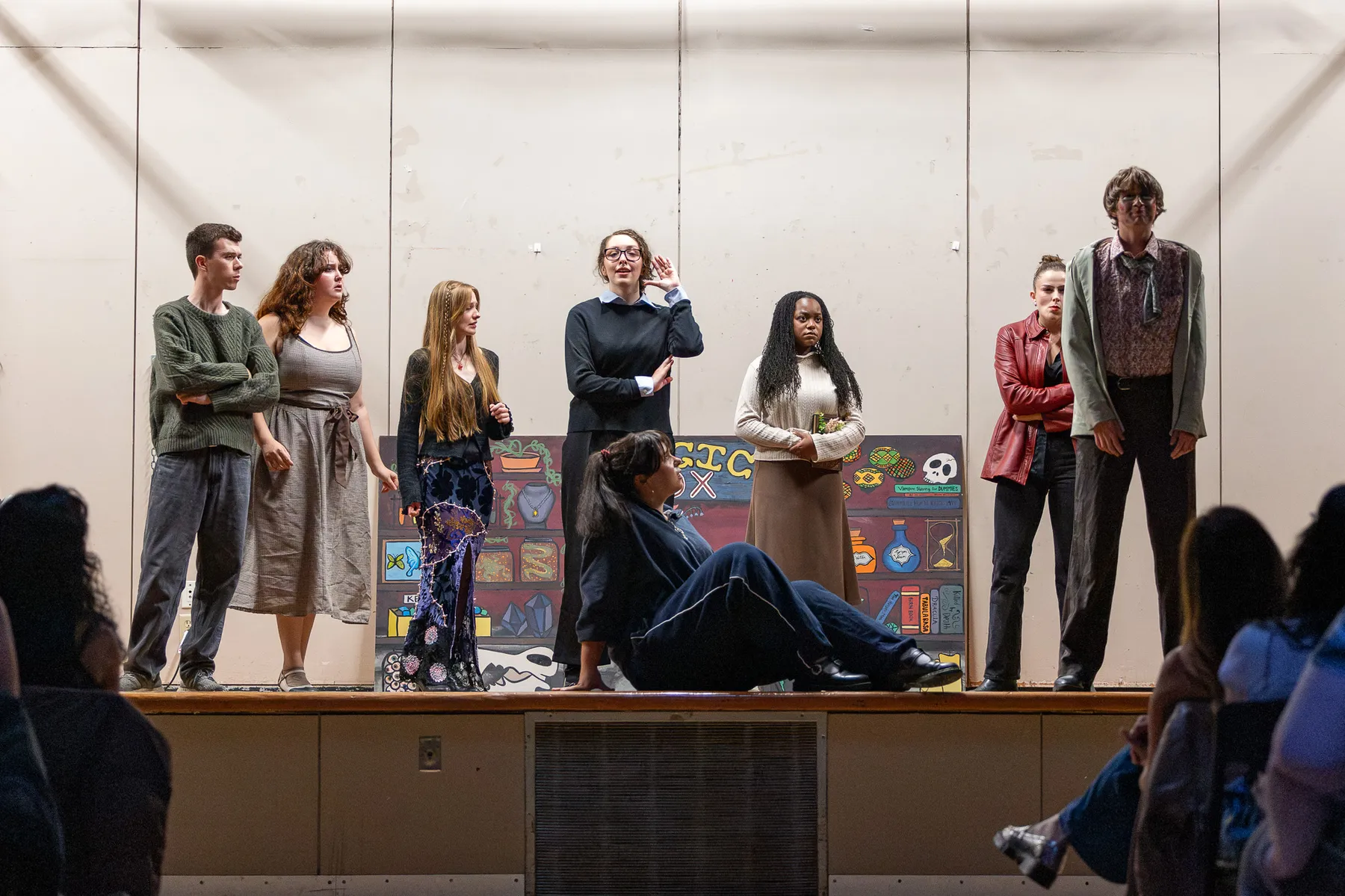
In staging this episode, Yellow House Theatre Co. put the narrative into its intended medium. The show’s musical spoof is now staged as a real-world musical. The production itself was low-budget. A painted, double-sided board symbolized the two major locations of the show: the Scooby Gang’s shop and the nightclub Sweet inhabits. The only special effects were a fog machine and a small strobe light. There were no spotlights or microphones, and the actors had to perform at the lip of a very small stage. It was thrilling to see a prop, a costume change or a bit of scenery every time one appeared.
But I have never seen a satire of a medium taken out of its original form and made so earnestly. Where the budget did not feel worn thin was the live band that scored each scene. Their performance felt so seamless that the amateur quartet replicated — rivalled, even — the contracted television orchestra. Keyboardist and alto saxophonist Elsa Yuan perfectly reproduced the piano part from the show. Unlike the original show, each and every performer in this production was a musical theatre actor. In the original episode, some actors couldn’t carry a tune, but that was not the case here.
Performer Sarah Hayes turned Spike’s number, “Rest in Peace,” from a sad puppy anthem to a spiteful and angry ballad about the torment of Buffy’s presence. “Walk Through the Fire” — a slower, rousing group number leading to the final fight – became almost operatic, like a final confrontation against an unbeatable foe.
I also want to extol Richards’s performance as Buffy. For a character so famous for being witty and fun, this episode is her at her most apathetic. Richards plays the turmoil of heaven-denied Buffy fantastically — almost enough to change my opinion on the character in this episode entirely. She brought a deep sorrow to the role, particularly in her version of “Something to Sing About,” where she nearly breaks down in tears describing heaven. You could hear a pin drop when she choked out the final notes.
The humour in this show was stronger than in the original series. By not relying on Whedonisms (see most recent MCU projects for reference), this show took the full power of being a staged production and used that to its benefit. Giles’s song “Standing” went from a mediocre ballad to a hilarious meta-number where a stagehand acted as a throwing knife running at Buffy, then a boomerang, then came back as the boomerang. Earlier, streetcleaners literally swept us into the next scene.
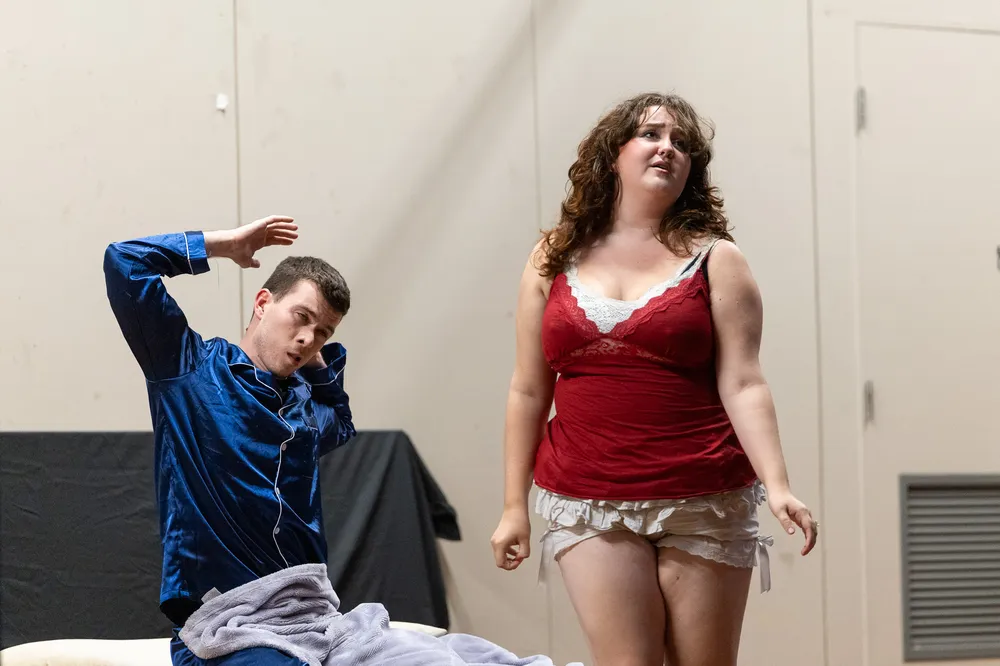
Xander and Anya’s number, which is awkward and weird in the TV show, became golden-age musical fun.
The best thing about this production, which they took in stride in the transition from TV to screen, was the choreography. Co-choreographers Sean Angelo Nacar and Athena Annika Reyes and assistant choreographer Mandisa Volo turned an episode with awkward dance numbers — which barely gave most of the cast anything other than a step-touch — into a fluid and dynamic production. Xander and Anya’s (played here by Tony Kulenovic and Clover Crocco, respectively) number, which is awkward and weird in the TV show, became golden-age musical fun. It made me believe someone could actually like Xander. Sweet (played by Nacar), became all the more threatening. He and his henchmen moved in sync across the stage, turning the character and his goons into a sort of a hive mind. It worked better for the kind of demon he is — not some evil, sword-wielding monster, but a disease infecting the town and narrative.
Adaptation fundamentally changes any work. The form of the original art is always made to suit that piece; a film is shot as a film, a book is written as a book. A good artist knows the strengths and weaknesses of their own medium. Thus, adaptation must be done with intention and familiarity with the new medium. This show’s transition from silver screen to stage does complicated things for the plot and stakes of the episode.
Once More, With Feeling hinges on how weird singing is, similar to the popular StarKid production The Guy Who Didn’t Like Musicals that likens song to an alien invasion. It's shorthand for the unnatural force, because no other episode had its vampires singing arias. When you turn that into a performed musical, the danger becomes much less apparent. Actors on stage are meant to sing, so what's the big deal?
Unlike The Guy Who Didn’t Like Musicals, which also portrays singing as an unnatural force that takes over characters' bodies and minds, Once More, With Feeling never see a gradual crescendo to that point. We start the play singing and end it singing. For an unfamiliar audience member, this seems like the norm. We don’t know the harm of these songs — that they are the result of a curse — which takes away tension. This is a musical, so people clap at the end of every number. The infection turns into something we celebrate.
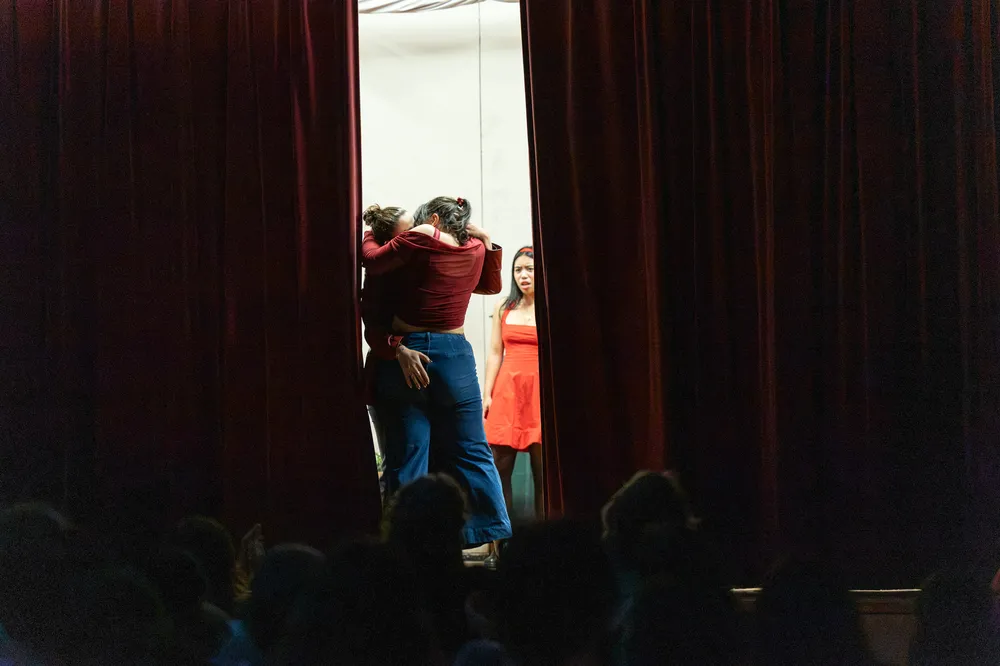
As a Buffy fan, I had a lot of fun. Yellow House Theatre Co. succeeded in giving me properly-staged scenes and songs that were sung well.